

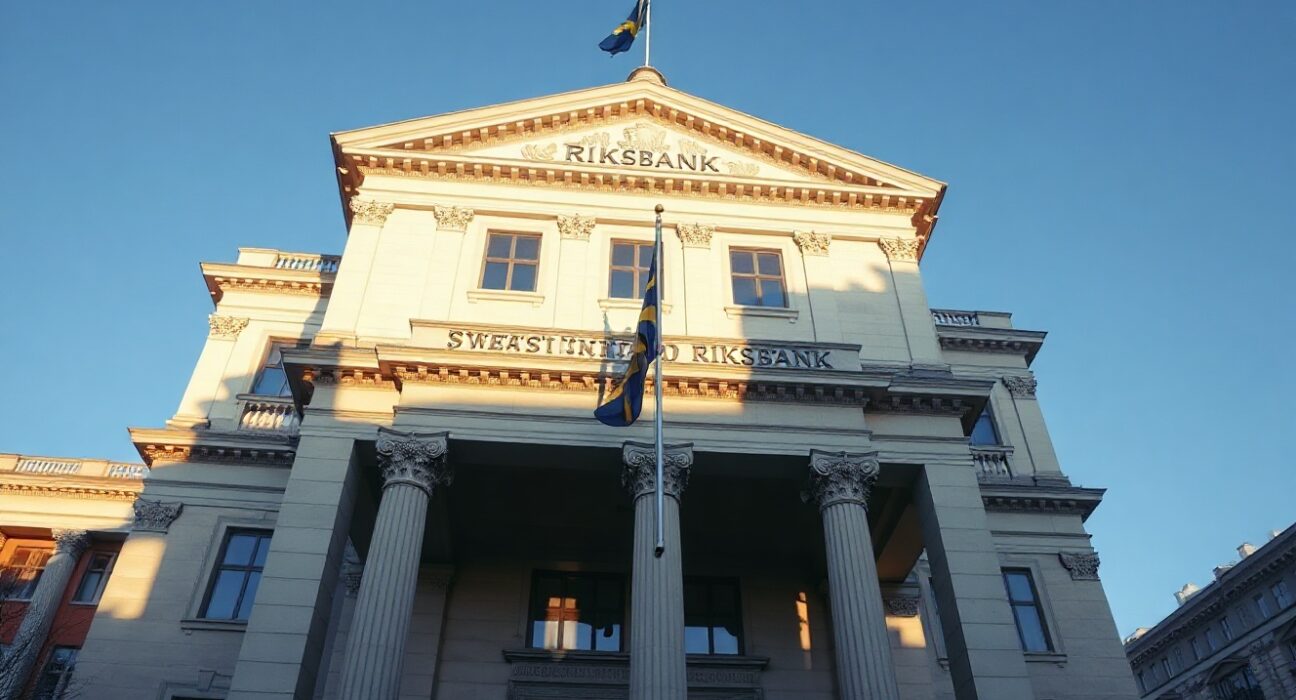
The Swedish Riksbank is widely expected to keep its policy rate unchanged at its upcoming meeting, even as underlying inflation pressures persist, according to a note from Nomura. The bank’s cautious stance reflects a delicate balance between supporting economic growth and containing price rises.
Nomura’s View on the Riksbank’s Decision
Nomura analysts project that the Riksbank will hold its benchmark interest rate steady, citing the central bank’s focus on inflation dynamics and economic uncertainty. Despite recent data showing core inflation above target, the Riksbank appears inclined to maintain a wait-and-see approach, prioritizing stability over aggressive tightening.
The Swedish krona has been sensitive to the central bank’s policy signals. A hold could provide some relief to the currency, which has faced pressure from global risk sentiment and domestic economic headwinds. However, Nomura suggests that the krona’s trajectory will depend heavily on the Riksbank’s forward guidance and any hints about future rate moves.
Core Inflation and Economic Context
Sweden’s core inflation rate has remained elevated, driven by services costs and a weak krona that raises import prices. The Riksbank’s target is 2%, but recent readings have exceeded that level, complicating the policy outlook. Yet, economic growth has slowed, and the labor market shows signs of softening, giving the central bank reason to avoid overtightening.
The Riksbank has previously signaled that it is prepared to act if inflation expectations become unanchored, but it also recognizes the risks of stifling recovery. This balancing act is central to the market’s expectations for a hold.
Implications for the Swedish Krona
For currency traders, the Riksbank’s decision is a key driver. A hold, coupled with a dovish tone, could weigh on the krona, while a more hawkish statement might offer temporary support. Nomura’s analysis suggests that the krona is likely to remain range-bound in the near term, with investors focusing on global factors and the Federal Reserve’s policy path.
Conclusion
In summary, the Riksbank is set to keep rates unchanged, as Nomura expects, despite core inflation pressures. The decision underscores the central bank’s cautious approach to policy normalization amid economic uncertainty. The Swedish krona’s outlook remains tied to the Riksbank’s communication and broader market conditions.
FAQs
Q1: When is the Riksbank’s next policy meeting?
The Riksbank holds its monetary policy meetings approximately six times a year. The exact schedule is available on the central bank’s official website, but typically they occur every six to eight weeks.
Q2: How does the Riksbank’s decision affect the Swedish krona?
The Riksbank’s interest rate decisions and forward guidance directly influence the krona’s value. A hold with a dovish stance can weaken the currency, while a hawkish surprise can strengthen it, as traders adjust to expected yield differentials.
Q3: What is the current Swedish inflation rate?
As of the latest data, Sweden’s CPI inflation has been above the Riksbank’s 2% target, with core inflation also elevated. However, figures are subject to monthly revisions, so it’s advisable to check the latest statistics from Statistics Sweden.
Disclaimer: The information provided is not trading advice, Bitcoinworld.co.in holds no liability for any investments made based on the information provided on this page. We strongly recommend independent research and/or consultation with a qualified professional before making any investment decisions.
