
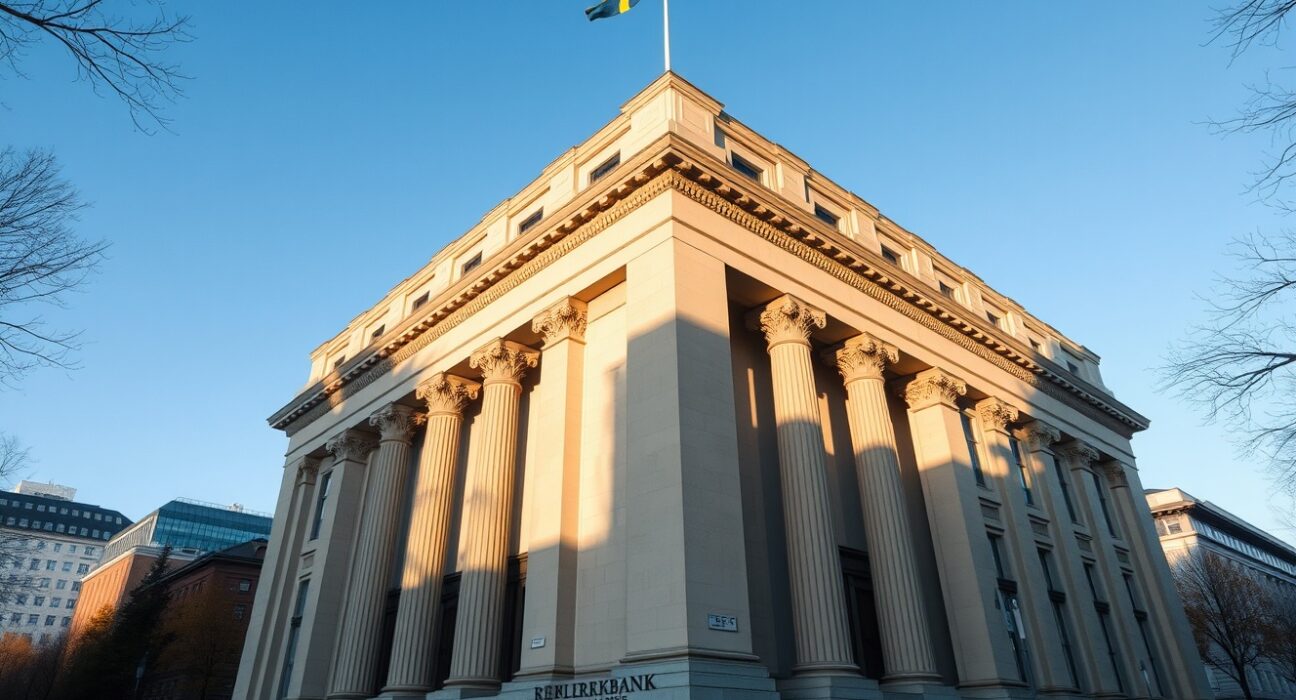
STOCKHOLM, March 2025 – The Swedish Riksbank has maintained its benchmark interest rate unchanged, according to analysis from global financial firm Nomura, as mounting energy market volatility creates new economic uncertainties for the Nordic nation. This decision marks the third consecutive meeting where Sweden’s central bank has held rates steady, reflecting a cautious approach amid shifting global energy dynamics and persistent inflationary pressures.
Riksbank Maintains Monetary Policy Stance
The Riksbank’s Executive Board voted unanimously to keep the repo rate at 3.75%, continuing the policy path established in late 2024. Consequently, this decision signals the central bank’s commitment to price stability while acknowledging emerging risks in energy markets. Furthermore, the bank’s monetary policy report highlights concerns about potential energy price shocks affecting Sweden’s inflation trajectory.
Nomura’s analysis suggests the Riksbank faces a delicate balancing act. On one hand, core inflation remains above the 2% target. On the other hand, external energy market pressures threaten to complicate the disinflation process. The central bank’s statement emphasizes data-dependent forward guidance, indicating future decisions will respond to economic developments.
Energy Market Volatility Intensifies
European energy markets have experienced significant turbulence in recent months. Several factors contribute to this volatility:
- Geopolitical tensions affecting natural gas supplies
- Renewable energy integration challenges during low-wind periods
- Infrastructure maintenance delays across transmission networks
- Storage capacity limitations ahead of winter seasons
Sweden’s electricity prices have shown particular sensitivity to these developments. The country’s energy mix, while heavily reliant on hydro and nuclear power, remains connected to broader European markets through interconnectors. Therefore, price fluctuations in Germany and Poland directly impact Swedish consumers and businesses.
Historical Context of Swedish Energy Policy
Sweden has pursued ambitious energy transition policies for decades. The nation aims to achieve 100% renewable electricity production by 2040. However, this transition creates short-term vulnerabilities. For instance, intermittent renewable sources require backup capacity during periods of low generation.
The table below illustrates Sweden’s electricity generation mix:
| Source | Percentage | Characteristics |
|---|---|---|
| Hydroelectric | 45% | Stable but seasonal |
| Nuclear | 30% | Baseload capacity |
| Wind | 17% | Intermittent |
| Other | 8% | Biomass, solar |
Nomura’s Economic Assessment
Nomura’s research team has published detailed analysis of the Riksbank’s policy position. Their report identifies three primary considerations influencing the central bank’s decision:
First, inflation expectations remain anchored near the target. Survey data shows households and businesses expect inflation around 2% over the medium term. Second, labor market conditions show gradual cooling, with wage growth moderating from previous highs. Third, housing market adjustments continue, with prices stabilizing after earlier corrections.
The financial firm’s economists note that energy price risks represent the most significant uncertainty. Specifically, they highlight how sudden price spikes could reverse recent disinflation progress. Meanwhile, sustained low prices might accelerate inflation’s return to target.
Comparative Central Bank Approaches
The Riksbank’s cautious stance contrasts with more aggressive approaches elsewhere. The European Central Bank recently cut rates by 25 basis points, citing improved inflation outlook. Conversely, the Federal Reserve maintains higher rates amid stronger U.S. economic growth.
Sweden’s unique position as a small, open economy with its own currency allows independent policy decisions. However, the Riksbank must consider exchange rate effects. A weaker krona could import inflation through higher import prices.
Economic Impacts and Forward Projections
Monetary policy decisions affect various economic sectors differently. The current steady-rate environment provides predictability for businesses making investment decisions. Construction companies, for example, benefit from stable financing costs for long-term projects.
Household consumption patterns show mixed signals. Retail sales data indicates cautious spending, particularly on durable goods. Meanwhile, service consumption remains relatively robust. This divergence suggests consumers prioritize experiences over material purchases during uncertain periods.
Export-oriented industries face challenges from global demand softness. Swedish manufacturing, particularly automotive and engineering sectors, reports order book reductions. Consequently, business confidence indicators have moderated from earlier highs.
Conclusion
The Riksbank’s decision to maintain steady interest rates reflects prudent risk management amid building energy market volatility. Nomura’s analysis underscores the central bank’s data-dependent approach, balancing inflation risks against growth considerations. Looking forward, energy price developments will likely determine the timing of future policy adjustments. Sweden’s economy demonstrates resilience, but external shocks remain the primary concern for monetary policymakers.
FAQs
Q1: What is the current Riksbank interest rate?
The Riksbank has maintained its repo rate at 3.75%, according to the latest policy decision analyzed by Nomura.
Q2: How do energy markets affect Swedish monetary policy?
Energy price volatility influences inflation expectations and economic activity, making it a key consideration for the Riksbank’s policy decisions.
Q3: What makes Sweden’s energy situation unique?
Sweden relies heavily on hydro and nuclear power but remains connected to volatile European markets through electricity interconnectors.
Q4: How does the Riksbank’s approach compare to other central banks?
The Riksbank maintains a more cautious stance than the ECB but less restrictive than the Federal Reserve, reflecting Sweden’s specific economic conditions.
Q5: What indicators will the Riksbank watch for future rate decisions?
The central bank will monitor core inflation, wage developments, energy prices, and exchange rate movements to guide future policy adjustments.
Disclaimer: The information provided is not trading advice, Bitcoinworld.co.in holds no liability for any investments made based on the information provided on this page. We strongly recommend independent research and/or consultation with a qualified professional before making any investment decisions.