
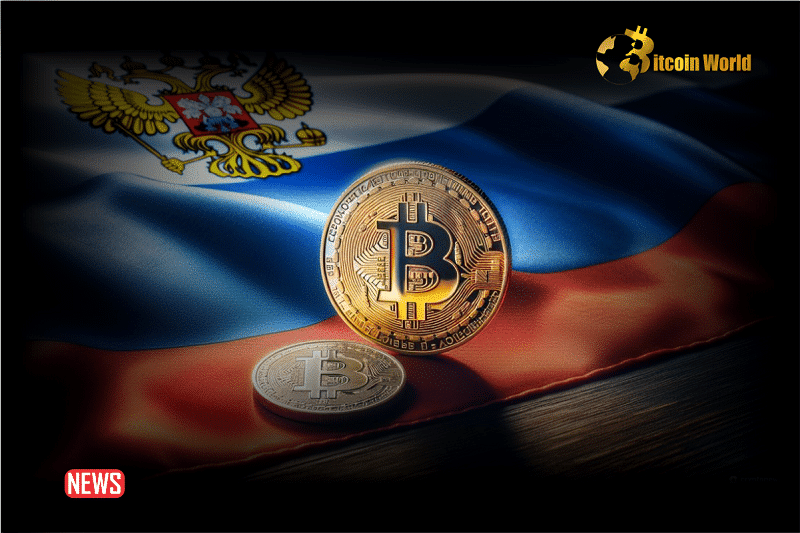
Buckle up, crypto enthusiasts! Russia is about to turn up the heat on the digital currency scene. Starting September 1st, get ready for some serious changes as the nation clamps down on crypto circulation. But hold on, it’s not a blanket ban – there’s a twist. Crypto miners are getting a golden ticket, exempted from these sweeping restrictions. Intrigued? Let’s dive into what’s happening in Russia and what it means for the future of crypto.
Russia’s Crypto Clampdown: What’s Changing on September 1st?
Imagine a scenario where only certain types of crypto are allowed within a country’s borders. That’s precisely what Russia is gearing up for. From September 1st, the nation will enforce stringent rules, primarily targeting the general circulation of popular cryptocurrencies like Bitcoin. The key takeaway? Only digital financial assets issued under Russian jurisdiction will be permitted. Think of it as creating a walled garden for crypto within Russia.
- Stricter Rules: Russia is implementing significant restrictions on crypto circulation starting September 1st.
- Rubles and Russian Crypto Only: Only digital financial assets issued within Russia and the digital ruble will be permitted for general use.
- Miner Exemption: Surprisingly, crypto miners are being exempted from these strict rules.
- Geopolitical Context: This move is happening amidst ongoing geopolitical tensions, adding another layer of complexity.
Leading this charge is Anatoly Aksakov, a prominent figure as the Chairman of the State Duma Committee on the Financial Market. This initiative isn’t happening in isolation; it’s part of a larger government strategy to gain more control over the burgeoning crypto ecosystem, especially as geopolitical pressures mount.
Why the Crypto Curbs? Ruble Power Play & Control
So, why is Russia taking such a firm stance? According to Aksakov himself, the primary goal of this legislation is to bolster the dominance of the Russian ruble. In his words, these restrictions on non-Russian crypto operations are designed to “reinforce the ruble’s dominance.” Essentially, Russia wants its national currency to be the king in its financial domain, and crypto is seen as a potential challenger.
“Digital financial assets issued in Russian jurisdiction, and digital rubles will be allowed. The need for restrictions is due to the fact that today cryptocurrency – is a quasi-currency that replaces the ruble in the country. But only the Russian ruble fulfills the mission of the monetary unit, so this decision has been made. From September 1, restrictions will be introduced,” Aksakov explained.
See Also: Crypto.com Delayed South Korea Launch Amid Regulatory Scrutiny Over Money Laundering Concerns
Miners Get a Break: Why Are They Exempt?
Here’s where it gets interesting. While general crypto circulation is being restricted, crypto miners are getting a special exemption. Furthermore, Central Bank-sponsored test projects operating within an “experimental legal framework” will also be carved out from these limitations. Why this preferential treatment?
The answer lies in economics. Crypto mining is a lucrative sector for Russia, significantly contributing to the nation’s tax revenues. It’s estimated that Russian crypto miners generate over $2.59 billion in liquidity, which is crucial for foreign trade settlements. In a nutshell, Russia seems to be leveraging crypto mining for economic benefits while trying to control its broader usage.
Not a Ban, But a Control Mechanism
To clarify, it’s crucial to understand that Russia isn’t outright banning cryptocurrencies. Anton Gorelkin, another Member of the State Duma, emphasized this point. The restrictions are specifically targeting the creation of crypto exchanges and platforms that facilitate the exchange of cryptocurrencies outside of a designated experimental zone.
“Of course, the circulation of cryptocurrencies will not be banned. The creation of exchanges outside the zone of the experimental legal regime will fall under the ban,” Gorelkin wrote.
Policy Tug-of-War: Internal Debates on Crypto’s Future in Russia
Interestingly, within the Russian government itself, there’s a noticeable debate about the best approach to crypto. Artem Kiryanov, Deputy Chairman of the State Duma Committee on Economic Policy, highlights the need for crystal-clear regulations, emphasizing that:
“The regulation of cryptocurrency should be prescribed in the digital code, which would clearly spell out the conceptual apparatus and common judicial law enforcement practice,” Kiryanov stated.
This suggests a faction pushing for a more structured and legally defined approach to crypto regulation.
Finance Minister’s Moderated Stance: Regulation Over Prohibition
On the other side of the spectrum, Russia’s Finance Minister, Anton Siluanov, has been advocating for a more balanced perspective. He’s openly opposed a complete ban on cryptocurrencies, arguing instead for regulation that allows their use in both domestic and international transactions.
“I am sure that the Central Bank and we will come to an agreement. This issue has been discussed for several years. We cannot prohibit the circulation of cryptocurrencies. Therefore, we need to regulate this channel. I am sure that we will find a solution,” Siluanov stated.
Siluanov’s stance, along with support from Elvira Nabiullina, Head of the Bank of Russia, who backs experimental use of crypto in international settlements, hints at a potential future where Russia might leverage cryptocurrencies for external financial operations. This reflects a growing recognition of crypto’s potential role in the global financial landscape, especially in the context of sanctions and international trade.
See Also: Breaking: OKX Jumpstart Introduces RUNECOIN Mining By BTC Staking
Crypto in the Shadows: Military Procurement and Sanctions Bypassing
Adding another layer of complexity is the reported use of cryptocurrencies by Russian entities to circumvent sanctions and procure sensitive goods. Recent reports indicate that Tether’s USDT, in particular, has been used to acquire critical components, even for military technology.
The case of Andrey Zverev, a Russian operative in China, illustrates this point. In 2022, he allegedly used USDT to bypass traditional banking systems and purchase drone components vital for military operations in Ukraine. This highlights how crypto can be utilized to sidestep the scrutiny of traditional financial institutions, especially in a sanctions-heavy environment.
Disclaimer: The information provided is not trading advice. Bitcoinworld.co.in holds no liability for any investments made based on the information provided on this page. We strongly recommend independent research and/or consultation with a qualified professional before making any investment decisions.
#Binance #WRITE2EARN
Disclaimer: The information provided is not trading advice, Bitcoinworld.co.in holds no liability for any investments made based on the information provided on this page. We strongly recommend independent research and/or consultation with a qualified professional before making any investment decisions.