

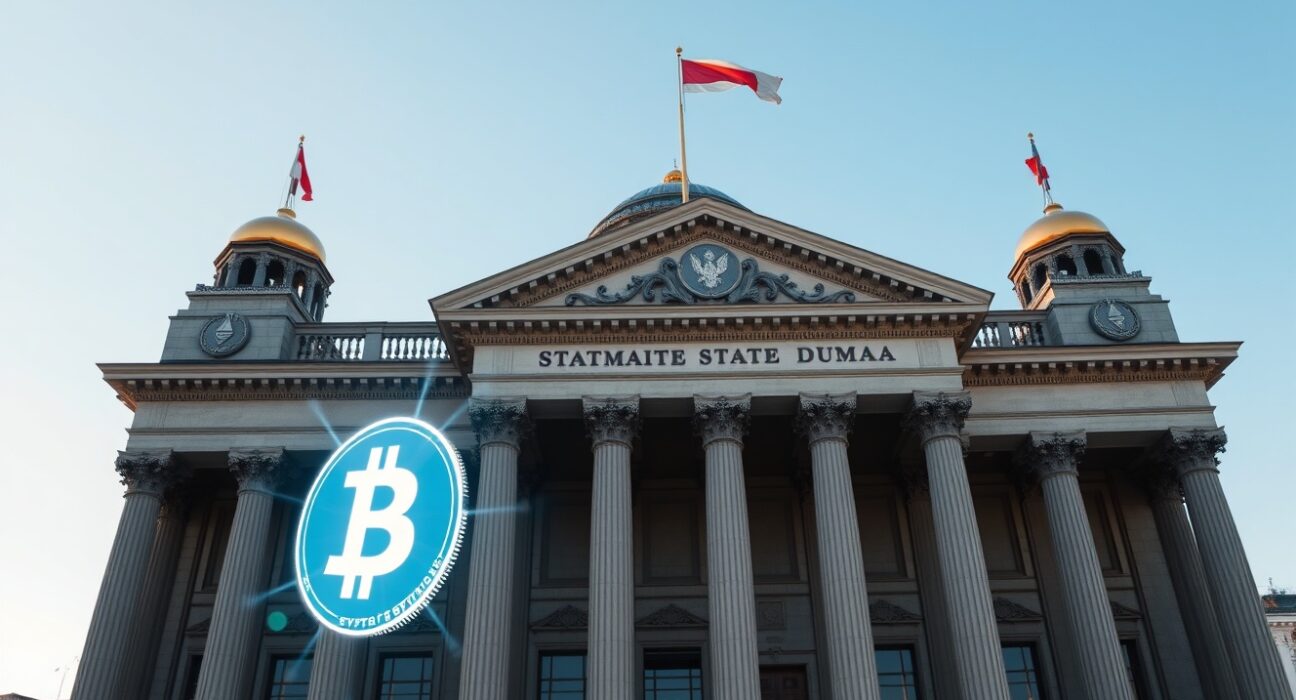
MOSCOW, RUSSIA – March 2025 marks a pivotal moment for cryptocurrency regulation as the Russian State Duma, the parliament’s lower house, approves groundbreaking legislation titled ‘On Digital Currency and Digital Rights’ in its first reading. This Russian crypto bill establishes comprehensive legal foundations for digital assets while granting unprecedented authority to the nation’s central bank. Consequently, financial institutions and crypto exchanges now face a transformed regulatory landscape with significant implications for market participants.
Russian Crypto Bill Establishes Legal Framework
The newly passed legislation represents Russia’s most substantial move toward formal cryptocurrency recognition. Previously, digital assets operated in a legal gray area despite widespread adoption. The bill specifically defines digital currency as property under Russian law, providing crucial legal protection for holders. Furthermore, it establishes clear distinctions between various digital asset types, including cryptocurrencies, utility tokens, and security tokens. This classification system enables targeted regulation for different asset categories.
According to legislative documents, the Russian crypto bill addresses several critical areas:
- Legal Status: Digital currencies receive formal recognition as property
- Transaction Framework: Establishes rules for legitimate cryptocurrency transactions
- Taxation Guidelines: Creates clear tax obligations for digital asset operations
- Consumer Protection: Implements safeguards for individual cryptocurrency investors
This legislative development follows years of debate between Russia’s central bank and finance ministry regarding cryptocurrency regulation. Initially, the central bank advocated for a complete ban on cryptocurrency operations. Meanwhile, the finance ministry pushed for regulated integration into the financial system. The current compromise legislation reflects elements from both positions, creating a controlled but permissible environment.
Central Bank Gains Unprecedented Oversight Authority
The legislation designates the Bank of Russia as the primary regulator for the cryptocurrency market. This central bank oversight extends across multiple dimensions of digital asset operations. Specifically, the Bank of Russia receives authority to issue licenses to cryptocurrency exchanges, brokers, and custody providers. Additionally, it can approve or prohibit specific cryptocurrency transactions based on financial stability concerns.
The central bank’s new powers include:
| Regulatory Power | Scope | Implementation Timeline |
|---|---|---|
| Licensing Authority | Exchanges, brokers, custodians | 6 months after final passage |
| Transaction Approval | Large-scale cryptocurrency transfers | Immediate upon final passage |
| Market Surveillance | All cryptocurrency operations | 12 months after final passage |
| Compliance Enforcement | Anti-money laundering measures | Immediate upon final passage |
This regulatory approach mirrors aspects of Singapore’s Payment Services Act while incorporating Russia’s unique financial sovereignty concerns. The central bank will develop specific technical requirements for licensed entities, including cybersecurity standards, capital adequacy ratios, and reporting protocols. Market participants must demonstrate compliance before receiving operational licenses.
International Context and Comparative Analysis
Russia’s legislative move occurs within a global trend toward cryptocurrency regulation. The European Union implemented its Markets in Crypto-Assets (MiCA) framework in 2024, establishing comprehensive rules across member states. Similarly, the United Kingdom introduced its Financial Services and Markets Act 2023 provisions for digital assets. However, Russia’s approach differs significantly by concentrating authority within the central bank rather than creating separate regulatory bodies.
Notably, China maintains its prohibition on cryptocurrency trading despite developing a central bank digital currency. Conversely, the United States employs a multi-agency approach with SEC, CFTC, and Treasury Department involvement. Russia’s model most closely resembles Kazakhstan’s, where the central bank oversees licensed cryptocurrency mining and exchange operations. This similarity reflects shared concerns about capital flight and financial sovereignty in both nations.
Impact on Crypto Institutions and Market Participants
The legislation establishes specific requirements for cryptocurrency exchanges operating within Russian jurisdiction. These platforms must implement know-your-customer (KYC) procedures matching traditional financial institution standards. Additionally, exchanges must maintain transaction records for seven years and report suspicious activities to financial monitoring authorities. Non-compliant platforms face substantial penalties, including license revocation and criminal prosecution.
For individual investors, the Russian crypto bill introduces both protections and obligations:
- Legal Recognition: Cryptocurrency holdings receive property rights protection
- Tax Compliance: Capital gains from cryptocurrency trading become taxable
- Dispute Resolution: Legal mechanisms for addressing fraud or theft
- Investment Limits: Potential restrictions on retail investor exposure
Cryptocurrency mining operations receive specific attention within the legislation. The bill establishes energy consumption standards and reporting requirements for mining facilities. Moreover, it creates a registry of authorized mining operations with preferential electricity rates in certain regions. This approach aims to formalize Russia’s significant cryptocurrency mining industry while addressing energy grid concerns.
Legislative Process and Implementation Timeline
The first reading approval represents just the initial stage in Russia’s legislative process. The bill now proceeds to committee review, where deputies will propose amendments and modifications. Subsequently, the legislation will undergo second and third readings in the State Duma. Following Duma approval, the Federation Council must review and approve the bill. Finally, President Vladimir Putin would sign it into law.
Based on typical legislative timelines, the Russian crypto bill could become law within six to nine months. However, the central bank has already begun developing implementing regulations. These technical rules will establish detailed requirements for market participants. Industry consultations will occur during this regulatory development phase, allowing for stakeholder input before final implementation.
The legislation includes transitional provisions for existing cryptocurrency businesses. Current operators will have twelve months to comply with new licensing requirements after the law’s enactment. During this transition period, they may continue operations while preparing compliance documentation. This approach minimizes market disruption while ensuring regulatory objectives are met.
Geopolitical Considerations and Financial Sovereignty
Russia’s cryptocurrency legislation development occurs against a backdrop of international financial sanctions. Since 2022, numerous Russian entities have faced restrictions from Western financial systems. Consequently, cryptocurrency presents potential alternatives for international transactions. The legislation includes provisions addressing cross-border cryptocurrency transfers, though details remain classified for national security reasons.
Financial analysts note that regulated cryptocurrency markets could facilitate trade with nations facing similar sanctions. Countries like Iran and Venezuela have explored cryptocurrency mechanisms for international commerce. Russia’s formal regulatory framework might enable similar approaches while maintaining financial oversight. However, the legislation explicitly prohibits using cryptocurrency for sanctions evasion, creating potential compliance challenges for international businesses.
Conclusion
The Russian crypto bill’s first reading approval represents a watershed moment for digital asset regulation in one of the world’s largest economies. This legislation establishes comprehensive legal foundations while granting the central bank sweeping oversight powers. Market participants now face a transformed regulatory environment with both opportunities and compliance obligations. As the bill progresses through subsequent legislative stages, its final form will significantly influence Russia’s position in the global cryptocurrency ecosystem. The international community will closely monitor implementation, particularly regarding cross-border transaction provisions and their implications for global financial systems.
FAQs
Q1: What does the Russian crypto bill accomplish in its current form?
The legislation establishes digital currency as legally recognized property while creating a comprehensive regulatory framework. It designates the Bank of Russia as the primary regulator with authority over licensing, transaction approval, and market surveillance.
Q2: How will this legislation affect cryptocurrency exchanges operating in Russia?
Exchanges must obtain licenses from the Bank of Russia, implement enhanced KYC procedures, maintain extensive transaction records, and comply with cybersecurity standards. Non-compliant exchanges face penalties including license revocation.
Q3: What happens to the bill after first reading approval?
The legislation proceeds to committee review for amendments, then second and third readings in the State Duma. Following Duma approval, it moves to the Federation Council before potential presidential signature into law.
Q4: How does Russia’s approach compare to other countries’ cryptocurrency regulations?
Russia concentrates authority within the central bank, unlike the EU’s MiCA framework or the US multi-agency approach. It most closely resembles Kazakhstan’s model while incorporating elements from Singapore’s Payment Services Act.
Q5: What are the implications for individual cryptocurrency investors in Russia?
Investors gain legal protection for holdings but face tax obligations on capital gains. The legislation may introduce investment limits for retail participants while providing dispute resolution mechanisms previously unavailable.
Disclaimer: The information provided is not trading advice, Bitcoinworld.co.in holds no liability for any investments made based on the information provided on this page. We strongly recommend independent research and/or consultation with a qualified professional before making any investment decisions.
