

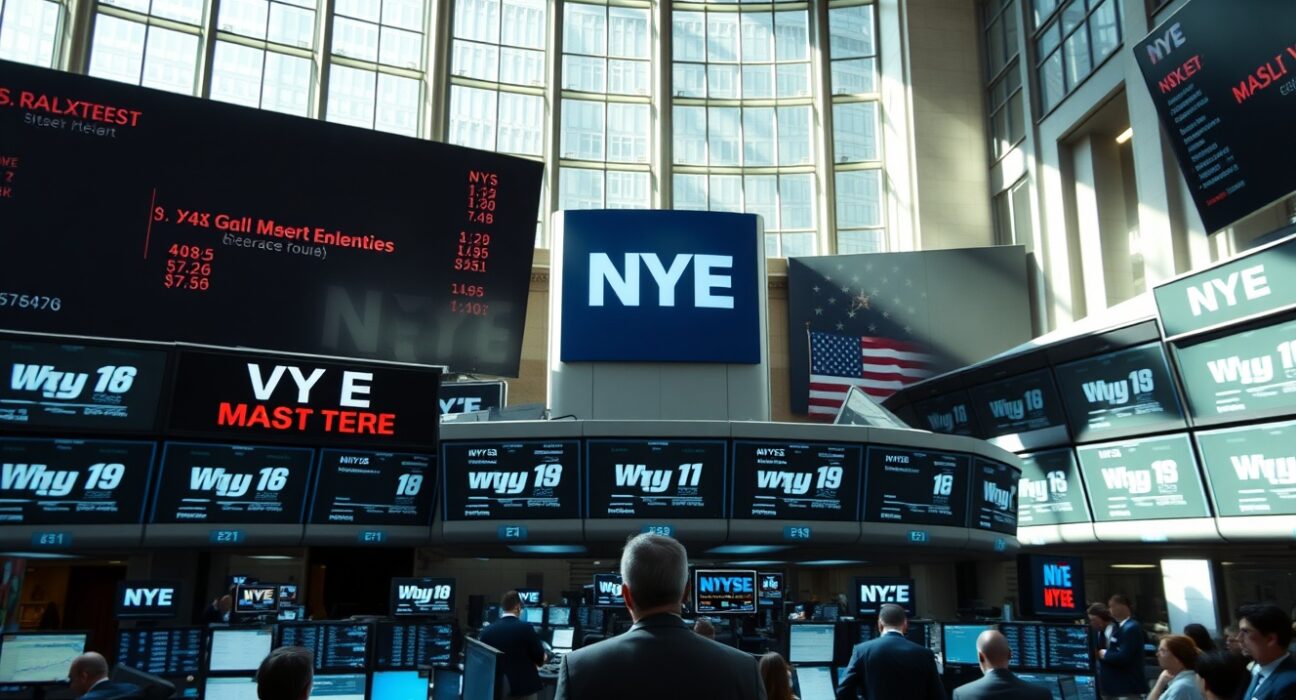
The U.S. Securities and Exchange Commission has formally allowed a New York Stock Exchange rule change that paves the way for a pilot program tokenizing shares of major companies and exchange-traded funds on blockchain infrastructure. The amendment, submitted by the NYSE on May 1 and published by the SEC on May 12, is now in effect.
What the new rules allow
Under the approved framework, institutions qualified by the Depository Trust & Clearing Corporation for its pilot program can trade tokenized versions of stocks and ETFs using distributed ledger technology. The tokenization scope is limited to components of the Russell 1000 index and ETFs that track major benchmarks.
Each token will carry the same ticker symbol as its underlying security and grant identical shareholder rights, including dividend distributions, trading priorities, and fee structures. This means token holders will have the same legal and economic standing as traditional shareholders.
Timeline and rollout
The DTCC pilot program is set to run for three years. The corporation previously indicated that trading of these tokens would begin in July, with a more comprehensive platform expected to launch in October. The phased rollout suggests the DTCC is approaching tokenization cautiously, testing settlement and custody mechanics before expanding.
Why this matters for markets
The approval marks a significant step toward integrating blockchain technology into the core infrastructure of U.S. capital markets. Tokenization could reduce settlement times, lower operational costs, and enable more efficient collateral management. However, the pilot’s narrow scope—limited to Russell 1000 stocks and major index ETFs—indicates regulators are taking a measured approach, prioritizing system stability over rapid expansion.
For institutional investors, the program offers a controlled environment to test blockchain-based trading without disrupting existing market structures. The three-year timeline provides sufficient data for regulators to assess risks related to custody, liquidity, and market integrity before considering broader adoption.
Conclusion
The SEC’s approval of the NYSE rule change represents a carefully calibrated regulatory green light for tokenized securities in the U.S. market. While the pilot program is limited in scope and duration, it establishes a precedent for how traditional exchanges and clearing houses can experiment with blockchain technology within the existing regulatory framework. Market participants should watch the July and October rollout milestones closely for early signals on scalability and institutional appetite.
FAQs
Q1: Which securities can be tokenized under this pilot program?
Only stocks that are components of the Russell 1000 index and ETFs tracking major indices are eligible. This excludes smaller companies and alternative asset classes.
Q2: Will token holders have the same rights as regular shareholders?
Yes. The tokens carry identical shareholder rights, including dividends, voting where applicable, trading priorities, and fee structures as the underlying securities.
Q3: How long will the pilot program run?
The DTCC pilot program is approved for three years, with initial trading expected to begin in July and an expanded platform launch planned for October.
Disclaimer: The information provided is not trading advice, Bitcoinworld.co.in holds no liability for any investments made based on the information provided on this page. We strongly recommend independent research and/or consultation with a qualified professional before making any investment decisions.
