

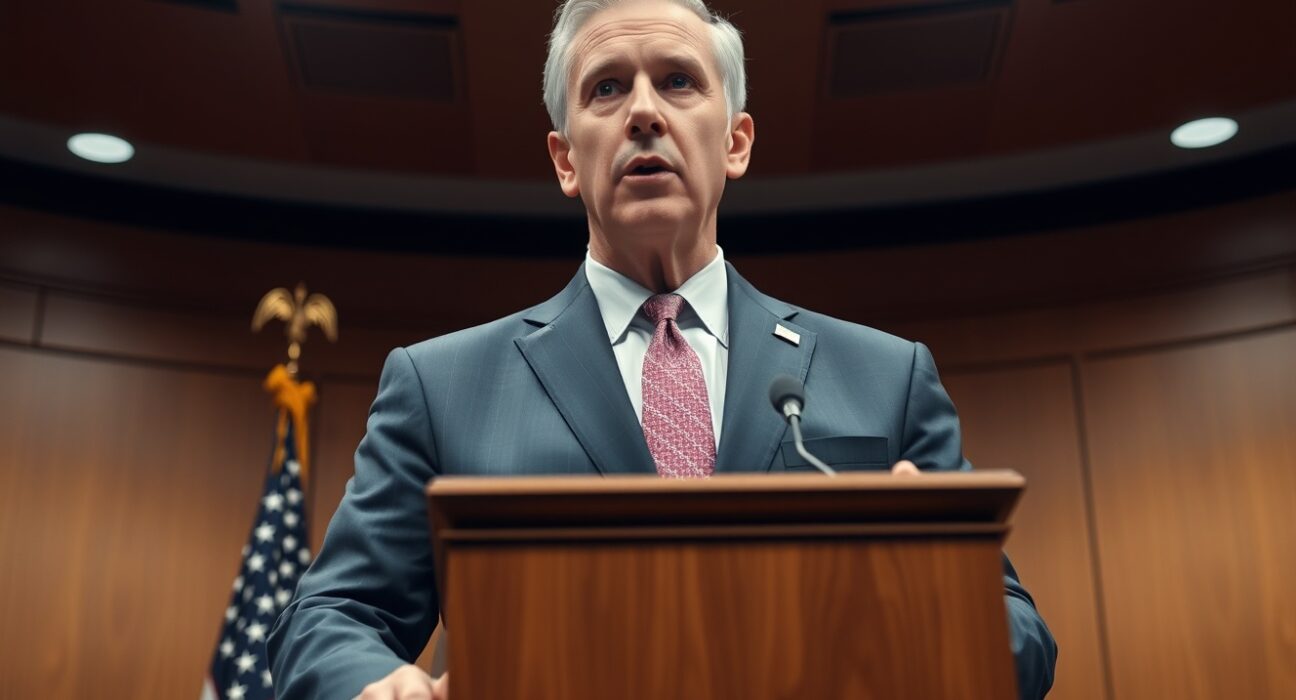
In a significant development for the digital asset industry, U.S. Securities and Exchange Commission (SEC) Chairman Paul Atkins has issued a crucial call for clear cryptocurrency regulations. Speaking in Washington D.C. in October 2025, Chairman Atkins emphasized the pressing need for a coherent regulatory framework to govern the rapidly evolving crypto market. This statement marks a pivotal moment in the ongoing dialogue between regulators and the blockchain sector. Furthermore, it underscores a potential shift toward more definitive policy actions. The call for clarity arrives amid persistent market volatility and global regulatory divergence.
The Imperative for Clear Crypto Regulations
Chairman Paul Atkins articulated the fundamental necessity for regulatory certainty. He highlighted how the current patchwork of state and federal guidance creates confusion for businesses and investors. Consequently, this ambiguity can stifle innovation and expose consumers to unnecessary risk. The SEC, under his leadership, recognizes the transformative potential of blockchain technology. However, the commission also maintains its core mandate to protect investors and ensure fair markets. Therefore, establishing clear crypto regulations becomes a non-negotiable prerequisite for sustainable growth.
The Chairman’s remarks reference a decade of regulatory evolution. For instance, the SEC’s 2017 DAO Report was an early signal. Later, numerous enforcement actions clarified the application of securities laws to certain digital assets. Despite these steps, a comprehensive legislative framework remains absent. This regulatory gap forces companies to navigate a complex compliance landscape. It also leaves retail investors vulnerable to projects operating in legal gray areas. Atkins’ call, therefore, seeks to bridge this gap with purposeful and transparent rules.
Historical Context and Regulatory Journey
The path to today’s regulatory discussion is long and complex. Initially, Bitcoin’s emergence prompted questions about its classification. Subsequently, the 2014 IRS notice treating it as property set an early tax precedent. The 2020 OCC interpretive letter allowing banks to custody crypto assets was another milestone. However, the most contentious debates have centered on which digital assets constitute securities. Landmark cases and settlements have provided some guidance, yet legislative action from Congress has stalled repeatedly. Chairman Atkins’ statement injects renewed urgency into this stalled process.
Impacts on the U.S. Cryptocurrency Market
The call for clear rules carries immediate and long-term implications for the U.S. cryptocurrency market. Market participants have long cited regulatory uncertainty as a major barrier. This uncertainty affects several key areas:
- Institutional Investment: Large financial institutions require legal certainty before allocating significant capital.
- Startup Formation: Entrepreneurs often base their companies offshore to avoid U.S. regulatory complexity.
- Exchange Operations: Trading platforms must constantly adapt to evolving compliance expectations.
- Consumer Protection: Without clear rules, bad actors can exploit loopholes, harming retail investors.
Establishing a transparent framework could reverse these trends. It would likely encourage domestic innovation and job creation. Moreover, it would position the United States as a leader in the responsible development of digital asset technology. A regulated environment also helps legitimize the asset class for a broader segment of the public. This legitimacy is essential for achieving mainstream financial adoption.
Global Comparisons and Competitive Landscape
The United States is not operating in a vacuum. Other jurisdictions have moved more decisively to create crypto regulations. The European Union’s Markets in Crypto-Assets (MiCA) framework provides a comprehensive rulebook for 27 nations. Similarly, Singapore, Switzerland, and the United Kingdom have established detailed regulatory regimes. These frameworks offer valuable case studies. They demonstrate both the benefits of clarity and the challenges of implementation. The U.S. must consider its competitive position. A delayed or overly restrictive approach could cede technological leadership and economic activity to other regions.
| Jurisdiction | Regulatory Framework | Key Focus |
|---|---|---|
| European Union | Markets in Crypto-Assets (MiCA) | Consumer protection, market integrity, anti-money laundering |
| United Kingdom | Financial Services and Markets Act 2023 | Stablecoin regulation, promotion of innovation |
| Singapore | Payment Services Act | Licensing for crypto service providers, risk-based oversight |
| United States | Multi-agency approach (SEC, CFTC, etc.) | Securities vs. commodity classification, enforcement actions |
The Path Forward and Legislative Challenges
Translating Chairman Atkins’ call into law presents significant hurdles. Congress holds the primary authority to create new statutory frameworks for crypto regulations. Multiple bills have been introduced in recent years, addressing topics like stablecoins and market structure. However, partisan differences and technical complexity have prevented consensus. The SEC can provide guidance and use its existing authority, but lasting clarity requires congressional action. Key issues for legislators include defining regulatory jurisdiction between the SEC and the Commodity Futures Trading Commission (CFTC). They must also address custody rules, tax treatment, and anti-money laundering requirements.
Stakeholder engagement will be critical in this process. Industry representatives advocate for rules that foster innovation. Consumer advocacy groups emphasize robust investor protections. Banking institutions seek clarity on their role in the digital asset ecosystem. Balancing these diverse interests is the central challenge for policymakers. Chairman Atkins’ statement serves as a powerful catalyst for this essential, albeit difficult, legislative negotiation.
Conclusion
SEC Chairman Paul Atkins’ call for clear cryptocurrency regulations represents a watershed moment for the U.S. financial landscape. His statement acknowledges both the potential and the perils of the digital asset revolution. A well-defined regulatory framework is no longer a theoretical debate but an economic imperative. It is essential for protecting investors, fostering responsible innovation, and maintaining the United States’ competitive edge. The journey from regulatory ambiguity to clarity will be complex. However, the direction set by Chairman Atkins provides a crucial foundation for building a secure and vibrant future for the U.S. cryptocurrency market.
FAQs
Q1: What specifically did SEC Chairman Paul Atkins say about crypto regulations?
Chairman Atkins stated that the United States needs clear regulations for the cryptocurrency market. He emphasized that regulatory certainty is essential for protecting investors and ensuring the healthy development of the digital asset ecosystem.
Q2: Why are clear crypto regulations considered so important?
Clear regulations provide legal certainty for businesses, encourage responsible innovation, protect consumers from fraud, and help prevent illicit finance. They also give institutional investors the confidence to participate, which can stabilize markets.
Q3: What is the current state of cryptocurrency regulation in the U.S.?
The U.S. currently has a fragmented regulatory approach. Multiple federal agencies, including the SEC and CFTC, claim jurisdiction based on how they classify different assets. There is no single, comprehensive federal law specifically governing all digital assets, leading to enforcement actions as the primary tool for clarification.
Q4: How do U.S. crypto regulations compare to those in other countries?
Several other jurisdictions, like the European Union and Singapore, have enacted more comprehensive and explicit regulatory frameworks. The U.S. is often seen as lagging in providing clear, forward-looking rules, which some argue pushes innovation and business activity overseas.
Q5: What are the next steps following Chairman Atkins’ statement?
The statement increases pressure on the U.S. Congress to pass legislation that clearly defines regulatory roles and rules for digital assets. The SEC may also issue more formal guidance or proposed rules under its existing authority, while continuing its enforcement efforts against what it deems unlawful activities.
Disclaimer: The information provided is not trading advice, Bitcoinworld.co.in holds no liability for any investments made based on the information provided on this page. We strongly recommend independent research and/or consultation with a qualified professional before making any investment decisions.
