
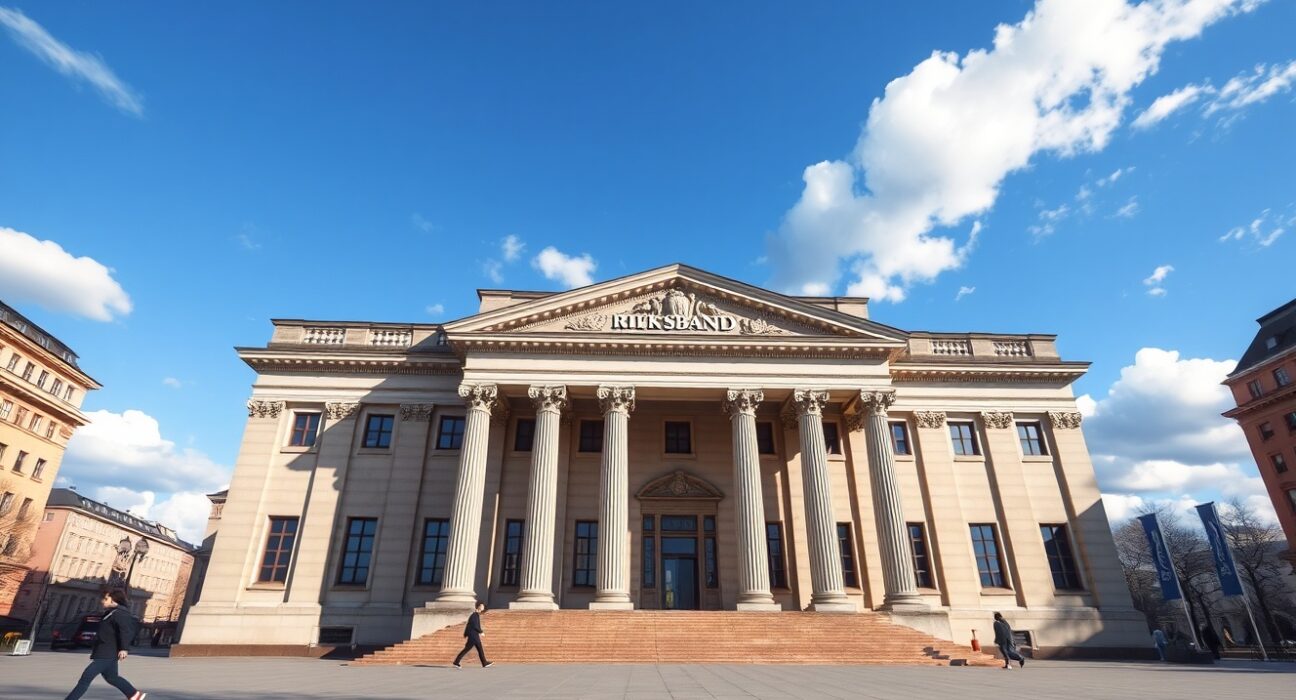
STOCKHOLM, March 2025 – The Swedish krona (SEK) faces potential headwinds as recent inflation data suggests the Riksbank may delay planned interest rate increases, according to analysis from TD Securities. This development comes amid shifting economic indicators that challenge previous monetary policy expectations. Consequently, currency traders and economists are closely monitoring Sweden’s economic trajectory for signals about future central bank actions.
SEK Currency Outlook Amid Changing Inflation Dynamics
Recent consumer price index (CPI) readings from Statistics Sweden show inflation moderating more quickly than anticipated. Specifically, the February 2025 report indicated annual inflation at 2.1%, marking a significant decline from the 2.7% recorded just three months earlier. This trend represents the fourth consecutive month of decreasing price pressures within the Swedish economy. Meanwhile, core inflation measures excluding volatile energy and food prices also demonstrate similar moderation patterns.
TD Securities analysts highlight several contributing factors to this inflationary cooling. First, global supply chain normalization continues to reduce imported price pressures. Second, domestic demand shows signs of softening amid higher borrowing costs implemented during previous tightening cycles. Third, energy price stabilization provides relief to household budgets and business operating costs. These combined elements create a complex environment for monetary policymakers.
Riksbank Monetary Policy Decision Framework
The Swedish central bank operates under a clear inflation targeting mandate, aiming to maintain price stability with a 2% annual inflation target. Historically, the Riksbank has demonstrated responsiveness to inflation deviations from this target. However, current circumstances present particular challenges for policy calibration. The bank must balance inflation control against economic growth considerations and financial stability concerns.
TD Securities Analysis and Market Implications
TD Securities researchers published detailed analysis suggesting the Riksbank may postpone previously anticipated rate hikes. Their assessment considers multiple economic variables beyond headline inflation figures. For instance, they examine wage growth trends, productivity metrics, and exchange rate effects on import prices. Furthermore, their models incorporate international monetary policy divergence, particularly European Central Bank actions affecting the euro-SEK cross rate.
The analysis identifies several key indicators that will influence Riksbank decisions:
- Inflation expectations: Survey-based measures of future price increases
- Labor market conditions: Unemployment rates and wage settlement outcomes
- Currency valuation: SEK exchange rate against major trading partner currencies
- Housing market stability: Property prices and household debt levels
Current data suggests inflation expectations remain anchored near the 2% target, reducing immediate pressure for aggressive tightening. Additionally, labor market indicators show gradual cooling rather than rapid deterioration. These conditions support a more patient approach to monetary policy adjustments.
Historical Context of Swedish Monetary Policy
Sweden’s monetary policy history provides important context for current decisions. The Riksbank maintained negative interest rates from 2015 to 2019, an unprecedented experiment in advanced economy central banking. Subsequently, the bank embarked on a normalization process interrupted by the pandemic response. This historical experience informs current policymaker caution regarding premature tightening or excessive delay.
A comparative analysis of recent Riksbank decisions reveals patterns in their response function:
| Period | Inflation Rate | Policy Action | SEK Performance |
|---|---|---|---|
| Q4 2023 | 3.2% | 25bps hike | SEK appreciation |
| Q1 2024 | 2.8% | 25bps hike | Mixed performance |
| Q3 2024 | 2.5% | Policy pause | SEK depreciation |
| Current | 2.1% | Expected delay | Downward pressure |
This historical pattern demonstrates the Riksbank’s data-dependent approach. Policy adjustments consistently follow confirmed trends rather than responding to single data points. Consequently, market participants now anticipate similar methodological consistency in the current environment.
Global Monetary Policy Divergence Effects
International central bank actions create important spillover effects for smaller open economies like Sweden. The European Central Bank’s policy trajectory particularly influences Riksbank decisions through trade and financial channels. Currently, ECB policymakers signal continued caution regarding inflation risks, potentially creating policy synchronization between the two institutions.
Meanwhile, other major central banks present contrasting approaches. The Federal Reserve maintains a relatively hawkish stance despite moderating U.S. inflation. Similarly, the Bank of England faces persistent service sector inflation pressures. These divergent paths create complex cross-currents for the Swedish krona across different currency pairs.
Economic Impact Assessment
Delayed rate hikes would produce several economic consequences. First, household borrowing costs would remain relatively stable, supporting consumption patterns. Second, business investment decisions might proceed with greater certainty about financing expenses. Third, government debt servicing costs would face less upward pressure, providing fiscal flexibility.
However, potential downsides also merit consideration. Extended accommodative policy could reignite inflationary pressures if demand rebounds unexpectedly. Additionally, currency depreciation might import inflation through higher import prices. Finally, financial stability risks could emerge if low rates encourage excessive risk-taking in asset markets.
Market Reactions and Currency Implications
Financial markets have begun pricing in reduced probability of near-term Riksbank tightening. Forward rate agreements (FRAs) now indicate approximately 40% likelihood of a rate increase within the next six months, down from 75% probability three months earlier. This repricing reflects both domestic inflation trends and global monetary policy developments.
The Swedish krona has responded accordingly, depreciating approximately 3% against the euro since the latest inflation data release. Currency analysts attribute this movement primarily to shifting interest rate differential expectations. Additionally, portfolio flows show reduced demand for SEK-denominated assets as yield prospects diminish.
Market participants identify several key levels for monitoring SEK performance:
- EUR/SEK: 11.50 as critical resistance level
- USD/SEK: 10.80 as important technical threshold
- GBP/SEK: 13.20 as potential breakout point
Breakthroughs beyond these levels could trigger accelerated moves as algorithmic trading systems respond to technical signals.
Expert Perspectives on Policy Timing
Financial institution analysts offer varied interpretations of the appropriate policy response. Some argue for preemptive action to maintain inflation target credibility. Others advocate patience to avoid unnecessary economic contraction. This diversity of opinion reflects genuine uncertainty about underlying economic dynamics.
Independent economists generally support a cautious approach given recent data trends. They emphasize that monetary policy operates with significant lags, requiring forward-looking assessment rather than backward-looking reaction. Consequently, most recommend waiting for additional data confirming inflation trends before committing to further tightening.
Conclusion
The SEK currency outlook remains closely tied to Swedish inflation developments and Riksbank policy responses. Current data suggests softening price pressures may justify delayed interest rate increases, as TD Securities analysis indicates. Market participants should monitor upcoming economic releases for confirmation of inflation trends. Furthermore, international monetary policy developments will continue influencing SEK valuation through relative interest rate differentials. Ultimately, the Riksbank faces complex trade-offs between inflation control and economic support in the coming quarters.
FAQs
Q1: What inflation rate is the Riksbank targeting?
The Swedish central bank maintains a 2% annual inflation target as its primary price stability objective. This symmetric target applies to the consumer price index with fixed interest rate (CPIF) measure.
Q2: How does Swedish inflation compare to other European countries?
Sweden’s current inflation rate of approximately 2.1% sits below the Eurozone average of 2.4% and significantly below Eastern European rates exceeding 5% in some countries.
Q3: What factors influence Riksbank interest rate decisions beyond inflation?
The central bank considers multiple variables including employment levels, wage growth, financial stability risks, housing market conditions, exchange rate effects, and international economic developments.
Q4: How might delayed rate hikes affect Swedish households?
Postponed increases would maintain relatively lower borrowing costs for mortgages and consumer loans, potentially supporting consumption but possibly extending housing market imbalances.
Q5: What upcoming data releases could change the policy outlook?
Key indicators include March inflation data (April 10), Q1 GDP figures (April 28), unemployment statistics (May 7), and the next Riksbank monetary policy report (April 25).
Disclaimer: The information provided is not trading advice, Bitcoinworld.co.in holds no liability for any investments made based on the information provided on this page. We strongly recommend independent research and/or consultation with a qualified professional before making any investment decisions.