
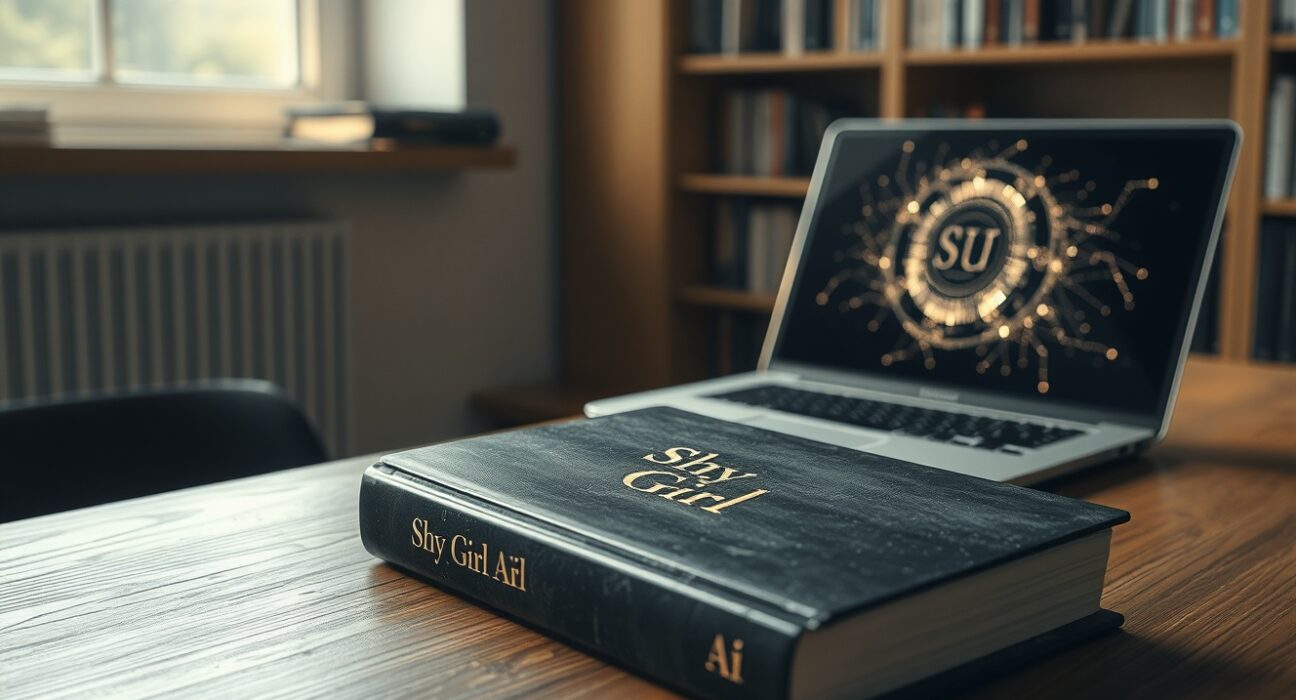
In a landmark decision that has sent shockwaves through the literary world, Hachette Book Group announced on March 21, 2026, that it would cease publication of the horror novel ‘Shy Girl’ across all markets due to mounting evidence of artificial intelligence-generated text. This unprecedented move by one of the world’s largest publishers highlights the escalating crisis of authenticity facing the global publishing industry as AI tools become more sophisticated and accessible. The controversy centers on author Mia Ballard’s disputed work, which was scheduled for a spring release in the United States and was already available in the United Kingdom.
Shy Girl AI Controversy Timeline and Key Events
The ‘Shy Girl’ saga unfolded rapidly over several weeks, beginning with reader suspicions and culminating in a major corporate reversal. Initially, self-published author Mia Ballard gained traction with her horror novel, leading to an acquisition deal with Hachette Book Group. However, shortly after the UK release, reviewers on platforms like GoodReads and YouTube began raising red flags. These early adopters noted unusual textual patterns, inconsistent narrative voice, and stylistic anomalies that suggested algorithmic generation rather than human authorship.
Consequently, The New York Times investigated these claims, querying Hachette directly about the allegations. The very next day, Hachette issued its stunning withdrawal announcement. The publisher cited a ‘thorough review of the text’ as the basis for its decision, though it provided no specific technical details about its detection methods. This sequence of events demonstrates how quickly AI-related controversies can escalate in the digital age, where crowd-sourced scrutiny can pressure major institutions into rapid response.
The Author’s Defense and Legal Threats
Author Mia Ballard vehemently denied the AI allegations in an email statement to The New York Times. Instead, she blamed a freelance editor she hired to polish the original self-published version. Ballard claimed this unnamed acquaintance introduced AI-generated content without her knowledge or consent during the editing process. ‘My mental health is at an all time low and my name is ruined for something I didn’t even personally do,’ Ballard stated, adding that she is pursuing legal action against the editor. This defense raises complex questions about accountability in collaborative creative processes where AI tools might be secretly deployed.
Broader Publishing Industry Implications
The ‘Shy Girl’ incident represents more than an isolated controversy; it signals a fundamental challenge to traditional publishing models. Industry observers like writer Lincoln Michel have noted that U.S. publishers typically perform minimal editing on previously published works they acquire. This standard practice now creates vulnerability, as publishers may lack robust vetting processes for detecting AI-generated content. The table below outlines the immediate impacts on different industry stakeholders:
| Stakeholder | Immediate Impact | Long-term Concern |
|---|---|---|
| Publishers | Increased scrutiny costs | Erosion of reader trust |
| Authors | Heightened suspicion | Burden of proof for authenticity |
| Readers | Questioning book authenticity | Diminished cultural value of literature |
| Retailers | Potential returns and refunds | Need for verification systems |
Furthermore, the controversy exposes significant gaps in industry standards. Currently, no universal protocol exists for disclosing AI assistance in creative works, unlike disclosure requirements in academic publishing or journalism. This case may accelerate calls for:
- Standardized disclosure statements for AI-assisted content
- Technical verification tools for manuscript submission
- Contractual clauses addressing AI use in publishing agreements
- Industry-wide ethics guidelines for AI in creative processes
Technological Detection and Authenticity Verification
While Hachette has not publicly detailed its detection methodology, the field of AI-generated text identification has advanced significantly since early tools like GPT-2 detectors emerged. Modern detection systems analyze multiple linguistic dimensions, including:
Perplexity (measure of text predictability), burstiness (variation in sentence structure), and semantic coherence across long passages. However, these systems face an arms race against increasingly sophisticated AI models that can mimic human writing patterns more convincingly. The ‘Shy Girl’ case demonstrates that while technical detection is possible, it often requires corroborating evidence from human readers who notice subtle inconsistencies in voice, emotional depth, or narrative logic.
Historical Context and Precedents
The ‘Shy Girl’ controversy follows several smaller-scale incidents that foreshadowed today’s crisis. In 2023, several science fiction magazines temporarily closed submissions after being flooded with AI-generated stories. In 2024, a poetry prize was rescinded when the winning entry was found to be AI-generated. However, the Hachette case represents the first time a major traditional publisher has withdrawn a commercially published novel specifically over AI concerns. This escalation suggests the problem has moved from niche communities to mainstream publishing.
Legal and Ethical Dimensions of AI Authorship
The ‘Shy Girl’ situation exposes numerous unresolved legal questions surrounding AI-generated content. Copyright law traditionally requires human authorship for protection, creating uncertainty about works with significant AI involvement. Contract law faces new challenges regarding representations and warranties about creative processes. Furthermore, consumer protection issues emerge when readers purchase works under assumptions of human creation. Ethically, the case raises questions about:
- Transparency obligations to readers about creative methods
- Fair competition between human and AI-assisted authors
- Cultural value of human creative expression versus algorithmic generation
- Labor implications for editors, writers, and publishing professionals
These complex issues will likely require legislative attention as AI tools become more pervasive in creative industries. Some jurisdictions have begun considering ‘AI disclosure’ laws similar to nutrition labels for creative content.
Conclusion
The Hachette Book Group’s decision to pull the ‘Shy Girl’ novel over AI concerns marks a pivotal moment for the publishing industry. This controversy highlights the urgent need for clear standards, detection technologies, and ethical frameworks as artificial intelligence transforms creative processes. While the specific facts of Mia Ballard’s case remain disputed, the broader implications are undeniable: publishers, authors, and readers must navigate a new landscape where the very definition of human creativity faces unprecedented technological challenges. The ‘Shy Girl’ incident will likely accelerate industry conversations about authenticity, transparency, and value in the age of generative AI.
FAQs
Q1: What exactly did Hachette Book Group announce regarding ‘Shy Girl’?
Hachette announced on March 21, 2026, that it would not publish the horror novel ‘Shy Girl’ in the United States as planned and would discontinue its sale in the United Kingdom. The publisher cited concerns that artificial intelligence was used to generate the text after conducting a review.
Q2: How did people first suspect the novel might be AI-generated?
Reviewers on GoodReads and YouTube platforms initially raised suspicions about the book’s authenticity. They noted unusual writing patterns, inconsistent narrative voice, and stylistic anomalies that suggested algorithmic generation rather than human authorship.
Q3: What has author Mia Ballard said in response to the allegations?
Ballard has denied using AI to write her novel. She claims an acquaintance she hired to edit the original self-published version introduced AI-generated content without her knowledge or consent. Ballard states she is pursuing legal action and that the controversy has severely impacted her mental health and reputation.
Q4: Why is this case particularly significant for the publishing industry?
This represents the first time a major traditional publisher has withdrawn a commercially published novel specifically over AI concerns. It exposes vulnerabilities in standard publishing practices, particularly the minimal editing often performed on acquired works, and highlights the lack of industry standards for detecting or disclosing AI-assisted content.
Q5: What are the broader implications of this controversy for future publishing?
The case will likely accelerate calls for standardized AI disclosure statements, development of better detection tools, contractual clauses addressing AI use, and industry-wide ethics guidelines. It also raises fundamental questions about copyright, consumer protection, and the cultural value of human versus AI-generated creative works.
Disclaimer: The information provided is not trading advice, Bitcoinworld.co.in holds no liability for any investments made based on the information provided on this page. We strongly recommend independent research and/or consultation with a qualified professional before making any investment decisions.