

The silver price forecast turned bearish this week as XAG/USD experienced significant downward pressure, primarily driven by unexpectedly strong US economic indicators and a consequent surge in the US Dollar’s value. Market analysts observed the precious metal breaking below key technical support levels, reflecting shifting investor sentiment away from safe-haven assets. This movement represents a critical juncture for commodities traders and long-term investors monitoring inflation hedges. Consequently, the immediate outlook for silver appears constrained by macroeconomic forces favoring dollar-denominated assets over non-yielding metals.
Silver Price Forecast: Analyzing the XAG/USD Decline
Recent trading sessions witnessed the silver price forecast undergoing substantial revision following the release of robust US economic data. The XAG/USD pair, which tracks the price of silver in US dollars, declined approximately 3.2% over a five-day period, marking one of the steepest weekly drops in the current quarter. This decline directly correlates with strengthening economic indicators from the United States, including manufacturing output and employment figures. Market participants consequently adjusted their positions, anticipating a more hawkish stance from the Federal Reserve regarding interest rates. Historical data reveals that silver typically exhibits heightened volatility during periods of dollar strength, often underperforming gold in similar conditions.
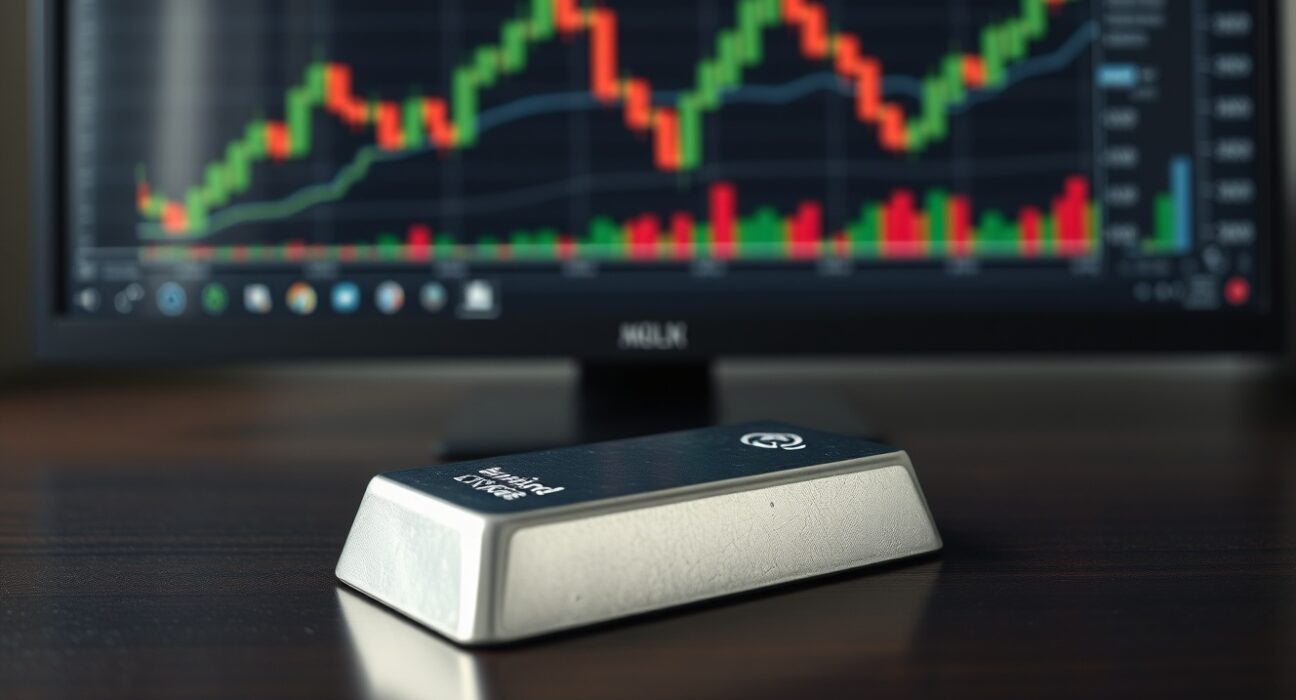
Technical analysis further supports the bearish silver price forecast. The XAG/USD pair breached the critical 50-day moving average, a key support level monitored by institutional traders. Additionally, trading volume increased significantly during the decline, confirming genuine selling pressure rather than temporary market noise. Chart patterns suggest the next major support zone lies approximately 5% below current levels, potentially inviting bargain-seeking buyers. However, macroeconomic fundamentals currently overshadow technical signals, creating a challenging environment for trend reversal predictions.
US Economic Data’s Impact on Precious Metals
Strong US economic data represents the primary catalyst for the revised silver price forecast. Recent reports indicated unexpected growth in several key sectors, fundamentally altering market expectations. The Institute for Supply Management’s manufacturing index surpassed consensus estimates, signaling expansion in industrial activity. Simultaneously, weekly jobless claims fell to multi-month lows, suggesting continued labor market resilience. These developments collectively strengthened the case for maintaining elevated interest rates, diminishing silver’s appeal as an alternative investment.
The relationship between economic indicators and precious metals is well-documented in financial literature. Robust data typically bolsters the US Dollar through two primary mechanisms: increased foreign investment in US assets and expectations of tighter monetary policy. A stronger dollar makes silver more expensive for holders of other currencies, reducing international demand. Furthermore, higher interest rates increase the opportunity cost of holding non-yielding assets like silver, prompting capital rotation into interest-bearing instruments. The current economic landscape exemplifies this dynamic with particular clarity.
Expert Analysis and Market Sentiment
Financial institutions and commodity analysts have adjusted their silver price forecast in response to recent developments. According to market research from leading investment banks, the consensus outlook for silver has shifted from cautiously optimistic to neutral or slightly bearish for the coming quarter. Experts cite the dollar’s momentum and changing interest rate expectations as dominant factors. Some analysts, however, note that industrial demand for silver in renewable energy and electronics sectors could provide underlying support, potentially limiting further declines.
Market sentiment indicators reflect this cautious stance. The Commodity Futures Trading Commission’s weekly report showed managed money accounts reducing their net-long positions in silver futures for the third consecutive week. This reduction in speculative interest often precedes extended periods of price consolidation or decline. Meanwhile, physical silver holdings in exchange-traded funds experienced modest outflows, though not at levels suggesting panic selling. The overall sentiment suggests a wait-and-see approach among institutional investors awaiting clearer signals on inflation trajectories.
Historical Context and Comparative Performance
Examining historical patterns provides valuable context for the current silver price forecast. During previous cycles of dollar strength and rising interest rates, silver has demonstrated predictable behavioral patterns. Analysis of the past decade reveals that silver typically underperforms gold during initial phases of monetary tightening, often experiencing sharper corrections. However, silver has also shown stronger recovery potential once rate hike cycles conclude, benefiting from both monetary and industrial demand factors.
The following table illustrates silver’s performance during similar macroeconomic environments:
| Period | US Dollar Change | Silver Price Change | Primary Driver |
|---|---|---|---|
| 2016-2017 | +7.2% | -9.8% | Fed Rate Hikes |
| 2018-2019 | +4.5% | -12.3% | Trade Policy |
| 2022-2023 | +11.8% | -15.6% | Aggressive Tightening |
Comparative analysis with other assets further illuminates silver’s position. While silver declined, other inflation-sensitive assets exhibited mixed performance. Gold demonstrated relative resilience, declining only modestly compared to silver’s sharper drop. Industrial metals like copper showed greater stability, supported by manufacturing data. This divergence highlights silver’s unique position as both a monetary and industrial metal, subject to competing influences during economic transitions.
Global Factors Influencing Silver Markets
Beyond US economic data, several global factors contribute to the silver price forecast. Chinese industrial demand remains a crucial variable, as the country accounts for approximately 18% of global silver consumption. Recent manufacturing surveys from China showed modest improvement, though not sufficient to offset dollar-driven headwinds. European economic indicators presented a mixed picture, with some nations showing resilience while others faced contractionary pressures. This global economic fragmentation creates additional uncertainty for silver markets.
Geopolitical developments also warrant consideration in comprehensive market analysis. While traditional safe-haven flows into precious metals have been limited recently, escalating tensions in certain regions could alter this dynamic. Historical precedent suggests that geopolitical events typically produce short-term spikes in silver prices rather than sustained rallies, unless they significantly impact energy markets or global trade patterns. Current assessments indicate that geopolitical risk premiums in silver prices remain relatively contained, though monitoring is essential.
Industrial Demand and Technological Applications
Silver’s fundamental outlook includes significant support from growing industrial applications. The metal plays crucial roles in several high-growth sectors:
- Renewable Energy: Photovoltaic solar panels require substantial silver content, with demand projected to increase 15% annually
- Electronics: 5G infrastructure and electric vehicle components utilize silver for conductivity and durability
- Medical Technology: Antimicrobial applications in healthcare settings continue to expand
- Green Technology: Hydrogen production and energy storage systems incorporate silver components
These demand sources provide structural support that differentiates silver from purely monetary assets. Industry analysts project that technological applications could account for over 60% of total silver demand within five years, potentially altering its price dynamics relative to traditional drivers. This evolving demand profile suggests that while short-term price movements respond to monetary factors, long-term valuation may increasingly reflect industrial fundamentals.
Conclusion
The silver price forecast currently reflects bearish pressure as XAG/USD declines amid strong US economic data and dollar appreciation. Technical breakdowns and shifting sentiment indicators suggest continued near-term challenges for the precious metal. However, underlying industrial demand and potential shifts in monetary policy expectations could establish support levels and eventual recovery pathways. Market participants should monitor upcoming economic releases, particularly inflation data and Federal Reserve communications, for signals that might alter the current trajectory. While the immediate silver price forecast appears constrained, the metal’s dual nature as both monetary asset and industrial commodity suggests potential for divergence from purely dollar-driven patterns as market conditions evolve.
FAQs
Q1: What caused the recent decline in silver prices?
The primary driver was stronger-than-expected US economic data, which boosted the US Dollar and raised expectations that interest rates might remain elevated for longer. This made non-yielding assets like silver less attractive to investors.
Q2: How does a stronger US Dollar affect silver prices?
Since silver is priced in US dollars globally, a stronger dollar makes it more expensive for buyers using other currencies, reducing international demand. Additionally, dollar strength often correlates with higher US interest rates, increasing the opportunity cost of holding silver.
Q3: Is the current silver price decline different from historical patterns?
The current decline follows established historical patterns where silver typically underperforms during periods of dollar strength and monetary tightening. However, the magnitude and speed of the decline reflect particularly robust economic data that exceeded market expectations.
Q4: What support levels are analysts watching for silver?
Technical analysts are monitoring several key levels, including the recent lows around $24.50 per ounce and longer-term support near $23.80. A break below these levels could signal further downward momentum, while holding above them might indicate consolidation.
Q5: Could industrial demand offset the current price pressure on silver?
While growing industrial demand provides fundamental support, it typically acts as a longer-term factor rather than an immediate counterbalance to currency and interest rate movements. Significant price recovery would likely require either dollar weakness or clearer signs that industrial demand is accelerating beyond current projections.
Disclaimer: The information provided is not trading advice, Bitcoinworld.co.in holds no liability for any investments made based on the information provided on this page. We strongly recommend independent research and/or consultation with a qualified professional before making any investment decisions.
