
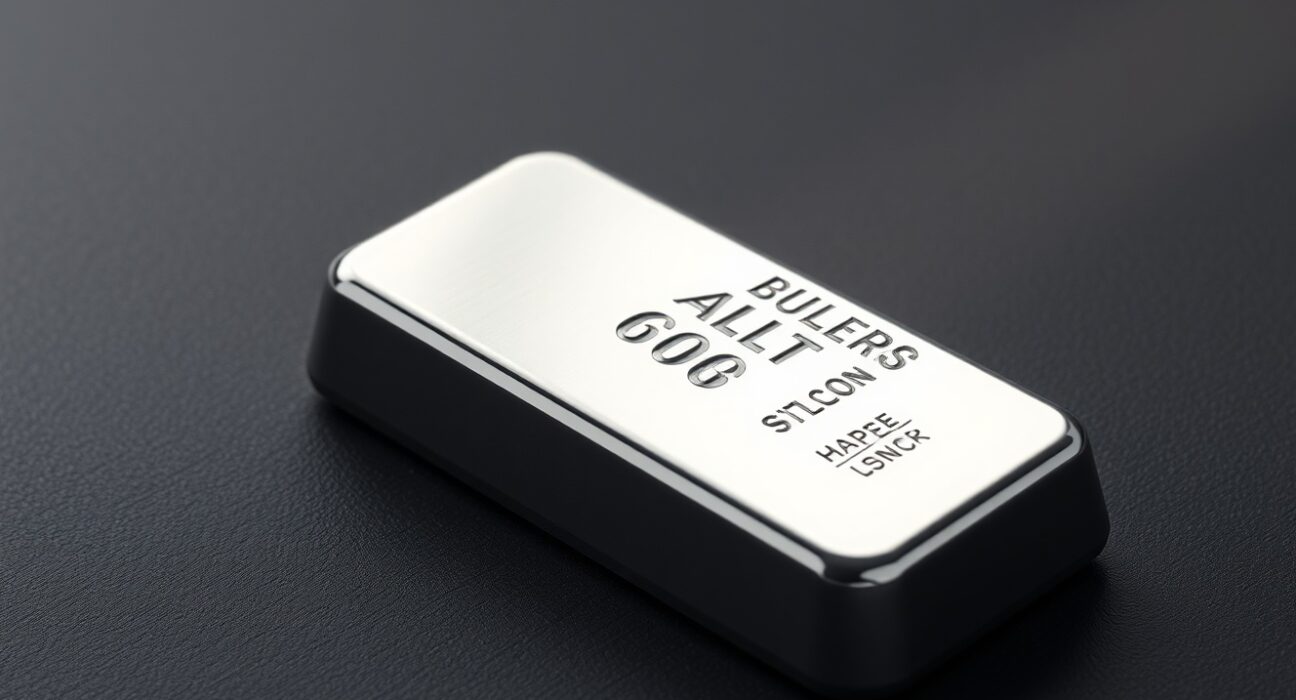
Global silver markets entered a period of consolidation in early 2025, with the XAG/USD pair hovering persistently around the $81.00 level. This pivotal stall reflects a significant shift in macroeconomic expectations, primarily driven by fading anticipations for imminent interest rate cuts from the U.S. Federal Reserve. Consequently, traders and analysts are closely monitoring central bank signals and inflation data for the next directional catalyst.
Silver Price Forecast: Analyzing the $81.00 Pivot Point
The $81.00 level has emerged as a critical technical and psychological threshold for silver. Market participants previously viewed this zone as a springboard for a rally toward record highs. However, recent price action shows consolidation. This behavior indicates a battle between bullish industrial demand fundamentals and bearish financial headwinds from rising real yields. Several key factors are currently influencing this equilibrium.
- Technical Resistance: The $81.00-$82.50 range has acted as a supply zone, capping several rally attempts throughout Q4 2024.
- Dollar Correlation: The U.S. Dollar Index (DXY) has found support, creating indirect pressure on dollar-denominated commodities like silver.
- Moving Averages: The 50-day and 200-day simple moving averages are converging near $79.50, suggesting a potential compression before a larger breakout.
Furthermore, trading volumes have declined during this consolidation phase. This decline often precedes a significant price movement. Market technicians are watching for a sustained close above $82.50 or a breakdown below $79.00 to confirm the next major trend.
The Federal Reserve’s Pivotal Role in Precious Metals
The primary driver behind silver’s stalled momentum is the evolving narrative surrounding U.S. monetary policy. In late 2024, markets had priced in a high probability of Federal Reserve rate cuts commencing in the first half of 2025. This expectation weakened as subsequent economic data, particularly concerning employment and core services inflation, remained resilient. Higher interest rates typically strengthen the U.S. dollar and increase the opportunity cost of holding non-yielding assets like silver.
| Economic Indicator | Recent Data (Q4 2024) | Impact on Fed Policy |
|---|---|---|
| Core PCE Inflation | +2.8% YoY | Supports a “higher for longer” stance |
| Non-Farm Payrolls | Average +180K/month | Indicates a robust labor market |
| Retail Sales | Moderate growth | Suggests consumer resilience |
As a result, Fed officials have adopted a more cautious tone in recent communications. They emphasize the need for greater confidence that inflation is moving sustainably toward the 2% target before considering policy easing. This recalibration has directly impacted financial markets, leading to an adjustment in the pricing of all rate-sensitive assets, including precious metals.
Expert Analysis on Industrial Demand vs. Financial Pressures
Market analysts highlight the unique dual nature of silver as an asset. On one hand, strong industrial demand from the solar energy, electronics, and automotive sectors provides a fundamental price floor. The global energy transition continues to drive significant photovoltaic (PV) panel production, which consumes substantial amounts of silver. Conversely, financial market dynamics, particularly real Treasury yields and dollar strength, exert powerful short-term influence. When real yields rise, as they do when rate cut expectations fade, the appeal of holding silver diminishes relative to interest-bearing assets.
This creates a complex environment where physical market tightness contends with macroeconomic headwinds. Warehouse inventories for silver in major exchanges like the COMEX have shown periodic draws, indicating solid underlying physical demand. However, these supportive fundamentals are currently being overshadowed by the dominant monetary policy narrative. Experts suggest that a decisive break in either direction will require a catalyst that tips this balance, such as a clear shift in Fed guidance or a surprise in monthly inflation prints.
Historical Context and Comparative Market Performance
Examining silver’s performance relative to other assets provides additional context. Historically, silver exhibits higher volatility than gold, often amplifying gold’s moves. During the recent period, the gold-to-silver ratio has fluctuated within a familiar range. This indicates that silver is not underperforming its precious metals peer in a disproportionate manner. Instead, the entire complex is experiencing pressure from the same macroeconomic forces. Meanwhile, other commodities, such as copper and oil, have also faced similar challenges from a strengthening dollar, though their individual supply-demand stories create divergences.
Past instances of Fed policy pivots, such as the “taper tantrum” of 2013 or the post-2018 pause, offer valuable lessons. In those cycles, precious metals often experienced initial weakness as rates rose or expectations adjusted, followed by stabilization and eventual rallies once the market fully digested the new policy path. The current environment suggests we may be in that digestion phase. Market participants are reassessing the timeline for monetary easing and repricing assets accordingly, leading to the observed consolidation in silver prices.
Conclusion
The silver price forecast remains tightly linked to the path of U.S. monetary policy. The XAG/USD pair’s consolidation around $81.00 directly results from fading Federal Reserve rate cut bets, which have bolstered the dollar and real yields. While robust industrial demand provides a fundamental cushion, the short-term trajectory will likely hinge on incoming inflation and employment data that guide the Fed’s hand. A break above $82.50 or below $79.00 will signal the market’s chosen direction, making the coming weeks critical for silver traders and long-term investors monitoring this pivotal silver price forecast.
FAQs
Q1: Why is the silver price stuck near $81.00?
The primary reason is a shift in market expectations regarding Federal Reserve interest rate cuts. Stronger-than-expected economic data has led investors to push back the timeline for anticipated easing, strengthening the U.S. dollar and pressuring dollar-denominated commodities like silver.
Q2: What does XAG/USD mean?
XAG is the ISO 4217 currency code for one troy ounce of silver. USD is the code for the U.S. dollar. Therefore, XAG/USD represents the exchange rate, showing how many U.S. dollars are needed to purchase one ounce of silver.
Q3: How do Federal Reserve rate decisions affect silver?
Higher U.S. interest rates generally strengthen the dollar, making silver more expensive for holders of other currencies. They also increase the “opportunity cost” of holding silver, which pays no interest, versus yield-bearing assets like Treasury bonds.
Q4: What is the difference between silver and gold in this market environment?
Silver has stronger industrial uses (e.g., in electronics and solar panels), giving it demand support unrelated to investment flows. However, it is also more volatile. Both metals are currently facing similar headwinds from monetary policy, but silver’s price movements are typically more pronounced.
Q5: What key data should I watch to forecast silver’s next move?
The most critical indicators are U.S. Consumer Price Index (CPI) and Personal Consumption Expenditures (PCE) inflation reports, Federal Open Market Committee (FOMC) meeting statements and economic projections, and U.S. non-farm payrolls data. These directly influence interest rate expectations.
Disclaimer: The information provided is not trading advice, Bitcoinworld.co.in holds no liability for any investments made based on the information provided on this page. We strongly recommend independent research and/or consultation with a qualified professional before making any investment decisions.