
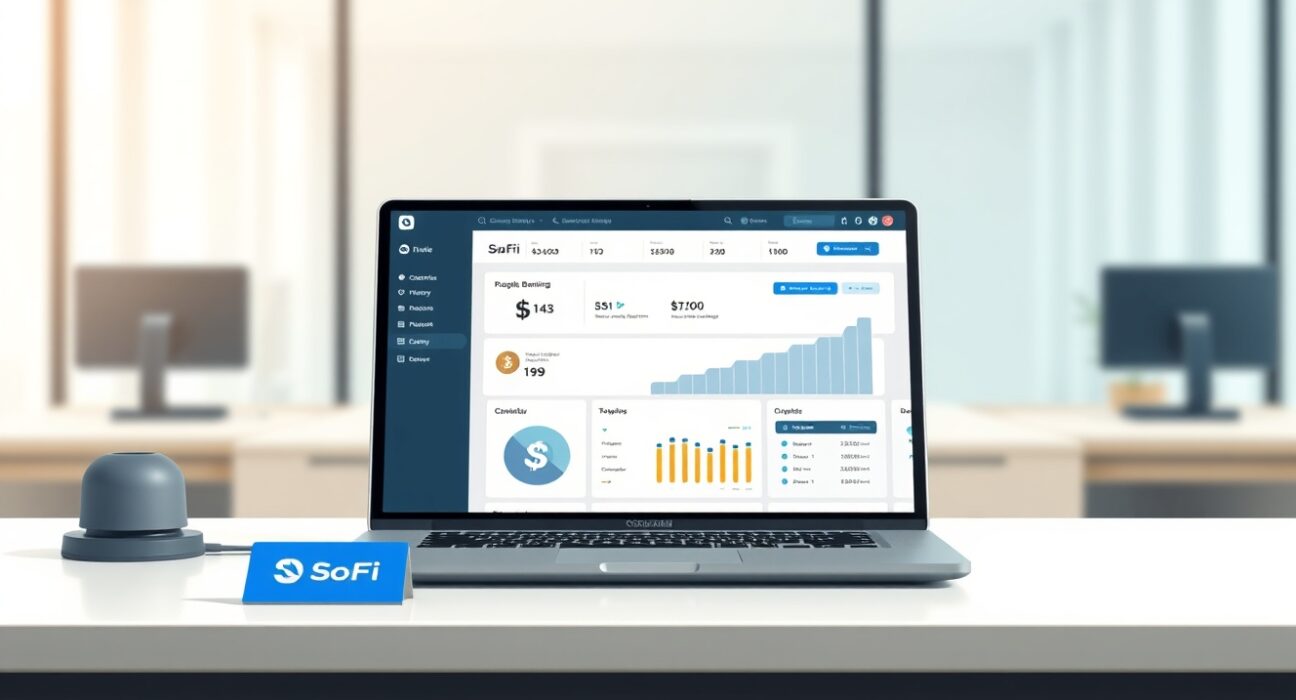
In a significant move that bridges traditional finance with digital assets, SoFi Technologies has launched its comprehensive Big Business Banking platform with integrated cryptocurrency support, fundamentally changing how companies manage their financial operations in the United States as of March 2025.
SoFi’s Big Business Banking Platform Redefines Corporate Finance
SoFi Technologies, the prominent U.S. fintech platform, has officially introduced its Big Business Banking service. This innovative platform represents a substantial advancement in corporate financial management. Consequently, businesses can now handle both traditional fiat currency and cryptocurrency within a single, unified environment. The service specifically addresses the fragmented nature of current corporate financial management. Previously, companies needed separate relationships with traditional banks, custody providers, and cryptocurrency service firms. Now, SoFi consolidates these functions into one comprehensive solution.
The platform enables businesses to manage deposits, execute fund transfers, and process payments seamlessly. Moreover, it operates within a single regulatory framework, providing clarity and compliance assurance. This development arrives at a crucial moment in financial technology evolution. Traditional banking institutions have increasingly explored digital asset integration. However, few have delivered fully integrated solutions for corporate clients. SoFi’s platform therefore represents a notable milestone in mainstream cryptocurrency adoption for business applications.
The Evolution of Corporate Banking and Cryptocurrency Integration
The financial technology landscape has undergone dramatic transformation over the past decade. Initially, cryptocurrency services existed completely separate from traditional banking. Subsequently, some institutions began offering limited digital asset services. However, these typically required separate accounts and interfaces. SoFi’s integrated approach marks a significant departure from this segmented model.
Several factors have driven this convergence. First, increasing corporate demand for cryptocurrency exposure has created market pressure. Second, regulatory clarity has improved in certain jurisdictions. Third, technological advancements have enabled more secure integration. Fourth, competitive pressures have forced innovation in the financial sector. SoFi’s platform directly addresses these converging trends.
Regulatory Compliance and Security Framework
The platform operates within established U.S. regulatory parameters. Specifically, it complies with Financial Crimes Enforcement Network (FinCEN) guidelines and relevant state regulations. Additionally, the service incorporates robust security protocols for digital asset protection. These include multi-signature wallet technology and institutional-grade custody solutions. Furthermore, the platform maintains comprehensive transaction monitoring systems. These systems help ensure compliance with anti-money laundering requirements.
Security measures extend across both fiat and cryptocurrency operations. For instance, the platform employs advanced encryption for all transactions. It also utilizes biometric authentication for account access. Regular security audits further strengthen the system’s integrity. These comprehensive protections address common corporate concerns about digital asset security.
Functional Capabilities and Business Applications
The Big Business Banking platform offers numerous practical applications for corporate clients. Primarily, it simplifies treasury management for companies holding digital assets. Businesses can now manage traditional and cryptocurrency holdings through one interface. This consolidation reduces administrative complexity significantly.
Key platform features include:
- Unified account management for fiat and cryptocurrency holdings
- Integrated payment processing supporting multiple currency types
- Real-time reporting across all financial assets
- Regulatory compliance tools for transaction monitoring
- API connectivity for integration with existing financial systems
The platform particularly benefits companies with specific operational needs. Technology firms frequently receive cryptocurrency payments. E-commerce businesses increasingly accept digital assets. International companies require efficient cross-border settlement. Investment firms manage diversified asset portfolios. All these entities gain operational efficiency through SoFi’s integrated approach.
Market Context and Competitive Landscape
SoFi enters a competitive but rapidly evolving market segment. Traditional banks have cautiously approached cryptocurrency services. Meanwhile, specialized cryptocurrency firms often lack comprehensive banking capabilities. SoFi’s hybrid position offers distinct advantages in this environment.
The corporate banking market demonstrates clear trends toward digital asset integration. According to industry analysis, approximately 23% of U.S. businesses now hold cryptocurrency as part of their treasury strategy. Furthermore, 42% of technology companies accept cryptocurrency payments. These statistics highlight growing corporate engagement with digital assets.
Several factors differentiate SoFi’s offering from existing solutions:
| Feature | Traditional Banks | Cryptocurrency Exchanges | SoFi Big Business Banking |
|---|---|---|---|
| Fiat Banking Services | Comprehensive | Limited | Comprehensive |
| Cryptocurrency Services | Limited | Comprehensive | Integrated |
| Regulatory Framework | Established | Evolving | Integrated |
| Unified Interface | No | No | Yes |
This comparative positioning gives SoFi significant market opportunity. The platform addresses a clear gap in available financial services. It provides the regulatory certainty of traditional banking with the innovation of cryptocurrency services.
Implementation and Adoption Considerations
Businesses considering the platform must evaluate several implementation factors. First, integration with existing financial systems requires careful planning. Second, staff training ensures effective platform utilization. Third, regulatory compliance demands ongoing attention. Fourth, security protocols necessitate thorough understanding.
The platform’s adoption will likely follow a gradual trajectory. Early adopters will probably include technology companies and financial services firms. These organizations typically possess greater cryptocurrency familiarity. Subsequently, adoption may expand to traditional businesses exploring digital assets. This gradual adoption pattern mirrors historical technology integration in financial services.
Future Development and Industry Implications
SoFi’s platform launch may trigger broader industry developments. Other financial institutions will likely accelerate their cryptocurrency integration plans. Regulatory bodies may develop more specific guidelines for hybrid platforms. Technology providers will probably create complementary services. These developments could collectively advance corporate cryptocurrency adoption.
The platform’s success metrics will include several key indicators. Account adoption rates will demonstrate market acceptance. Transaction volumes will indicate platform utilization. Security incident frequency will reflect system robustness. Customer satisfaction scores will measure service quality. These metrics will collectively determine the platform’s long-term viability.
Conclusion
SoFi’s Big Business Banking platform represents a substantial innovation in corporate financial services. The integrated cryptocurrency support addresses growing business demand for digital asset management. Moreover, the unified regulatory environment provides crucial compliance assurance. This development signals increasing maturity in cryptocurrency integration with traditional finance. Consequently, businesses gain more efficient tools for modern financial management. The platform’s success may influence broader financial industry evolution toward integrated digital asset services.
FAQs
Q1: What types of businesses can use SoFi’s Big Business Banking platform?
Any registered business entity in eligible U.S. jurisdictions can potentially utilize the platform, though specific eligibility criteria apply based on business type, size, and compliance requirements.
Q2: Which cryptocurrencies does the platform support?
While specific cryptocurrency offerings may evolve, the platform initially supports major digital assets with established regulatory clarity, including Bitcoin and Ethereum, with plans to expand based on market demand and regulatory developments.
Q3: How does the platform ensure security for cryptocurrency holdings?
The platform employs institutional-grade custody solutions, multi-signature wallet technology, advanced encryption, biometric authentication, and regular security audits to protect digital assets.
Q4: Can businesses use the platform for international transactions?
Yes, the platform supports cross-border transactions for both fiat and cryptocurrency, though specific capabilities may vary by jurisdiction based on regulatory considerations.
Q5: How does this platform differ from using separate banking and cryptocurrency services?
The platform provides unified account management, integrated reporting, consolidated compliance oversight, and a single interface for all financial operations, reducing administrative complexity compared to maintaining separate relationships with different service providers.
Disclaimer: The information provided is not trading advice, Bitcoinworld.co.in holds no liability for any investments made based on the information provided on this page. We strongly recommend independent research and/or consultation with a qualified professional before making any investment decisions.