
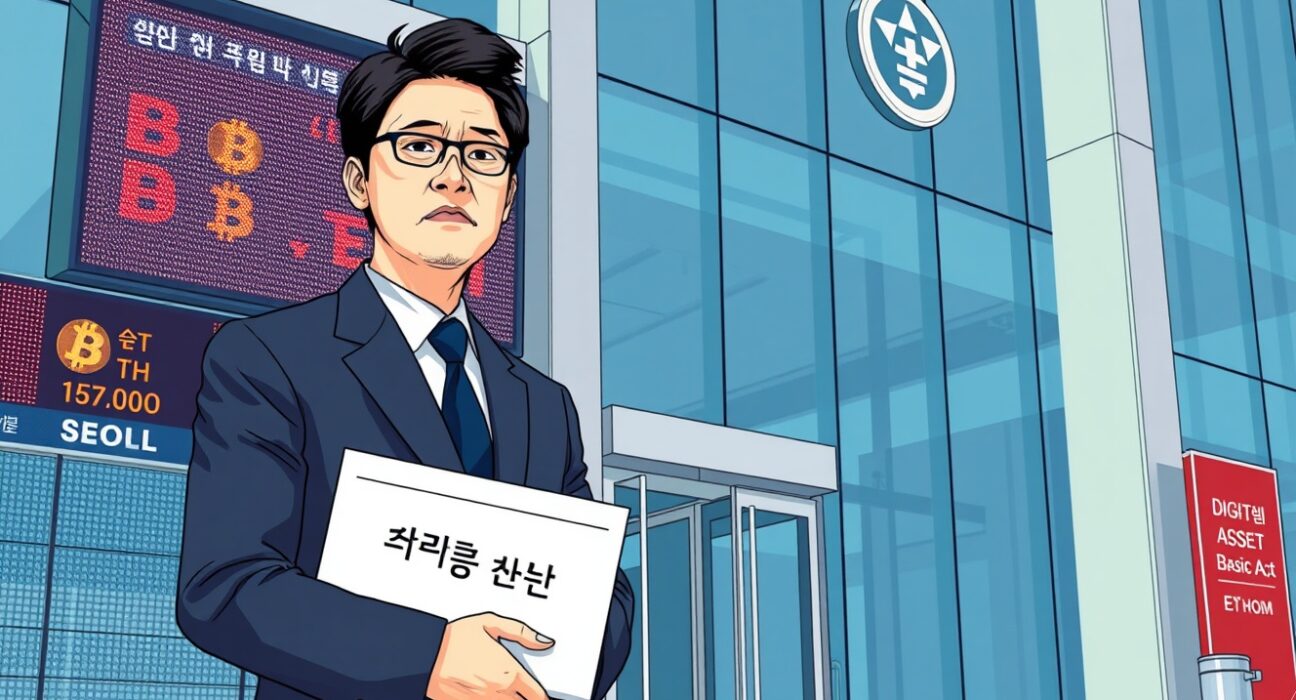
SEOUL, South Korea – March 2025 – In a landmark regulatory development, South Korean authorities are moving decisively to cap ownership stakes in cryptocurrency exchanges at 20% for individuals and 34% for corporations, fundamentally reshaping the nation’s digital asset landscape and forcing major shareholders to divest significant holdings.
South Korea’s Crypto Exchange Ownership Caps Explained
The ruling Democratic Party’s Digital Asset Task Force and South Korean financial authorities have reached a preliminary agreement to include these ownership limits in the forthcoming Basic Act on Digital Assets. This regulatory framework represents South Korea’s most comprehensive attempt to govern the cryptocurrency sector systematically. The proposal will undergo final confirmation at a party-government consultative meeting before becoming law.
These proposed ceilings exceed the 15-20% range previously discussed by policymakers. However, they still mandate substantial divestments from major shareholders of leading exchanges like Upbit, Bithumb, and Korbit. The caps apply to individuals including related parties, preventing family members or associates from collectively exceeding the 20% threshold.
Regulatory Context and Historical Background
South Korea’s cryptocurrency regulation has evolved significantly since the 2017-2018 boom period. Initially, authorities focused on anti-money laundering measures and investor protection. Subsequently, they implemented real-name trading accounts and strengthened know-your-customer requirements. The current ownership cap proposal represents a natural progression toward market structure regulation.
Financial Services Commission data reveals South Korea’s cryptocurrency trading volume consistently ranks among the world’s highest. This market significance necessitates robust regulatory frameworks. The Basic Act on Digital Assets, first proposed in 2021, aims to provide comprehensive legal clarity for digital assets, exchanges, and service providers.
Comparative International Regulatory Approaches
South Korea’s ownership cap approach differs markedly from other jurisdictions. For instance, Japan focuses on exchange licensing requirements rather than ownership restrictions. Meanwhile, the United States employs a securities-based regulatory framework through the SEC. The European Union’s Markets in Crypto-Assets regulation emphasizes consumer protection and market integrity.
The table below illustrates key regulatory differences:
| Jurisdiction | Primary Approach | Ownership Restrictions |
|---|---|---|
| South Korea | Ownership caps & comprehensive act | 20% individual, 34% corporate |
| Japan | Exchange licensing system | No specific caps |
| United States | Securities regulation | No exchange ownership caps |
| European Union | MiCA framework | No ownership restrictions |
Immediate Impacts on Major Korean Exchanges
The ownership caps will directly affect South Korea’s largest cryptocurrency platforms. Upbit, operated by Dunamu Inc., dominates the market with approximately 80% share. Bithumb, the second-largest exchange, has undergone multiple ownership changes in recent years. Korbit, one of Korea’s oldest exchanges, maintains significant market presence.
Major shareholders must now prepare for substantial divestments. The regulatory timeline suggests compliance periods will follow the law’s enactment. Exchange operators face several strategic options:
- Gradual share sales to institutional or retail investors
- Strategic partnerships with financial institutions
- Corporate restructuring to distribute ownership
- Public listings to broaden shareholder base
Market Concentration and Competition Concerns
Financial authorities express concern about excessive market concentration. Currently, Upbit’s dominance creates potential systemic risks. The ownership caps aim to diversify control and encourage competitive dynamics. Additionally, they seek to prevent conflicts of interest and ensure proper governance.
Historical precedents exist in traditional finance where ownership restrictions promote market stability. Banking regulations often limit individual ownership in financial institutions. The cryptocurrency sector now faces similar structural requirements.
Broader Implications for Crypto Ecosystem
The ownership caps extend beyond exchange operators to affect the entire digital asset ecosystem. Venture capital firms with exchange investments must reconsider their positions. Corporate investors from traditional sectors may increase participation given the 34% corporate cap. Retail investors could gain access to exchange equity previously unavailable.
Industry analysts predict several secondary effects:
- Increased institutional participation in exchange ownership
- Enhanced corporate governance through diversified boards
- Potential international expansion by Korean exchanges
- Improved investor confidence through regulatory clarity
Technological and Operational Considerations
Exchange operators must maintain technological excellence despite ownership changes. Security systems, trading engines, and customer platforms require continuous investment. New shareholders must understand the technical complexities of cryptocurrency exchange operations. The regulatory framework includes provisions for technical standards and security requirements.
Operational resilience remains paramount given past exchange incidents globally. South Korean authorities emphasize security audits and risk management protocols. Ownership diversification should not compromise operational integrity or security standards.
Legal Framework and Implementation Timeline
The Basic Act on Digital Assets provides the legislative foundation for ownership caps. The National Assembly will review the final proposal before passage. Implementation will follow a phased approach with transition periods for compliance. Financial authorities will establish detailed enforcement guidelines.
The regulatory timeline includes several key milestones:
- Party-government consultation for final agreement
- National Assembly review and potential amendments
- Presidential approval and official promulgation
- Enforcement decree development by financial authorities
- Compliance period commencement for affected exchanges
International Coordination and Standards
South Korean regulators coordinate with international counterparts through organizations like the Financial Action Task Force. Global standards for cryptocurrency regulation continue evolving. The ownership cap approach may influence other jurisdictions considering similar measures. Cross-border regulatory cooperation remains essential given cryptocurrency’s global nature.
Korean exchanges operating internationally must navigate multiple regulatory regimes. The ownership caps apply specifically to domestic operations but may affect global strategic decisions. International investors monitor these developments for implications beyond South Korea.
Conclusion
South Korea’s proposed cryptocurrency exchange ownership caps at 20% for individuals and 34% for corporations represent a significant regulatory advancement. These measures address market concentration concerns while promoting diversified ownership structures. Major exchange shareholders must prepare for substantial divestments as the Basic Act on Digital Assets progresses toward implementation. The South Korean crypto regulation framework continues evolving with profound implications for exchanges, investors, and the broader digital asset ecosystem.
FAQs
Q1: When will South Korea’s crypto exchange ownership caps take effect?
The caps will become effective after the Basic Act on Digital Assets passes the National Assembly and receives presidential approval. Authorities will then establish a compliance timeline for affected exchanges.
Q2: How will the ownership caps affect Upbit’s market dominance?
Upbit’s parent company Dunamu will need to reduce ownership stakes, potentially diluting control. This may create opportunities for other exchanges to gain market share through improved competitiveness.
Q3: Can corporate entities form consortiums to exceed the 34% cap?
No, the regulations specifically prevent related parties from collectively exceeding ownership limits. Authorities will define relationship criteria to prevent circumvention.
Q4: Will foreign investors face different ownership restrictions?
The current proposal applies equally to domestic and foreign investors. However, additional foreign investment regulations may apply depending on the investor’s country of origin.
Q5: How do ownership caps compare to traditional financial regulations?
Similar ownership restrictions exist in banking and securities sectors globally. The approach aligns with financial stability principles while adapting to cryptocurrency’s unique characteristics.
Disclaimer: The information provided is not trading advice, Bitcoinworld.co.in holds no liability for any investments made based on the information provided on this page. We strongly recommend independent research and/or consultation with a qualified professional before making any investment decisions.
