

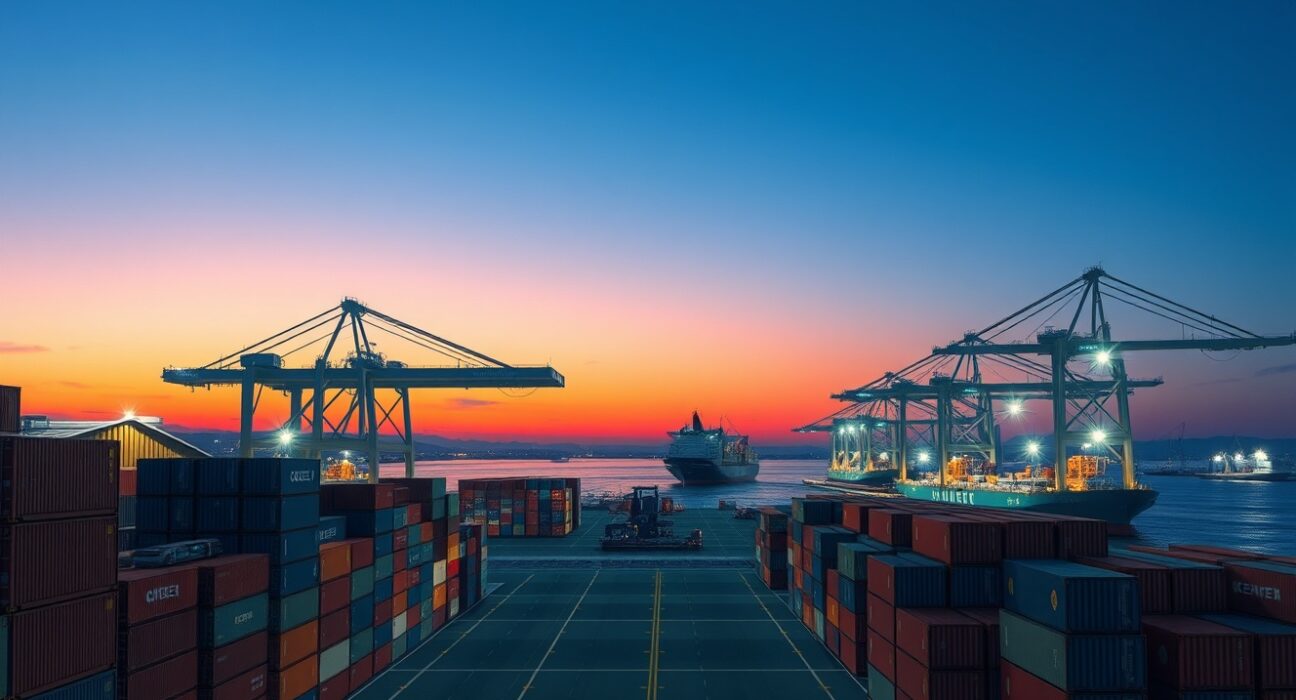
SEOUL, South Korea – March 2025: South Korea’s economy demonstrates remarkable trade resilience while confronting persistent energy-driven consumer price inflation, according to recent analysis from DBS Bank. The Asian nation’s export-oriented manufacturing sector continues to show strength despite global economic headwinds. Meanwhile, energy price volatility significantly influences the country’s Consumer Price Index trajectory. This dual dynamic presents both opportunities and challenges for policymakers in Seoul.
South Korea’s Trade Resilience in Global Context
South Korea maintains robust export performance through strategic diversification and technological advancement. The country’s trade surplus expanded consistently during the first quarter of 2025. Semiconductor exports, particularly advanced memory chips, drive this positive trend. Automotive and battery shipments to North America and Europe also contribute substantially. Furthermore, free trade agreements with multiple regions enhance market access.
Manufacturing output increased by 4.2% year-over-year according to recent data. This growth reflects capacity expansion in key sectors. Supply chain reorganization efforts since 2023 now yield tangible benefits. Domestic companies secured larger market shares in several technology categories. Consequently, trade resilience supports overall economic stability despite external pressures.
Export Composition Analysis
The following table illustrates South Korea’s export performance by sector for early 2025:
| Sector | Growth Rate | Market Share Change |
|---|---|---|
| Semiconductors | +8.7% | +1.2% |
| Automobiles | +5.3% | +0.8% |
| Batteries | +12.4% | +2.1% |
| Petrochemicals | +3.1% | -0.3% |
| Steel Products | +2.8% | -0.5% |
Energy-Driven CPI Inflation Dynamics
Consumer price inflation in South Korea remains elevated primarily due to energy costs. Electricity prices increased by 18.3% year-over-year in February 2025. Natural gas imports face persistent supply constraints. Additionally, global oil price fluctuations transmit directly to domestic markets. The transportation sector experiences particularly strong cost pressures. Food prices also contribute moderately to overall inflation.
The Bank of Korea monitors these developments closely. Monetary policy decisions balance growth support with price stability objectives. Core inflation, excluding food and energy, shows more moderate increases. However, households feel the impact of rising utility bills significantly. Government subsidies provide partial relief for vulnerable populations. Energy efficiency initiatives gain renewed policy emphasis.
Key Inflation Drivers
Several factors specifically influence South Korea’s CPI trajectory:
- Global energy markets: Geopolitical developments affect import costs
- Renewable transition: Infrastructure investments create short-term price pressures
- Exchange rate movements: Won volatility impacts dollar-denominated imports
- Regulatory changes: Environmental policies influence production costs
- Demand patterns: Economic recovery increases energy consumption
DBS Analysis and Economic Implications
DBS Bank economists highlight the interconnected nature of trade and inflation dynamics. Their research indicates export strength provides crucial foreign exchange earnings. These earnings help finance essential energy imports. However, the same energy imports contribute directly to domestic price pressures. This creates a complex policy environment for Korean authorities.
The analysis suggests several potential scenarios for 2025. Continued trade resilience could offset some inflation impacts through income effects. Alternatively, sustained energy price increases might eventually weaken export competitiveness. Manufacturing costs would rise accordingly. Monitoring these competing forces remains essential for economic forecasting.
Policy Response Framework
South Korean policymakers employ multiple tools to address these challenges. The government increased strategic petroleum reserves by 15% in early 2025. Tax adjustments on energy products provide temporary consumer relief. Export promotion programs receive additional funding. Meanwhile, the central bank maintains a data-dependent approach to interest rates. Structural reforms aim to enhance long-term energy security.
Sectoral Impacts and Business Adaptation
Different economic sectors experience varying effects from these trends. Heavy industries face the strongest cost pressures from energy prices. Technology manufacturers benefit most from export opportunities. Small and medium enterprises navigate a more challenging environment. Consumer discretionary spending shows some moderation. However, overall business confidence remains relatively stable.
Corporate adaptation strategies include several common elements. Energy efficiency investments accelerate across manufacturing facilities. Supply chain diversification reduces concentration risks. Pricing strategies incorporate greater flexibility for input cost changes. Research and development spending focuses on high-value products. These adjustments help maintain competitiveness in global markets.
Regional Comparisons and Competitive Position
South Korea’s economic performance compares favorably with regional peers. The country’s export growth outpaces several neighboring economies. Inflation management presents greater challenges than in some jurisdictions. Energy dependency remains higher than in resource-rich nations. However, technological sophistication provides important advantages.
Competitive positioning in key industries strengthens despite cost pressures. Semiconductor manufacturers maintain technological leadership. Automotive companies successfully transition toward electric vehicles. Battery producers capture growing global market share. These successes demonstrate underlying economic resilience beyond short-term fluctuations.
Conclusion
South Korea’s economy navigates complex dual dynamics of trade resilience and energy-driven CPI inflation in 2025. Export performance provides crucial stability amid global uncertainty. Energy price pressures present persistent challenges for price stability. The DBS analysis highlights these interconnected trends and their policy implications. Careful economic management will determine how successfully South Korea balances these competing forces while maintaining sustainable growth momentum.
FAQs
Q1: What drives South Korea’s trade resilience despite global economic challenges?
South Korea’s trade resilience stems from several factors including technological leadership in semiconductors, strategic free trade agreements, diversified export markets, and continuous manufacturing innovation that maintains competitive advantages.
Q2: How do energy prices specifically affect South Korea’s Consumer Price Index?
Energy prices directly impact South Korea’s CPI through electricity costs, transportation fuels, and industrial production expenses. As a major energy importer, global price fluctuations transmit quickly to domestic inflation measures.
Q3: What sectors show the strongest export performance in early 2025?
Battery exports demonstrate the strongest growth at over 12%, followed by semiconductors at nearly 9%, and automobiles at approximately 5%. These technology-intensive sectors lead South Korea’s export expansion.
Q4: How is the Bank of Korea responding to inflation pressures?
The Bank of Korea maintains a data-dependent monetary policy approach, balancing growth support with price stability objectives. Decisions consider both headline inflation and core measures while monitoring exchange rate impacts.
Q5: What long-term strategies address South Korea’s energy dependency?
Long-term strategies include renewable energy expansion, nuclear power development, energy efficiency investments, strategic reserve accumulation, and diversification of import sources to enhance energy security.
Disclaimer: The information provided is not trading advice, Bitcoinworld.co.in holds no liability for any investments made based on the information provided on this page. We strongly recommend independent research and/or consultation with a qualified professional before making any investment decisions.
