

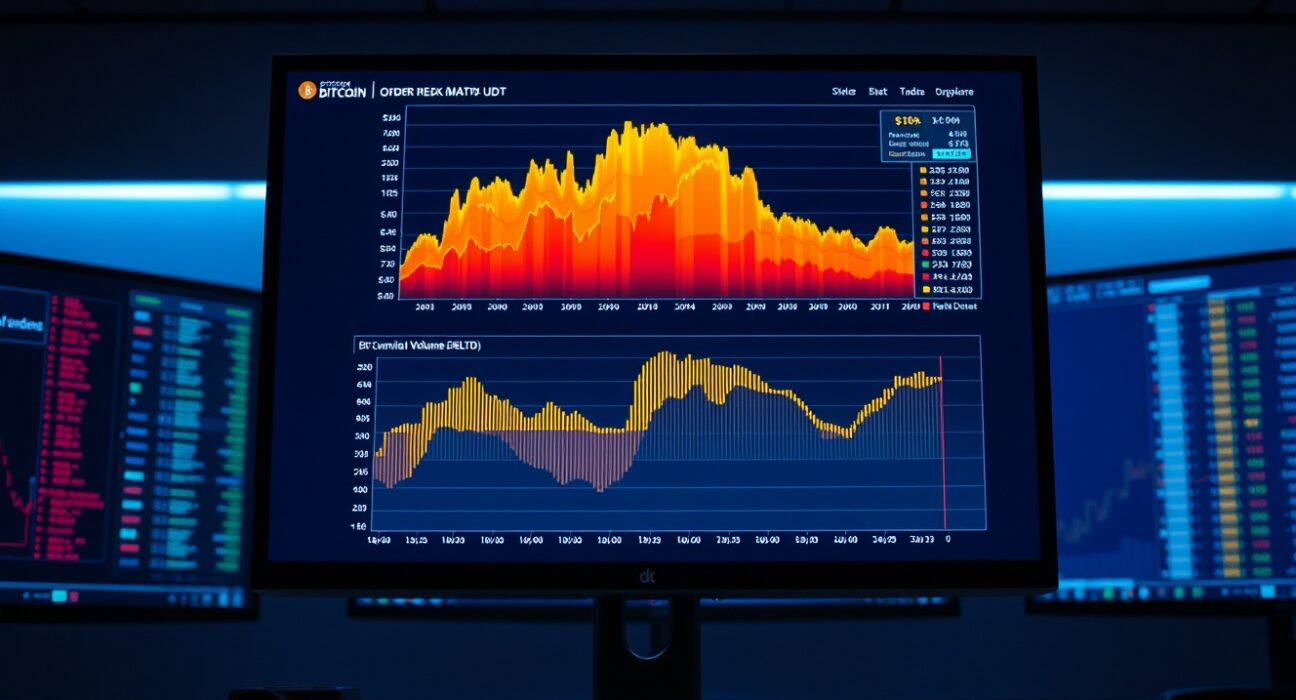
On May 20, at 12:00 a.m. UTC, the Spot Cumulative Volume Delta (CVD) chart for the BTC/USDT trading pair on major exchanges provides traders with a detailed view of order book dynamics. This analysis tool, which combines a volume heatmap with CVD lines, helps identify potential support and resistance levels by tracking trade activity at specific price points.
Understanding the Volume Heatmap
The top section of the chart features a volume heatmap that visualizes trading intensity. Brighter background colors indicate price levels where the market has spent more time or where significant volume has been exchanged. These high-activity zones often act as technical support or resistance, as traders may place orders near previously established price ranges. For the May 20 session, the heatmap highlights several key clusters that market participants should monitor for potential price reactions.
Cumulative Volume Delta: Tracking Buy and Sell Pressure
The lower section of the chart displays the Cumulative Volume Delta (CVD), which categorizes buy and sell orders by trade size. The yellow line represents smaller orders ranging from $100 to $1,000, while the brown line tracks large institutional-sized orders between $1 million and $10 million. When these lines rise, it indicates increasing buying pressure at that trade size. The divergence or convergence between these lines can offer insights into whether retail or institutional traders are driving market direction.
Implications for Traders
For active traders, the Spot CVD chart provides a real-time view of order flow that goes beyond simple price action. By observing which trade sizes are accumulating, traders can gauge the strength behind a move. For example, a price breakout accompanied by a rising brown CVD line suggests institutional support, while a move driven solely by the yellow line may indicate weaker retail momentum. The May 20 data offers a snapshot of these dynamics, which can be used to refine entry and exit strategies.
Conclusion
The Spot CVD chart for BTC/USDT on May 20 at 12:00 a.m. UTC presents a clear picture of market microstructure. By combining volume heatmap clusters with CVD trade-size analysis, traders can better understand where liquidity is concentrated and which market participants are most active. This data-driven approach supports more informed trading decisions in the volatile cryptocurrency market.
FAQs
Q1: What is the Spot CVD chart used for?
The Spot CVD chart is used to analyze order book data for a specific trading pair. It helps traders identify support and resistance levels through the volume heatmap and gauge buying or selling pressure through the Cumulative Volume Delta lines.
Q2: How often is the Spot CVD data updated?
The data is updated in real-time on most trading platforms, reflecting live order book changes. The specific snapshot for this analysis is taken at 12:00 a.m. UTC on May 20.
Q3: What do the different colored lines in the CVD section represent?
The yellow line represents smaller trades between $100 and $1,000, typically associated with retail traders. The brown line represents large trades between $1 million and $10 million, which are often linked to institutional activity.
Disclaimer: The information provided is not trading advice, Bitcoinworld.co.in holds no liability for any investments made based on the information provided on this page. We strongly recommend independent research and/or consultation with a qualified professional before making any investment decisions.
