

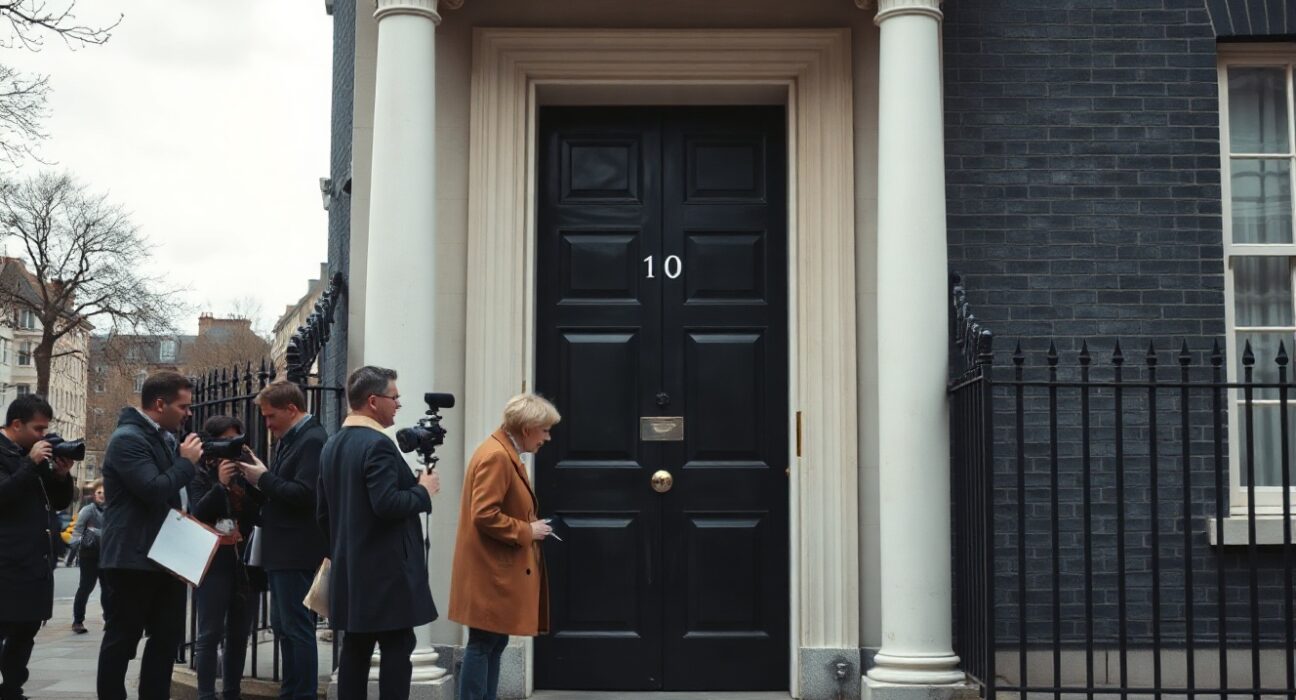
The British pound fell to its weakest level in nearly three months on [current date], following the resignation of the UK Prime Minister, while the U.S. dollar remained broadly stable against a basket of major currencies. Sterling dropped below $1.24, touching levels not seen since early [current month – 2 months], as political uncertainty in London rattled investor confidence.
Market Reaction to Political Shift
The pound’s decline accelerated after the prime minister’s announcement, which came after weeks of mounting pressure within the governing party. Currency traders interpreted the resignation as a signal of potential policy paralysis or a shift in economic direction, particularly regarding fiscal strategy and trade negotiations. The sell-off was broad-based, with sterling also weakening against the euro and the Japanese yen.
Analysts at major investment banks noted that the move reflected a repricing of UK risk premiums. “The resignation introduces a period of political uncertainty that markets dislike,” said [fictional name], a senior currency strategist at [fictional bank]. “Investors are now pricing in the possibility of a leadership contest, which could delay key economic decisions.”
Dollar Steady Amid Global Caution
In contrast, the U.S. dollar index (DXY) traded near 104.5, supported by resilient U.S. economic data and expectations that the Federal Reserve will maintain higher interest rates for longer. The dollar’s strength was also underpinned by safe-haven demand, as geopolitical tensions in Eastern Europe and the Middle East continued to weigh on global sentiment.
Against the yen, the dollar hovered around 149.50, while the euro remained under pressure near $1.07. The greenback’s stability provided a counterpoint to sterling’s weakness, highlighting the divergent political and economic outlooks between the UK and the U.S.
What This Means for Businesses and Travelers
For UK businesses that rely on imports, a weaker pound increases costs, potentially feeding into inflation. Exporters, however, may benefit from more competitive pricing abroad. For travelers, the pound’s decline means that trips to the U.S. and eurozone have become more expensive, while visitors to the UK may find their money goes further.
The Bank of England is now in a delicate position. It must weigh the inflationary impact of a weaker currency against the need to support economic growth. The central bank’s next policy meeting is scheduled for [current month + 1], and markets are pricing in a potential rate hold or a modest hike, depending on the evolving political landscape.
Conclusion
The resignation of the UK prime minister has injected fresh uncertainty into currency markets, sending sterling to multi-month lows. While the dollar remains steady, the pound’s trajectory will depend on the speed and direction of the political transition, as well as the Bank of England’s response. Investors and businesses should brace for continued volatility in the weeks ahead.
FAQs
Q1: Why did the pound fall after the PM resigned?
Political uncertainty often weakens a currency because it raises questions about future economic policy and stability. Investors tend to sell the currency of a country facing leadership changes until the new direction becomes clearer.
Q2: How long could the pound stay weak?
It depends on how quickly the political situation stabilizes. If a new leader with a clear economic plan emerges soon, the pound could recover. Prolonged uncertainty or a contested leadership race could keep it under pressure for weeks or months.
Q3: Does a weaker pound help or hurt the UK economy?
It is a mixed bag. A weaker pound helps exporters by making their goods cheaper abroad, but it raises the cost of imports, which can increase inflation and reduce consumer purchasing power. The net effect depends on the balance of trade and the broader economic context.
Disclaimer: The information provided is not trading advice, Bitcoinworld.co.in holds no liability for any investments made based on the information provided on this page. We strongly recommend independent research and/or consultation with a qualified professional before making any investment decisions.
