

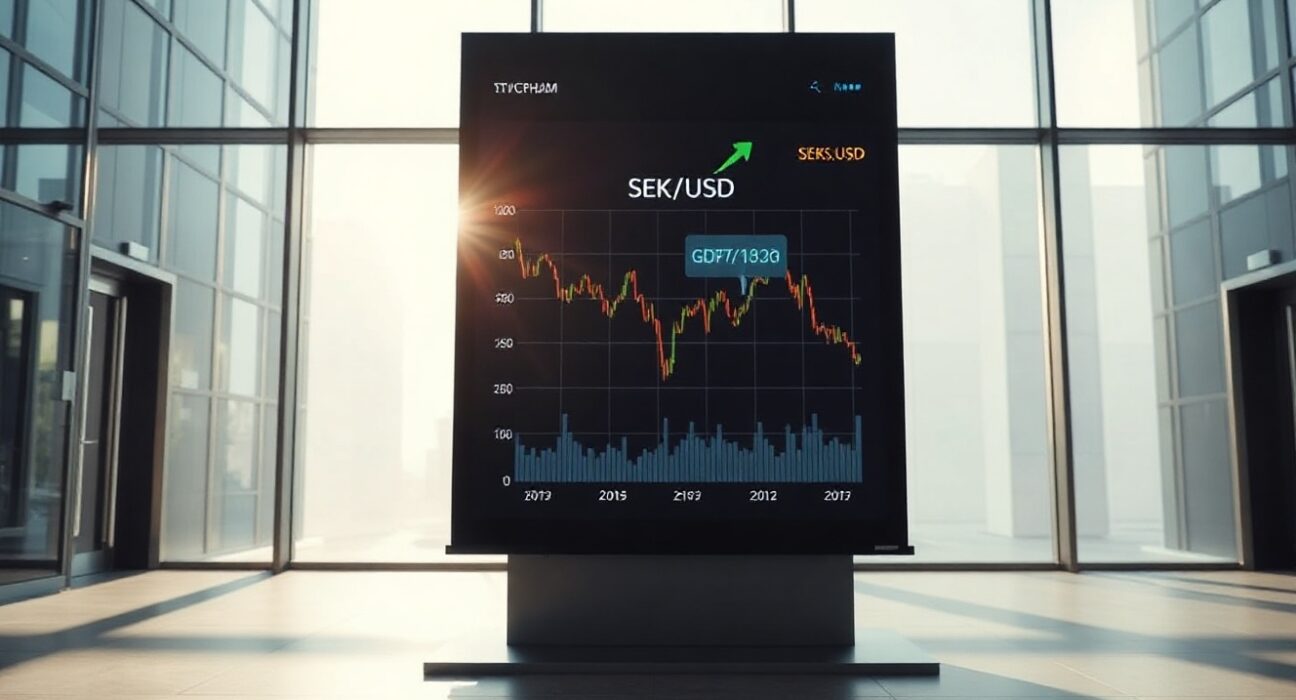
Sweden’s economy is showing clear signs of resilience, yet its currency, the krona (SEK), continues to trade on the back foot. This divergence has caught the attention of analysts at Societe Generale, who describe the situation as a notable paradox in the current foreign exchange landscape.
The Core Disconnect
Societe Generale’s research highlights that Sweden’s macroeconomic fundamentals are, by several measures, strengthening. The nation has posted better-than-expected GDP figures, its labor market remains tight, and industrial production has held up relatively well compared to its European peers. However, the krona has failed to rally on this positive data. Instead, it has remained under pressure, trading near historically weak levels against both the euro and the US dollar.
This disconnect suggests that traditional macroeconomic drivers are being overshadowed by other, more dominant market forces. The primary culprit, according to the analysis, is the global risk sentiment. The krona is considered a small, open-economy currency that is highly sensitive to global growth expectations and risk appetite. In an environment where geopolitical tensions and concerns about a global slowdown persist, investors tend to shun such currencies in favor of safe havens like the US dollar or Swiss franc.
Interest Rate Expectations and the Riksbank
Another key factor is the diverging path of monetary policy. While the Riksbank has been aggressive in raising rates to combat inflation, the market is now pricing in a peak in the Swedish rate cycle, with potential cuts on the horizon. In contrast, the US Federal Reserve and the European Central Bank have maintained a more hawkish stance for longer. This relative interest rate outlook reduces the carry appeal of the krona, making it less attractive for yield-seeking investors.
Societe Generale notes that the market is currently focusing more on the potential for future rate cuts in Sweden than on the current strength of the economy. Until the Riksbank can convince markets that rates will remain high enough to support the currency, the krona is likely to remain under structural selling pressure.
Implications for Investors and Importers
For investors holding Swedish assets, the weak krona erodes returns when converted back to stronger currencies. For Swedish importers, the weak currency raises the cost of imported goods, which can feed into domestic inflation—a problem the Riksbank is trying to solve. Conversely, Swedish exporters benefit from a weaker krona, as their goods become cheaper for foreign buyers, potentially boosting corporate earnings in the export-heavy Swedish economy.
The situation creates a complex feedback loop. A weak krona can help the export sector, which supports GDP growth, but it also makes it harder for the Riksbank to bring inflation down to its 2% target, potentially forcing the central bank to keep policy tighter for longer.
Conclusion
The Swedish krona’s current weakness in the face of a strong economy is a textbook example of how global risk appetite and monetary policy expectations can override local fundamentals. Societe Generale’s analysis serves as a reminder that currency markets are driven by a complex interplay of factors, and a strong domestic economy is not always enough to support a currency in a risk-off global environment. The outlook for the krona will likely hinge on a sustained improvement in global risk sentiment and a clearer signal from the Riksbank regarding its future policy path.
FAQs
Q1: Why is the Swedish krona weak if the economy is doing well?
The krona is being weighed down by global risk aversion and market expectations that the Riksbank will cut interest rates soon. These external and forward-looking factors are currently outweighing Sweden’s positive domestic economic data.
Q2: What did Societe Generale specifically say about the SEK?
Societe Generale highlighted a paradox where Sweden’s economic growth is strong, but the currency remains soft. They attribute this to the krona’s sensitivity to global risk sentiment and the market’s focus on potential future rate cuts by the Riksbank.
Q3: Who is most affected by a weak Swedish krona?
Swedish exporters benefit as their goods become cheaper abroad. However, Swedish consumers and importers are negatively impacted by higher costs for imported goods, which can contribute to inflation. International investors in Swedish assets also see reduced returns when converting profits back to their home currency.
Frequently Asked Questions
Why is the Swedish krona weakening despite Sweden’s strong economy?
The krona is being weighed down by global risk aversion, as investors favor safe-haven currencies like the US dollar over small, open-economy currencies during geopolitical tensions.
What does Societe Generale mean by a ‘paradox’ in the forex market?
They refer to the disconnect where Sweden’s improving macroeconomic fundamentals, such as strong GDP and a tight labor market, are not translating into a stronger krona.
How do interest rate expectations affect the krona’s performance?
Markets expect the Riksbank to cut rates soon, while the Fed and ECB maintain a hawkish stance, reducing the krona’s carry appeal and making it less attractive for yield-seeking investors.
What is the main factor overriding Sweden’s positive economic data for the krona?
Global risk sentiment is the primary driver, as investors avoid the krona due to its sensitivity to global growth fears and geopolitical uncertainty.
Is the krona expected to recover anytime soon?
The article suggests that until global risk appetite improves or the Riksbank’s rate outlook becomes more hawkish relative to other central banks, the krona may remain under pressure.
Disclaimer: The information provided is not trading advice, Bitcoinworld.co.in holds no liability for any investments made based on the information provided on this page. We strongly recommend independent research and/or consultation with a qualified professional before making any investment decisions.
