
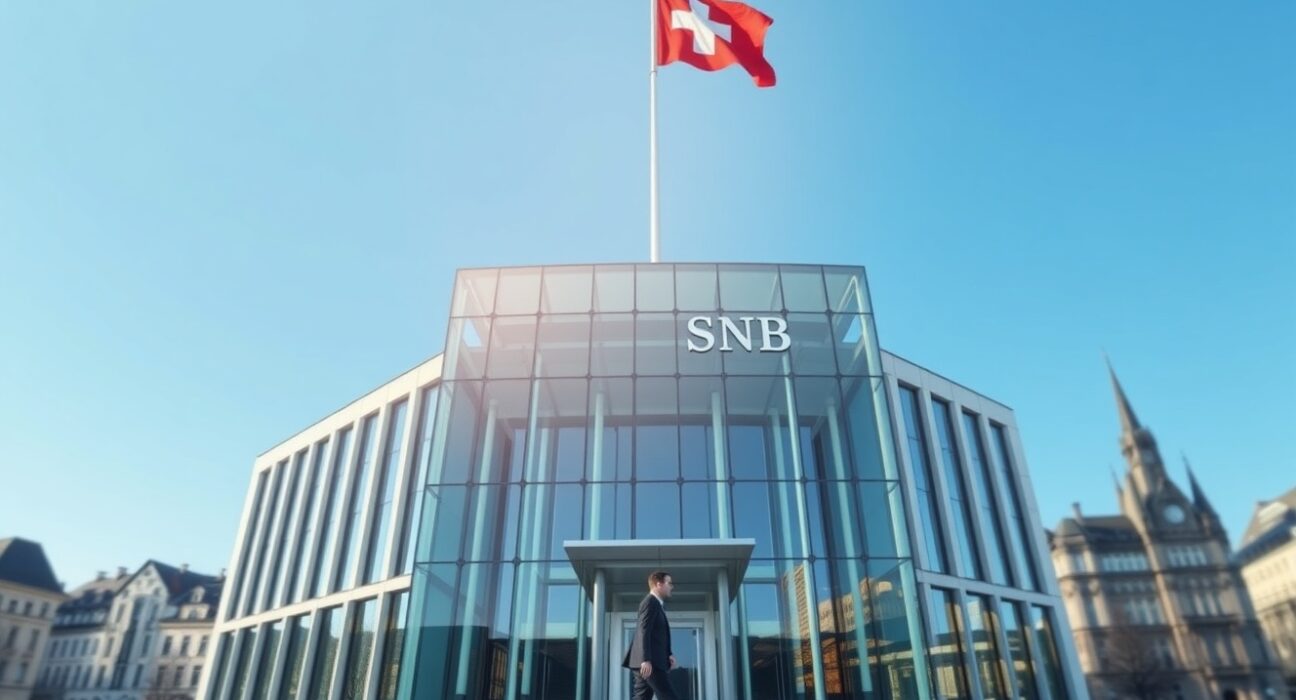
In a widely anticipated move, the Swiss National Bank (SNB) announced on March 20, 2025, from its headquarters in Zurich that it would leave its key policy interest rate unchanged at 0%. This decision maintains the central bank’s prolonged accommodative stance, directly influencing the value of the Swiss franc and the broader European economic landscape. Consequently, market participants globally scrutinized the announcement for signals about future monetary policy shifts.
Swiss National Bank Maintains 0% Interest Rate Policy
The SNB’s Governing Council confirmed the continuation of its expansive monetary policy. Specifically, it kept the policy rate at 0% and the interest rate on sight deposits at -0.75%. This marks the seventh consecutive quarter without a change. The bank stated its commitment to ensuring price stability while considering the overall economic situation. Furthermore, it reiterated its willingness to intervene in the foreign exchange market if necessary to counter upward pressure on the Swiss franc.
Market analysts had overwhelmingly predicted this outcome. Recent inflation data showed Swiss consumer prices rising at an annual rate of 1.2% in February 2025. This figure remains comfortably within the SNB’s definition of price stability. The global economic environment, characterized by modest growth and geopolitical tensions, also supported a cautious approach. Therefore, the decision provided stability rather than surprise.
Economic Context and Global Comparisons
The SNB’s stance exists within a complex global monetary policy framework. Major central banks like the European Central Bank (ECB) and the Federal Reserve have recently paused their own hiking cycles. For instance, the ECB held its deposit facility rate at 3.75% in its last meeting, signaling a potential peak. Meanwhile, the Bank of Japan continues its ultra-loose policy. This global synchronization towards caution reduces pressure on the SNB to act unilaterally.
Switzerland’s unique economic position heavily influences its policy. The country consistently runs a large current account surplus. This structural factor naturally exerts appreciation pressure on the Swiss franc. A stronger franc helps control imported inflation but can hurt export-oriented sectors like pharmaceuticals and machinery. The SNB’s negative interest rates and readiness for intervention aim to mitigate this tension. These tools form a critical part of its monetary policy toolkit.
Expert Analysis on the SNB’s Strategy
Financial experts point to the SNB’s dual mandate of price stability and economic development. “The SNB is navigating a narrow path,” notes Dr. Elena Fischer, a central banking specialist at the University of St. Gallen. “Its primary focus remains inflation, but it must also consider the franc’s strength and its impact on Switzerland’s small, open economy. The current hold reflects a balanced assessment of subdued inflationary risks against a fragile global growth outlook.” This expert perspective underscores the careful calibration behind the decision.
Historical context is also crucial. The SNB has maintained negative interest rates for over a decade, a unique experiment among major economies. This policy aimed to discourage safe-haven flows into the franc during periods of global stress. The bank’s massive balance sheet, swollen from years of foreign currency purchases, presents another long-term consideration. Any future policy normalization will require managing this substantial portfolio.
Immediate Market Reaction and Franc Dynamics
Following the announcement, the Swiss franc exhibited limited volatility against the euro and the US dollar. The EUR/CHF pair traded around 0.96, while USD/CHF hovered near 0.88. This muted response indicated the decision was fully priced in by traders. Swiss government bond yields also showed little movement. The stability underscores the SNB’s success in communicating its policy framework transparently.
Key factors the SNB monitors include:
- Inflation Forecasts: The SNB’s conditional inflation projection remains the cornerstone of its policy.
- Global Risk Sentiment: Geopolitical events often trigger safe-haven flows into the franc.
- Divergence with ECB Policy: Significant policy differences can create exchange rate volatility.
- Domestic Wage Growth: Rising wages could feed into persistent domestic inflation.
The bank’s next monetary policy assessment is scheduled for June 2025. Analysts will closely watch first-quarter GDP data and inflation trends for clues about a potential shift. Most economists project the first rate increase will not occur before the fourth quarter of 2025, at the earliest. The path remains data-dependent.
Broader Implications for Savers and the Economy
The prolonged period of zero and negative rates has profound effects. For Swiss savers and pension funds, finding positive real returns remains challenging. This environment continues to push investors into higher-risk assets like equities and real estate. The Swiss residential property market has seen significant price increases, prompting repeated warnings from the SNB about imbalances. However, the bank maintains that macroprudential tools, not interest rates, are the appropriate response to financial stability risks.
For businesses, the stable rate environment provides certainty for investment planning. Exporters, however, remain vulnerable to a sudden sharp appreciation of the franc. The SNB’s verbal intervention and proven willingness to act serve as a crucial backstop. This dynamic creates a fragile equilibrium where confidence in the central bank’s commitment is as important as the policy rate itself.
Conclusion
The Swiss National Bank’s decision to hold its key interest rate at 0% reflects a cautious and consistent approach to monetary policy. Anchored by manageable inflation and a uncertain global backdrop, the SNB prioritizes stability. The path forward remains contingent on incoming economic data, particularly regarding price developments and the strength of the Swiss franc. For now, the era of ultra-low Swiss National Bank interest rates continues, shaping the financial reality for Switzerland and influencing currency markets worldwide.
FAQs
Q1: Why did the Swiss National Bank keep interest rates at 0%?
The SNB held rates because Swiss inflation remains within its target range, and the global economic outlook is uncertain. The decision aims to ensure price stability without jeopardizing economic growth.
Q2: How does the SNB’s decision affect the Swiss franc?
The expected decision caused minimal immediate franc volatility. The SNB’s ongoing willingness to intervene in currency markets continues to be a more significant factor in limiting excessive franc appreciation.
Q3: What is the outlook for Swiss interest rates in 2025?
Most analysts expect rates to remain unchanged for most of 2025. The first potential increase is not anticipated before late 2025, depending entirely on future inflation and growth data.
Q4: How do negative interest rates work in Switzerland?
The SNB charges commercial banks a fee (currently -0.75%) on large deposits held at the central bank. This policy discourages hoarding cash and encourages lending, aiming to weaken the franc and stimulate economic activity.
Q5: What are the risks of keeping rates so low for so long?
Prolonged low rates can fuel asset price bubbles (like in real estate), compress bank profitability, and challenge pension funds seeking returns. The SNB monitors these financial stability risks separately from its inflation mandate.
Disclaimer: The information provided is not trading advice, Bitcoinworld.co.in holds no liability for any investments made based on the information provided on this page. We strongly recommend independent research and/or consultation with a qualified professional before making any investment decisions.