

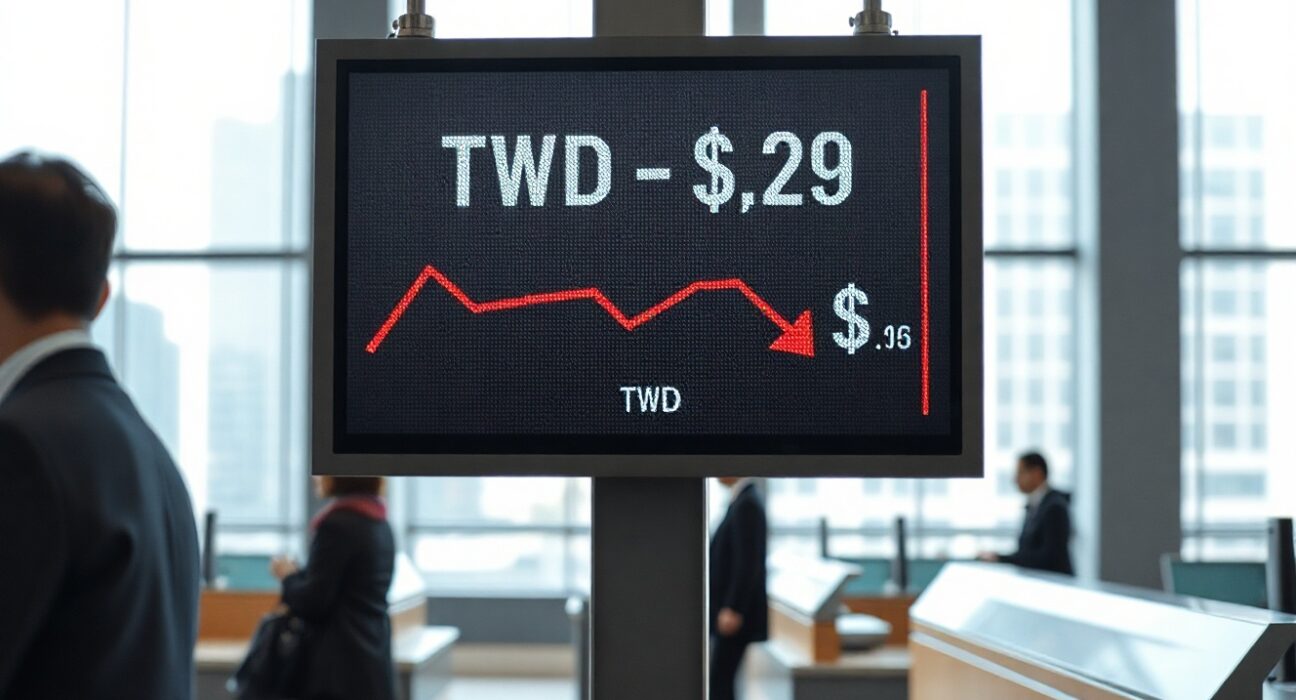
The Taiwan dollar (TWD) is currently experiencing weakness primarily driven by cross-border portfolio flows, according to analysts at OCBC Bank. However, the currency is expected to find a floor due to ongoing policy support from the central bank, limiting the scope for a sustained sell-off.
Flow-Driven Dynamics Weigh on TWD
OCBC’s latest research note highlights that the recent depreciation of the TWD is not rooted in fundamental economic deterioration but rather in short-term capital movements. Portfolio outflows, particularly from the equity market, have been the main catalyst putting downward pressure on the currency. This pattern is often observed when global investors adjust their positions in response to shifts in risk appetite or interest rate differentials.
The analysts note that while the TWD has weakened, the move is considered orderly and not indicative of a structural crisis. The current account surplus, a traditional buffer for the currency, remains robust, providing a fundamental anchor that prevents a disorderly depreciation.
Central Bank Intervention as a Stabilizing Force
The role of the Central Bank of the Republic of China (Taiwan) is a critical factor in the OCBC assessment. The bank has a well-established history of intervening in the foreign exchange market to smooth excessive volatility. OCBC expects this policy stance to continue, effectively capping the downside for the TWD.
This intervention is not aimed at defending a specific level but at preventing disorderly market conditions. By signaling a willingness to act, the central bank provides a psychological backstop that deters speculative attacks on the currency. This policy support, combined with the strong current account, creates a ‘put option’ for the TWD, limiting its depreciation potential.
Implications for Traders and Businesses
For forex traders, the OCBC analysis suggests a strategy of selling TWD on rallies rather than chasing the downside. The path of least resistance may still be lower in the near term due to persistent outflows, but the risk-reward profile becomes unfavorable at weaker levels where central bank intervention is more likely.
For importers and businesses with foreign currency liabilities, the current weakness presents a hedging opportunity. Locking in rates at these levels, with the knowledge of policy support, may be prudent to manage future currency risk. Conversely, exporters benefiting from a weaker TWD should be aware that the central bank’s actions may prevent further significant gains in their export competitiveness.
Conclusion
The Taiwan dollar’s current weakness is a function of portfolio flow dynamics rather than a fundamental shift in Taiwan’s economic health. OCBC’s analysis points to a currency that is under pressure but not in crisis, with a clear policy backstop from the central bank. This combination suggests a range-bound trading environment where the TWD may remain soft but is unlikely to break down significantly. The key for market participants is to distinguish between flow-driven noise and the underlying structural support that remains in place.
FAQs
Q1: What is the main reason for the Taiwan dollar’s weakness according to OCBC?
The primary driver is portfolio outflows, where international investors are moving capital out of Taiwanese assets, creating selling pressure on the TWD. This is considered a flow-driven, rather than a fundamental, issue.
Q2: How does the central bank support the Taiwan dollar?
The Central Bank of the Republic of China (Taiwan) intervenes in the foreign exchange market to smooth excessive volatility. By buying TWD or signaling its willingness to act, it provides a floor for the currency and deters speculative attacks.
Q3: Is the Taiwan dollar expected to weaken further?
OCBC analysts suggest the near-term bias remains weak due to ongoing outflows. However, the downside is limited by central bank policy and a strong current account surplus, meaning a sharp, uncontrolled depreciation is unlikely.
Disclaimer: The information provided is not trading advice, Bitcoinworld.co.in holds no liability for any investments made based on the information provided on this page. We strongly recommend independent research and/or consultation with a qualified professional before making any investment decisions.
