
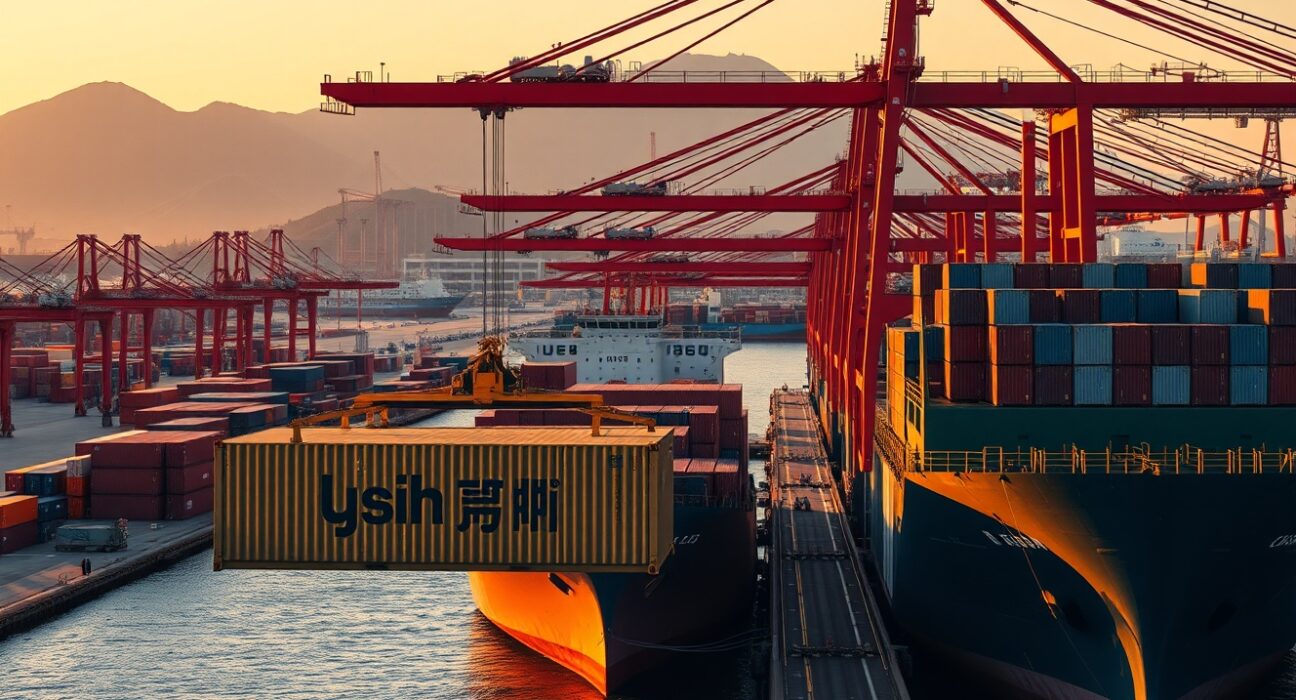
TAIPEI, TAIWAN – March 2025: A powerful trade surge is fundamentally reshaping Taiwan’s economic trajectory, prompting leading financial institution ING to issue a bold upgrade to its growth forecast. This development, rooted in robust export data and resilient supply chain dynamics, signals a pivotal moment for the island’s economy and its role in global technology networks. Consequently, analysts are closely monitoring the sustainability of this momentum and its broader implications.
Taiwan’s Trade Boom: The Data Driving Growth
Recent customs data reveals the tangible force behind ING’s revised outlook. Taiwan’s export orders, a reliable leading indicator, have consistently exceeded market expectations for three consecutive quarters. Specifically, shipments of electronic components, the cornerstone of the economy, expanded by over 18% year-on-year in the latest reporting period. Meanwhile, information and communication technology products followed closely with 15% growth. This performance starkly contrasts with earlier, more conservative projections of single-digit expansion.
Several interconnected factors fuel this export engine. Firstly, a sustained global recovery in consumer electronics demand provides a solid foundation. Secondly, the relentless expansion of artificial intelligence infrastructure worldwide continues to drive orders for high-performance semiconductors and servers, sectors where Taiwanese manufacturers hold dominant positions. Furthermore, strategic inventory replenishment cycles across global supply chains have created a synchronized uplift in orders.
ING’s Bold Growth Upgrade: Analysis and Rationale
ING’s economic team, citing the stronger-than-anticipated trade figures, has revised its full-year GDP growth forecast for Taiwan upward by a significant margin. The institution now projects the economy to expand well above the initial consensus, placing it among the top performers in the developed Asia-Pacific region. This upgrade reflects a comprehensive assessment of leading indicators, including purchasing managers’ indices, industrial production data, and cross-border trade flows.
The analysis points to structural strengths rather than temporary cyclical gains. Taiwan’s deep integration into the global technology supply chain, particularly in semiconductor fabrication and advanced electronics assembly, provides a durable competitive advantage. Additionally, the diversification of export destinations, with increased shipments to Southeast Asia and Europe, mitigates over-reliance on any single market and enhances economic resilience.
The Semiconductor Sector’s Central Role
No analysis of Taiwan’s trade is complete without examining the semiconductor industry. The sector accounts for a substantial portion of total exports and capital investment. Major foundries report capacity utilization rates near maximum levels, supported by long-term contracts for advanced nodes. This technological leadership translates directly into trade value, as the unit price and complexity of exported chips continue to rise. Consequently, the sector’s health is a primary determinant of the overall trade balance and national income.
Investment in next-generation fabrication facilities remains robust, signaling confidence in sustained demand. This capital expenditure, often in the billions of dollars, has significant multiplier effects throughout the domestic economy, supporting construction, materials, and high-skilled employment.
Global Context and Comparative Performance
Taiwan’s trade resurgence occurs within a complex global environment. While some regional economies face headwinds from slowing demand or geopolitical friction, Taiwan’s export profile has proven notably adaptable. A comparison of recent trade growth across key Asian economies highlights its relative outperformance.
| Economy | Key Export Sector | Recent YOY Growth | Primary Driver |
|---|---|---|---|
| Taiwan | Electronic Components | +18.2% | AI & HPC Demand |
| South Korea | Semiconductors & Autos | +12.1% | Memory Chip Recovery |
| Singapore | Pharmaceuticals & Machinery | +9.8% | Biomedical Exports |
| Vietnam | Consumer Electronics & Textiles | +14.5% | Manufacturing Shift |
This table illustrates Taiwan’s leading position in high-value technology exports. The data suggests its growth is qualitatively different, driven by cutting-edge demand rather than broader industrial recovery alone.
Domestic Impacts and Economic Multipliers
The trade boom generates substantial positive effects within Taiwan’s domestic economy. Firstly, strong export revenues bolster corporate profits and government tax receipts. These funds, in turn, support:
- Increased wage growth in the technology and manufacturing sectors.
- Higher domestic investment in research, development, and infrastructure.
- Consumer confidence and retail spending, creating a virtuous cycle.
Moreover, the central bank faces a different policy landscape. Strong external demand reduces the need for aggressive monetary stimulus, providing more room to manage inflation and financial stability. The currency may also experience appreciation pressures from consistent trade surpluses, affecting import costs and overseas earnings for exporters.
Risks and Forward-Looking Considerations
Despite the optimistic data, analysts like those at ING acknowledge several risk factors. The global economic outlook remains subject to shifts in major central bank policies and potential demand softening in key markets. Additionally, geopolitical tensions in the region could influence trade logistics and investment decisions. Supply chain diversification efforts by multinational corporations present both a challenge and an opportunity for Taiwanese firms to adapt and invest overseas.
Long-term sustainability depends on continuous innovation. Therefore, maintaining leadership in semiconductor process technology and capturing growth in emerging fields like electric vehicle components and green technology will be crucial for the next phase of trade-driven growth.
Conclusion
The evidence presented by Taiwan’s trade performance justifies ING’s bold growth upgrade. The island’s economy is experiencing a powerful, sector-driven expansion rooted in its unparalleled position in the global technology supply chain. While mindful of external risks, the current trade boom demonstrates remarkable resilience and provides a strong foundation for economic stability and advancement. Consequently, Taiwan’s role as a critical hub in the world’s digital and industrial infrastructure appears more secure and dynamic than ever.
FAQs
Q1: What is the main reason for ING’s upgraded growth forecast for Taiwan?
The primary reason is a stronger-than-expected and sustained boom in exports, particularly of electronic components and semiconductors, driven by global demand for AI infrastructure and consumer electronics.
Q2: Which sector contributes most to Taiwan’s trade boom?
The semiconductor and integrated circuit sector is the dominant contributor. Taiwan’s leading-edge foundries supply a vast portion of the world’s advanced chips, making this industry the central engine of export growth.
Q3: How does Taiwan’s trade performance compare to other Asian economies?
Recent data shows Taiwan outperforming many regional peers in terms of year-on-year export growth value, especially in high-technology goods, placing it at the forefront of the regional trade recovery.
Q4: What are the potential risks to this positive trade outlook?
Key risks include a slowdown in global technology demand, geopolitical tensions affecting supply chains, and increased competition as other countries invest heavily in domestic semiconductor production.
Q5: How does the trade boom affect ordinary citizens in Taiwan?
It can lead to higher wages in related industries, increased government revenue for public services, greater job security in the export sector, and potentially stronger consumer confidence, though it may also contribute to currency appreciation and inflation.
Disclaimer: The information provided is not trading advice, Bitcoinworld.co.in holds no liability for any investments made based on the information provided on this page. We strongly recommend independent research and/or consultation with a qualified professional before making any investment decisions.