

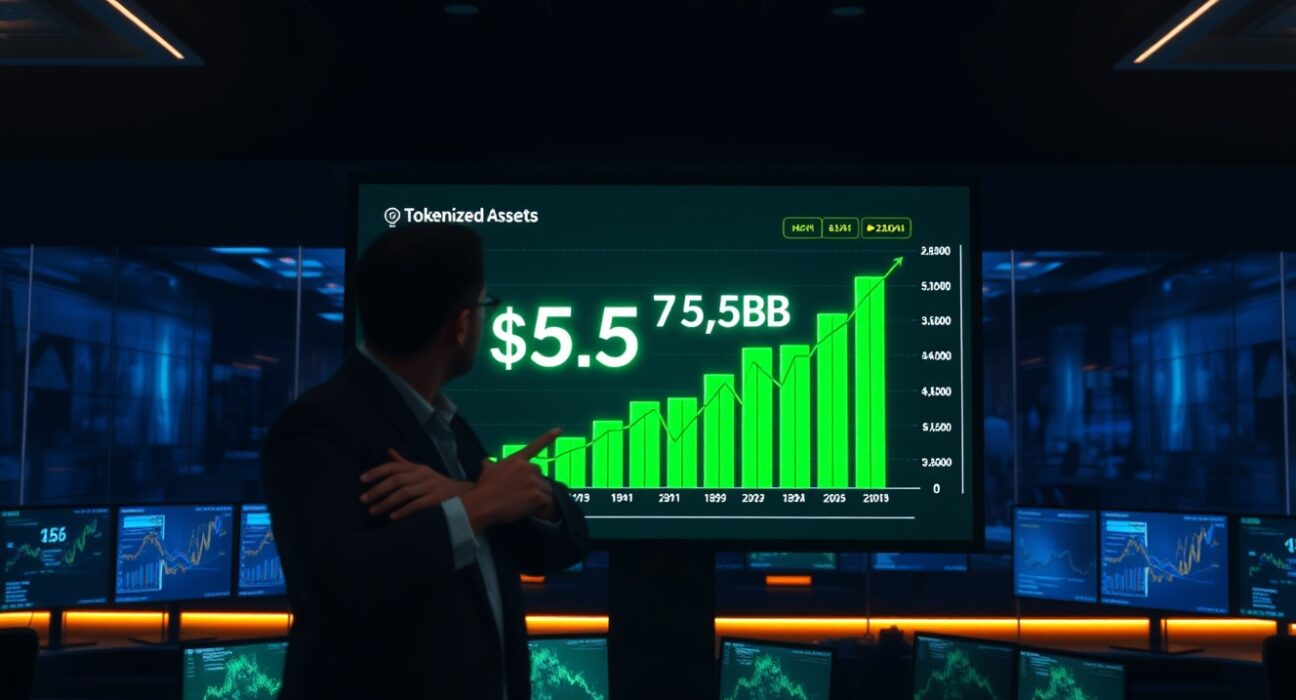
The market for tokenized assets has surged past $7.5 billion, more than tripling in value over the past twelve months, according to fresh data from crypto analytics firm CryptoRank. The milestone underscores a rapid shift in how traditional financial instruments are being represented and traded on blockchain networks.
What Is Driving the Tokenized Asset Boom?
Tokenization refers to the process of issuing a digital representation of a real-world asset — such as real estate, bonds, commodities, or private equity — on a blockchain. These tokens can be traded, settled, and fractionalized more efficiently than their physical counterparts.
The recent growth has been fueled by institutional interest, clearer regulatory frameworks in several jurisdictions, and the maturation of blockchain infrastructure. Major financial institutions, including BlackRock and Goldman Sachs, have launched or participated in tokenization pilots, lending credibility to the sector.
Key Segments and Use Cases
Private credit and U.S. Treasury debt have been among the fastest-growing categories. Tokenized U.S. Treasury products alone now exceed $1 billion in value, offering near-instant settlement and 24/7 trading to investors. Real estate tokenization platforms are also expanding, allowing smaller investors to access high-value properties through fractional ownership.
Other notable areas include tokenized carbon credits, art, and supply chain finance. The diversity of use cases suggests the trend is not limited to a single asset class but reflects a broader structural change in asset management.
Why This Matters for Investors
For retail and institutional investors alike, tokenization promises greater liquidity, lower transaction costs, and increased transparency. Assets that were once illiquid or required large minimum investments can now be traded in smaller increments on secondary markets. However, risks remain, including regulatory uncertainty in some regions, smart contract vulnerabilities, and the challenge of ensuring off-chain assets are accurately represented on-chain.
Conclusion
The tokenized asset market’s threefold expansion to $7.5 billion signals that blockchain-based representation of real-world assets is moving beyond experimentation into mainstream adoption. While challenges persist, the pace of growth and the caliber of institutional involvement suggest this sector will continue to reshape capital markets in the years ahead.
FAQs
Q1: What are tokenized assets?
Tokenized assets are digital tokens on a blockchain that represent ownership or rights to a real-world asset, such as real estate, bonds, or commodities. They enable fractional ownership and more efficient trading.
Q2: Why has the tokenized asset market grown so quickly?
Growth has been driven by institutional adoption, improved blockchain infrastructure, clearer regulations in some markets, and demand for more liquid and accessible investment options.
Q3: Are tokenized assets safe to invest in?
While tokenization offers benefits like transparency and liquidity, risks include regulatory changes, smart contract bugs, and reliance on oracles to verify off-chain asset values. Investors should conduct thorough due diligence.
Disclaimer: The information provided is not trading advice, Bitcoinworld.co.in holds no liability for any investments made based on the information provided on this page. We strongly recommend independent research and/or consultation with a qualified professional before making any investment decisions.
