

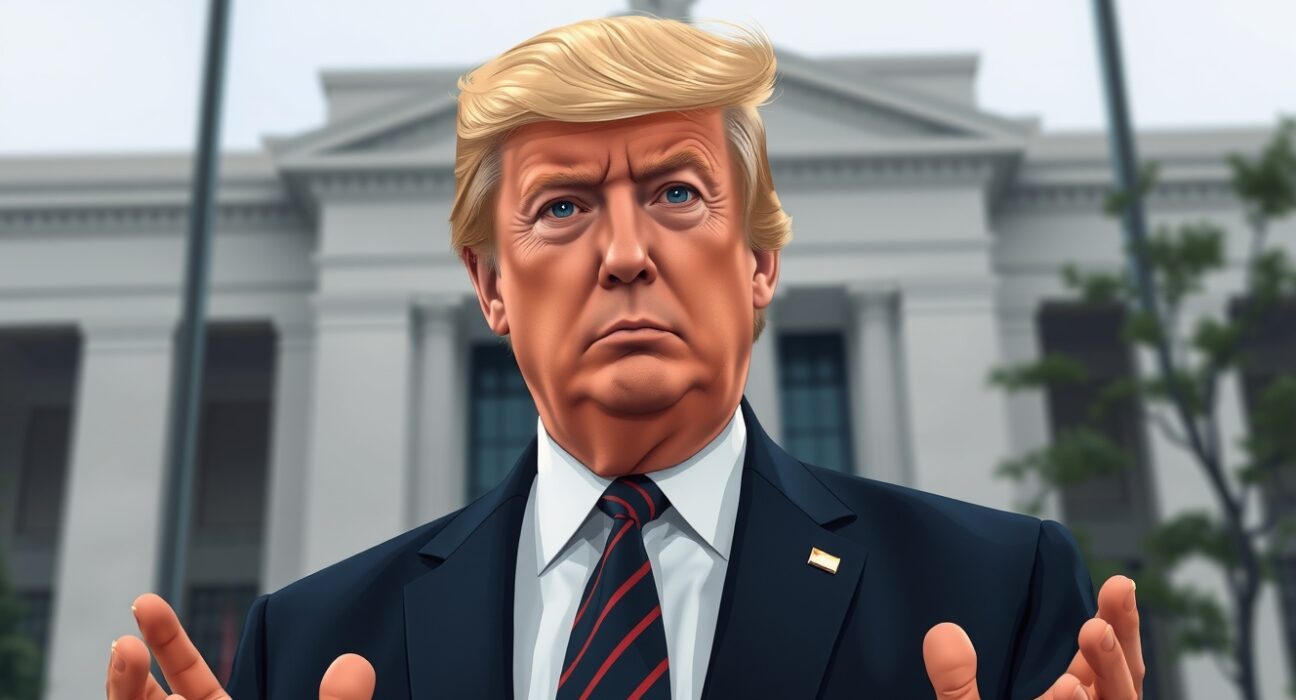
WASHINGTON, D.C. – In a statement that reverberated through financial markets, former President Donald Trump declared he would be “disappointed” if the newly appointed Federal Reserve chair fails to implement interest rate cuts. This direct commentary on monetary policy marks a significant moment in the ongoing dialogue between political leadership and the traditionally independent Federal Reserve. The statement comes amid evolving economic conditions and raises important questions about the boundaries of presidential influence over central banking decisions.
Federal Reserve Rates Face Presidential Scrutiny
President Trump’s comments about Federal Reserve rates represent a continuation of his longstanding approach to monetary policy. Throughout his presidency, Trump frequently commented on interest rate decisions, often advocating for lower rates to stimulate economic growth. His latest statement follows the appointment of a new Federal Reserve chair, creating immediate expectations about the direction of monetary policy. Historically, presidents have maintained varying degrees of distance from Federal Reserve operations to preserve the institution’s independence.
The Federal Reserve operates with a dual mandate from Congress: maximum employment and stable prices. Interest rate decisions directly influence borrowing costs, investment decisions, and overall economic activity. When the Federal Reserve lowers rates, it typically encourages borrowing and spending. Conversely, raising rates helps control inflation but may slow economic growth. These technical decisions traditionally remain within the Federal Reserve’s purview, insulated from direct political pressure.
Historical Context of Presidential Influence
The relationship between U.S. presidents and the Federal Reserve has evolved significantly over decades. President Lyndon Johnson reportedly confronted Fed Chair William McChesney Martin in 1965 over rate increases. Similarly, President Richard Nixon pressured Arthur Burns during the 1970s. However, most modern presidents have respected the Fed’s operational independence, recognizing that political interference could undermine economic stability. Trump’s public statements represent a departure from this recent tradition of restrained commentary.
Economic Implications of Rate Decisions
Interest rate changes create ripple effects throughout the economy. Lower rates typically benefit several sectors:
- Housing markets experience increased activity as mortgage costs decline
- Business investment grows with cheaper borrowing options
- Consumer spending often increases with lower credit costs
- Government debt servicing becomes less expensive
However, excessively low rates can lead to problematic outcomes. They may fuel asset bubbles, reduce savings returns for retirees, and limit the Federal Reserve’s ability to respond to future economic downturns. The Federal Reserve must balance these competing concerns when making rate decisions, considering both current conditions and future projections.
Institutional Independence Under Examination
The Federal Reserve’s independence serves as a cornerstone of modern economic policy. This separation from direct political control allows the institution to make difficult decisions that may be unpopular in the short term but necessary for long-term stability. When presidents publicly pressure the Federal Reserve, they potentially undermine this critical institutional framework. Market analysts closely watch these dynamics, as perceived political influence can affect investor confidence and economic forecasts.
Recent research from the Brookings Institution indicates that central bank independence correlates with lower inflation rates over time. Countries with politically controlled central banks often experience greater economic volatility. The United States established the Federal Reserve’s independence precisely to avoid the inflationary cycles that plagued earlier periods of American economic history. This institutional design has generally served the nation well through various economic challenges.
Global Economic Considerations
Federal Reserve decisions extend beyond American borders. As the world’s reserve currency, the U.S. dollar’s value influences global trade and finance. When the Federal Reserve adjusts interest rates, emerging markets often feel significant impacts. Lower U.S. rates typically encourage capital flows to developing economies seeking higher returns. Conversely, higher rates may trigger capital outflows from these same markets. The Federal Reserve must consider these international ramifications alongside domestic concerns.
Other major central banks, including the European Central Bank and the Bank of Japan, face similar balancing acts. However, the Federal Reserve’s decisions carry particular weight due to the dollar’s dominant position in global finance. International observers monitor Federal Reserve communications carefully, analyzing both official statements and external commentary from political figures.
Market Reactions and Economic Indicators
Financial markets responded to Trump’s comments with measured attention. Bond yields showed slight movement, while equity markets maintained relative stability. This tempered reaction suggests that investors recognize the Federal Reserve’s institutional resilience. However, sustained political pressure could eventually affect market perceptions of central bank independence. Economic indicators currently suggest a mixed picture that complicates rate decisions.
| Indicator | Current Status | Policy Implication |
|---|---|---|
| Inflation Rate | Moderating from peaks | Allows potential rate cuts |
| Employment Figures | Strong but cooling | Supports stable policy |
| GDP Growth | Moderate expansion | Permits cautious approach |
| Consumer Spending | Resilient but slowing | Warrants monitoring |
The Federal Reserve considers these indicators collectively when making policy decisions. No single metric determines outcomes, requiring careful analysis of the complete economic landscape. This complexity underscores why monetary policy decisions benefit from technical expertise rather than political calculation.
Conclusion
President Trump’s statement regarding Federal Reserve rates highlights the ongoing tension between political objectives and monetary policy independence. While presidents naturally concern themselves with economic performance, the Federal Reserve’s institutional autonomy remains crucial for long-term stability. The new Federal Reserve chair faces the challenging task of balancing economic data, institutional norms, and external expectations. Ultimately, interest rate decisions will depend on evolving economic conditions rather than political commentary, preserving the Federal Reserve’s vital role in maintaining economic stability.
FAQs
Q1: Why does presidential commentary on Federal Reserve rates matter?
Presidential statements about monetary policy can influence market expectations and potentially affect the perceived independence of the Federal Reserve, which is crucial for economic stability.
Q2: How independent is the Federal Reserve from political pressure?
The Federal Reserve operates with substantial independence in its day-to-day operations, though presidents appoint its leadership and Congress oversees its activities through legislation and confirmation processes.
Q3: What factors does the Federal Reserve consider when setting interest rates?
The Federal Reserve analyzes multiple economic indicators including inflation, employment figures, GDP growth, consumer spending, and global economic conditions when making rate decisions.
Q4: How do interest rate changes affect ordinary Americans?
Interest rate changes influence mortgage rates, credit card APRs, savings account yields, and business investment decisions, ultimately affecting employment opportunities and economic growth.
Q5: Has presidential pressure on the Federal Reserve been successful historically?
While presidents have occasionally influenced Federal Reserve decisions through appointments and public pressure, the institution has generally maintained its policy independence, particularly in recent decades.
Disclaimer: The information provided is not trading advice, Bitcoinworld.co.in holds no liability for any investments made based on the information provided on this page. We strongly recommend independent research and/or consultation with a qualified professional before making any investment decisions.
