

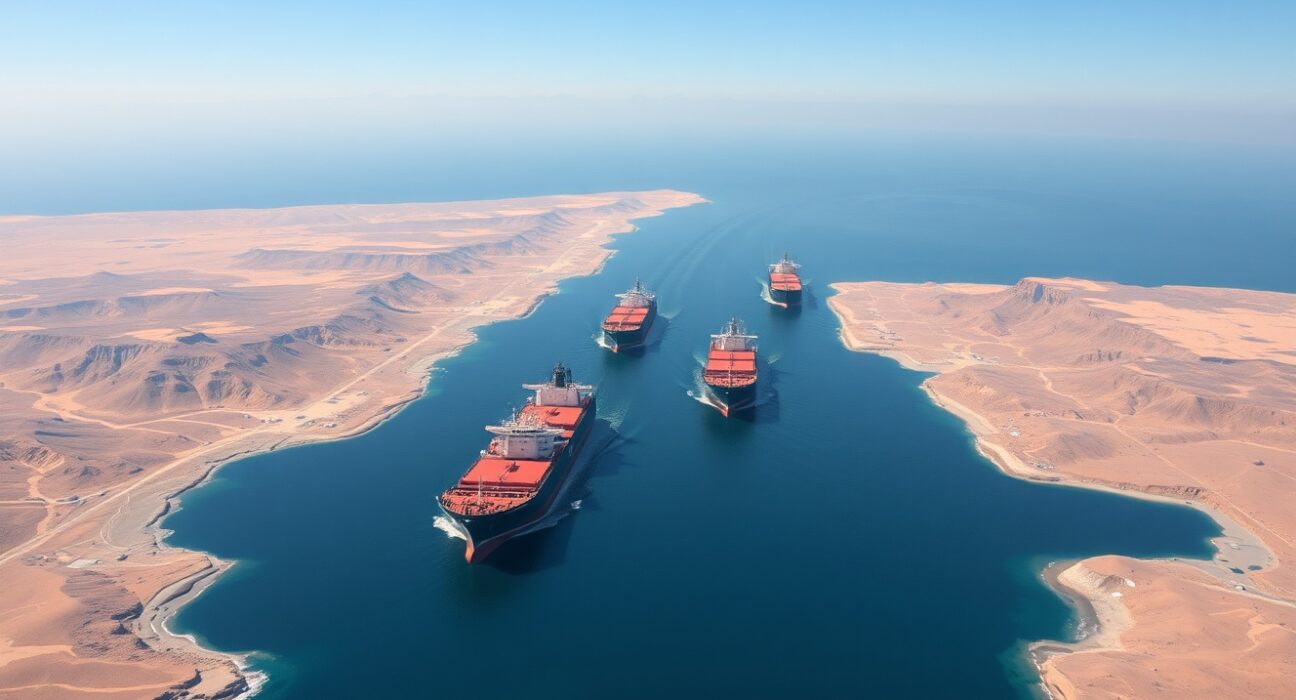
WASHINGTON, D.C. – In a significant development for global energy markets and Middle East security, U.S. President Donald Trump stated that extending the current ceasefire agreement with Iran remains highly unlikely. Furthermore, he confirmed the strategic Strait of Hormuz will stay closed to unfettered commercial traffic pending a comprehensive new deal. This announcement immediately reverberated through diplomatic channels and financial centers worldwide, casting doubt on near-term stability in a region responsible for roughly one-fifth of the world’s oil supply.
Trump Iran Ceasefire Stance Hardens Regional Deadlock
President Trump delivered his assessment from the White House, framing the stalled negotiations as a matter of national security. Consequently, his administration maintains a firm position. The original ceasefire, a fragile holdover from earlier diplomatic efforts, temporarily halted certain Iranian nuclear activities. However, it provided only a narrow window for further talks. Experts note the window is now closing rapidly. “The President’s statement reflects a calculated risk,” explains Dr. Anya Petrova, a senior fellow at the Center for Strategic and International Studies. “It signals to Tehran that Washington will not simply extend deadlines without substantive concessions, particularly on ballistic missile programs and regional proxy activities.”
This hardline posture follows months of intermittent discussions. European mediators have struggled to bridge the gap between U.S. demands and Iran’s insistence on sanctions relief. The table below outlines the core, publicly stated positions of the primary actors:
| Party | Primary Demand | Key Sticking Point |
|---|---|---|
| United States | Permanent restrictions on uranium enrichment and missile development | Iran’s support for regional militias |
| Iran | Lifting of all economic sanctions prior to any new commitments | Guarantees against future U.S. withdrawal from an agreement |
| European Union (Mediator) | Return to compliance with the 2015 JCPOA framework as a baseline | Rebuilding trust between Washington and Tehran |
Strait of Hormuz Closure Carries Global Economic Weight
The explicit linkage of the Strait of Hormuz’s status to a deal elevates the economic stakes considerably. This narrow sea passage, only 21 miles wide at its narrowest point, is arguably the world’s most important oil transit chokepoint. The U.S. Navy’s Fifth Fleet, based in Bahrain, currently enforces a restricted transit protocol. Essentially, commercial shipping requires explicit naval escort or faces significant delays. The immediate impacts are multifaceted:
- Oil Prices: Brent crude futures surged over 4% following the announcement, reflecting market anxieties about supply constraints.
- Shipping Costs: Insurance premiums for vessels transiting the region have skyrocketed, adding cost to global trade.
- Alternative Routes: Some oil exporters are exploring longer, costlier paths, such as the Red Sea or overland pipelines, but capacity remains limited.
Moreover, the closure acts as a powerful economic lever. Iran has historically threatened to block the strait in response to severe sanctions. Now, the U.S.-enforced restriction turns that threat on its head, applying pressure directly to Iran’s primary geopolitical tool. “The strait’s closure is a double-edged sword,” notes maritime security analyst Captain Richard Vance (Ret.). “While it pressures Iran, it also strains relations with Gulf allies and global partners who depend on free navigation. The longer it persists, the greater the diplomatic and economic friction.”
Historical Context and Escalation Risks
To understand the current impasse, one must consider the recent timeline. The 2015 Joint Comprehensive Plan of Action (JCPOA) collapsed after the U.S. withdrawal in 2018. Subsequently, a period of “maximum pressure” sanctions and retaliatory attacks on tankers ensued. The current ceasefire, negotiated in late 2024, was always viewed as temporary. Regional powers are now positioning themselves. For instance, Saudi Arabia and the United Arab Emirates have accelerated investments in oil infrastructure that bypasses the strait, like the East-West Petroline. Meanwhile, Iran recently concluded military exercises showcasing its asymmetric naval capabilities, including swarms of fast attack boats and anti-ship missiles.
This military posturing underscores the latent risk of miscalculation. A confrontation between U.S. and Iranian naval forces, even if unintended, could rapidly escalate. The International Energy Agency has warned member countries to be prepared to release strategic petroleum reserves if the disruption becomes prolonged. Furthermore, global manufacturing sectors, already grappling with supply chain issues, face renewed input cost pressures.
Pathways Forward and Diplomatic Scenarios
Despite the grim prognosis, several potential pathways remain. Backchannel communications reportedly continue through intermediaries in Oman and Switzerland. The European Union’s foreign policy chief is scheduled to visit both capitals next week in a last-ditch effort. Possible scenarios include a short-term technical extension to finalize details or a phased agreement where initial sanctions relief is exchanged for a verifiable halt to 60% uranium enrichment. However, the public rhetoric from both sides leaves little room for optimism. President Trump’s statement effectively sets a hard deadline, compelling other nations to choose between accommodating U.S. strategy or crafting an independent response.
The situation also tests international law regarding freedom of navigation. While the U.S. cites security provisions, some legal scholars argue the measure constitutes a blockade, which typically requires a formal declaration of war or U.N. Security Council authorization. This legal ambiguity may lead to challenges in international forums, further complicating the diplomatic landscape.
Conclusion
President Trump’s declaration that a Trump Iran ceasefire extension is highly unlikely, coupled with the maintained closure of the Strait of Hormuz, marks a critical juncture in Middle East geopolitics. The decision prioritizes leverage over immediate de-escalation, betting that economic and military pressure will eventually yield a more favorable agreement. The global consequences—from oil prices to regional security—are immediate and substantial. The coming weeks will determine whether this high-stakes strategy forces a breakthrough or deepens a dangerous and costly stalemate, keeping the world’s most vital oil artery under restricted flow.
FAQs
Q1: Why is the Strait of Hormuz so important?
The Strait of Hormuz is a critical maritime chokepoint between the Gulf of Oman and the Persian Gulf. Approximately 20-30% of the world’s seaborne traded oil, about 21 million barrels per day, passes through it. Its closure disrupts global energy supplies and trade routes.
Q2: What was the previous ceasefire agreement between the U.S. and Iran?
The ceasefire was a temporary, informal understanding reached in late 2024. It halted the further expansion of Iran’s nuclear program (specifically enrichment above 60%) and paused certain aggressive military actions in the region, in exchange for a limited pause on some new U.S. sanctions. It was intended to create space for formal negotiations.
Q3: How does the Strait’s closure affect global oil prices?
The restriction of traffic through the Strait of Hormuz creates a physical constraint on supply. Markets anticipate potential shortages, which drives up the futures price of crude oil. This increase then filters down to higher prices for gasoline, diesel, and other petroleum products worldwide.
Q4: What are Iran’s main demands in any new deal?
Iran’s central demands are the verifiable and permanent lifting of all U.S. and international economic sanctions, a guarantee that future U.S. administrations will not abandon the deal, and recognition of its right to a peaceful nuclear energy program.
Q5: Can oil be transported without using the Strait of Hormuz?
Yes, but options are limited and more expensive. Alternatives include using the Sumed pipeline in Egypt (which has limited capacity), the East-West Petroline across Saudi Arabia, or shipping oil around the southern tip of Africa via the Cape of Good Hope, which adds significant time and cost to voyages.
Disclaimer: The information provided is not trading advice, Bitcoinworld.co.in holds no liability for any investments made based on the information provided on this page. We strongly recommend independent research and/or consultation with a qualified professional before making any investment decisions.
