
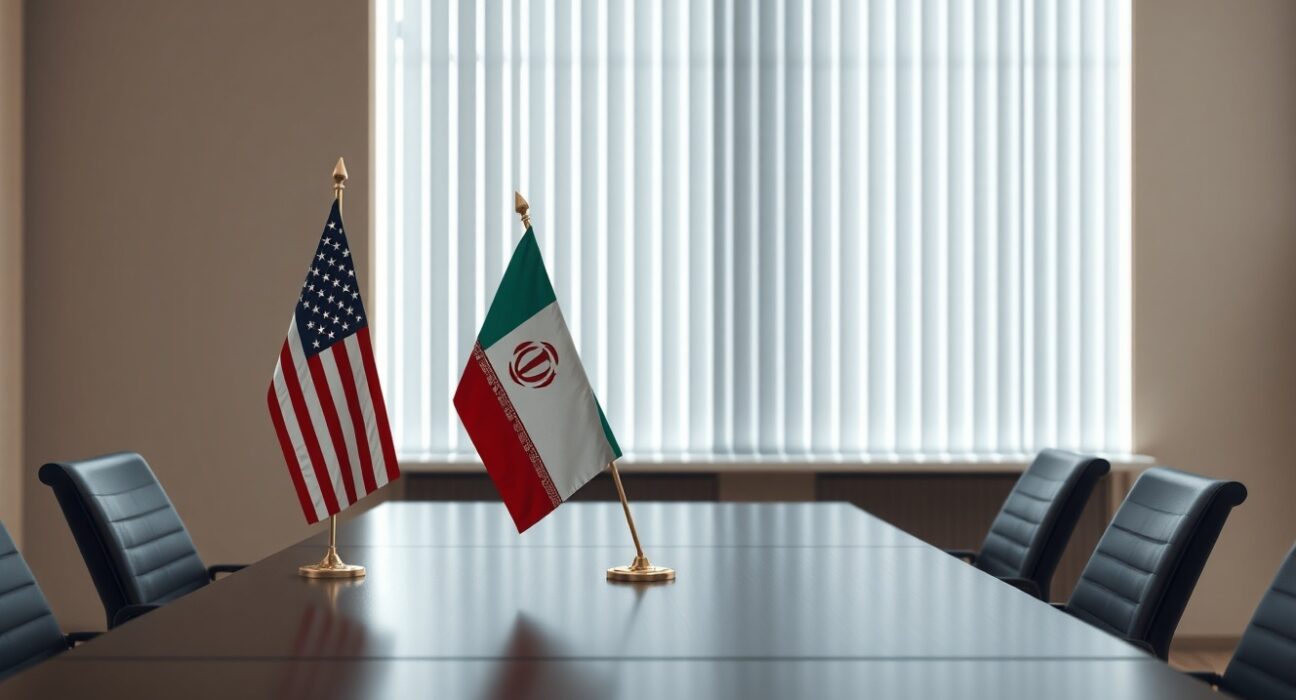
In a significant diplomatic development, President Donald Trump announced that the United States has entered into productive talks with Iran, with negotiations reportedly commencing last Saturday evening. The President stated that Iran has expressed a desire for peace and has agreed to relinquish its nuclear weapons program, setting a five-day timeline for the process. This announcement, made from the White House on Wednesday, marks a potential turning point in one of the world’s most tense geopolitical standoffs.
Trump Iran Talks: The Saturday Evening Breakthrough
President Trump revealed the diplomatic breakthrough during a press briefing, confirming that discussions with Iranian officials began quietly last Saturday. Consequently, this development follows months of escalating tensions in the Persian Gulf. The President emphasized the productive nature of the current dialogue. Moreover, he specifically noted Iran’s stated willingness to abandon its nuclear weapons ambitions. This announcement immediately captured global attention from capitals worldwide.
Historically, relations between Washington and Tehran have remained strained since the 1979 Iranian Revolution. The 2015 Joint Comprehensive Plan of Action (JCPOA), commonly known as the Iran nuclear deal, temporarily eased tensions. However, President Trump withdrew the United States from that agreement in May 2018, reinstating severe economic sanctions. Therefore, this new round of talks represents a dramatic shift in diplomatic strategy and tone from the previous maximum pressure campaign.
Analyzing the Nuclear Weapons Agreement
The core of President Trump’s announcement centers on Iran’s alleged agreement to give up its nuclear weapons. Importantly, Iran has consistently maintained that its nuclear program remains entirely peaceful under the Nuclear Non-Proliferation Treaty (NPT). The International Atomic Energy Agency (IAEA) has repeatedly verified Iranian compliance with the JCPOA’s nuclear restrictions until 2019. However, following the U.S. withdrawal and renewed sanctions, Iran gradually resumed previously prohibited nuclear activities.
Key nuclear capabilities Iran has developed include:
- Uranium Enrichment: Iran currently enriches uranium up to 60% purity
- Centrifuge Advancement: Installation of advanced IR-2m and IR-6 centrifuges
- Stockpile Accumulation: Significant growth in enriched uranium reserves
- Research & Development: Continued work on nuclear reactor technology
President Trump’s five-day timeline presents an unusually compressed framework for such complex negotiations. Typically, nuclear agreements require months or years of technical discussions. For comparison, the original JCPOA negotiations spanned nearly two years from serious talks to final agreement. This accelerated timeline suggests either remarkable prior groundwork or potentially different negotiation parameters than traditional comprehensive agreements.
Regional Security Implications
The potential resolution of the Iranian nuclear issue carries profound implications for Middle Eastern security architecture. Regional powers, particularly Israel and Saudi Arabia, have consistently expressed grave concerns about Iranian nuclear capabilities. Simultaneously, European allies have sought to preserve the original JCPOA framework through diplomatic channels. A genuine agreement could potentially reshape regional alliances and security calculations across the Gulf region.
Furthermore, any nuclear agreement would inevitably intersect with other regional issues including:
- Iran’s ballistic missile program development
- Tehran’s support for regional proxy groups
- Maritime security in the Strait of Hormuz
- Ongoing conflicts in Yemen and Syria
The Diplomatic Context and Verification Challenges
Diplomatic experts immediately noted the unusual nature of this announcement. Traditionally, sensitive nuclear negotiations proceed discreetly until parties reach substantial agreement. The public revelation of a specific start date and timeline represents a departure from standard diplomatic practice. Additionally, the five-day window raises questions about what specific commitments Iran might have made and what verification mechanisms would ensure compliance.
Verification remains the cornerstone of any effective nuclear agreement. The IAEA maintains extensive monitoring and inspection protocols developed over decades. Any new agreement would likely require:
| Verification Component | Potential Requirement |
|---|---|
| International Inspections | Unimpeded IAEA access to declared sites |
| Transparency Measures | Continuous monitoring of centrifuge production |
| Technical Constraints | Limits on enrichment levels and stockpiles |
| Duration Provisions | Time-bound restrictions with review mechanisms |
Moreover, the announcement comes amid ongoing economic challenges for Iran. U.S. sanctions have significantly impacted Iran’s oil exports and access to international financial systems. Consequently, economic relief likely forms a central component of any potential agreement. The specific sanctions relief package and its implementation timeline would crucially influence the durability of any nuclear understanding.
Historical Precedents and Future Scenarios
This development follows multiple cycles of confrontation and diplomacy between the United States and Iran. The 2015 JCPOA represented the most comprehensive previous agreement. Its collapse and the subsequent pressure campaign created the current diplomatic landscape. Now, potential pathways forward include a return to JCPOA parameters, a new modified agreement, or a more limited understanding addressing immediate concerns.
Regional reactions will significantly influence implementation. Israel has previously conducted military operations against Iranian nuclear facilities and infrastructure. Saudi Arabia and other Gulf states have sought security guarantees against Iranian regional influence. European powers continue to advocate for diplomatic solutions while maintaining their own economic interests. Therefore, a sustainable agreement would require addressing not just U.S.-Iran bilateral issues but broader regional security concerns.
Economic Dimensions and Sanctions Relief
The economic dimension remains crucial for any lasting agreement. Iran’s economy has contracted under comprehensive U.S. sanctions, particularly affecting oil exports and banking access. Potential sanctions relief could involve:
- Reauthorization of Iranian oil exports to international markets
- Access to frozen assets held in foreign banks
- Reconnection to international financial messaging systems
- Permission for foreign investment in key Iranian sectors
However, sanctions relief involves complex legal and procedural hurdles. Congressional review requirements, existing legislation, and multilateral sanction regimes all present challenges. Additionally, any agreement would need to survive potential political transitions in both countries, requiring durable institutional support beyond immediate diplomatic announcements.
Conclusion
President Trump’s announcement regarding productive Trump Iran talks represents a potentially transformative moment in Middle Eastern diplomacy. The revelation that discussions began last Saturday evening, coupled with Iran’s reported agreement to abandon nuclear weapons, suggests significant diplomatic movement. However, the compressed five-day timeline and complex verification requirements present substantial challenges. The coming days will reveal whether this announcement leads to a sustainable agreement or represents another chapter in the long, complicated relationship between Washington and Tehran. Ultimately, the region and the world await concrete details and verifiable implementation of any understanding reached through these delicate Trump Iran talks.
FAQs
Q1: When did the Trump administration say talks with Iran began?
A1: President Trump stated that productive talks with Iran began last Saturday evening, marking the start of this new diplomatic engagement.
Q2: What did Iran agree to according to President Trump’s announcement?
A2: According to the announcement, Iran has agreed to give up its nuclear weapons program and has expressed a desire for peace with the United States.
Q3: What is the timeline mentioned for these negotiations?
A3: President Trump mentioned a five-day timeline for the process, though he did not specify what exactly would occur within that period or what would follow.
Q4: How does this development relate to the previous Iran nuclear deal (JCPOA)?
A4: This represents a new diplomatic initiative following the U.S. withdrawal from the JCPOA in 2018. It remains unclear whether this would restore the original agreement, modify it, or create an entirely new framework.
Q5: What are the main challenges facing these negotiations?
A5: Key challenges include verification mechanisms for any nuclear commitments, the scope of sanctions relief, regional security concerns, and the unusually compressed negotiation timeline mentioned in the announcement.
Disclaimer: The information provided is not trading advice, Bitcoinworld.co.in holds no liability for any investments made based on the information provided on this page. We strongly recommend independent research and/or consultation with a qualified professional before making any investment decisions.