
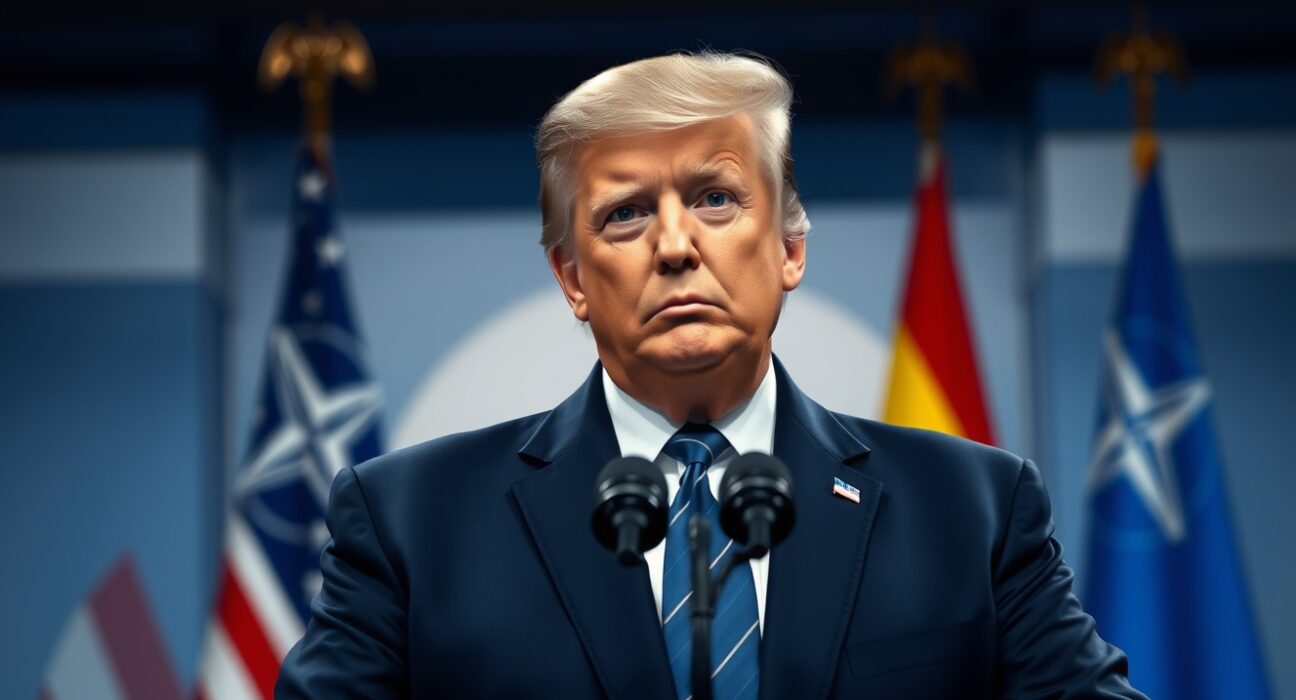
WASHINGTON, D.C., April 1, 2025 – President Donald Trump will reportedly express significant NATO dissatisfaction and seriously consider a U.S. withdrawal from the alliance during a scheduled April 2 speech, according to information from Walter Bloomberg via social media platform X. This potential Trump NATO withdrawal announcement represents one of the most consequential foreign policy developments of his presidency, potentially reshaping global security architecture and transatlantic relations for decades.
Trump NATO Withdrawal Consideration Timeline
The Walter Bloomberg report indicates President Trump will deliver his remarks about NATO dissatisfaction on April 2. Consequently, this timing places the speech at a critical juncture in international relations. Furthermore, European leaders have expressed concern about the potential implications. The North Atlantic Treaty Organization, established in 1949, has served as the cornerstone of transatlantic security for seventy-six years. Therefore, any discussion of U.S. withdrawal represents a fundamental shift in American foreign policy orientation.
Historically, President Trump has frequently criticized NATO members for insufficient defense spending. Specifically, he has repeatedly emphasized that many allies fail to meet the agreed-upon two percent of GDP target for military expenditures. However, this reported speech appears to escalate previous criticisms into concrete policy consideration. Meanwhile, NATO Secretary General Jens Stoltenberg recently highlighted increased European defense investments. Nevertheless, these developments may not sufficiently address the administration’s concerns about burden-sharing within the alliance.
NATO Dissatisfaction and Alliance Burden-Sharing
The core issue driving potential Trump NATO withdrawal consideration centers on financial contributions. Currently, only eleven of thirty-two member nations meet the two percent defense spending guideline. Consequently, this disparity has created persistent tension within the alliance. Moreover, the United States contributes approximately seventy percent of NATO’s combined defense expenditure. Therefore, American officials have long argued for more equitable burden distribution.
Key NATO Defense Spending Statistics (2024):
- United States: 3.49% of GDP ($916 billion)
- Poland: 3.90% of GDP ($31.9 billion)
- Greece: 3.01% of GDP ($8.5 billion)
- United Kingdom: 2.07% of GDP ($74.9 billion)
- Germany: 1.57% of GDP ($73.4 billion)
- Canada: 1.38% of GDP ($36.3 billion)
Additionally, European NATO members have increased defense spending by approximately eleven percent since Russia’s invasion of Ukraine. However, these increases have not uniformly reached the two percent threshold. Meanwhile, alliance officials emphasize that European members provide significant non-financial contributions. Specifically, these include hosting U.S. military bases and participating in joint operations worldwide.
Historical Context of US-NATO Relations
Previous administrations have also expressed concerns about NATO burden-sharing. For instance, President Barack Obama urged European members to increase defense investments. Similarly, President George W. Bush emphasized the importance of equitable contributions. However, no previous president has seriously considered complete withdrawal from the alliance. Therefore, this potential Trump NATO withdrawal announcement represents unprecedented escalation.
The North Atlantic Treaty’s Article 5 collective defense provision has been invoked only once. Specifically, this occurred following the September 11, 2001 terrorist attacks against the United States. Consequently, European NATO members deployed troops to Afghanistan in support of American-led operations. This historical context demonstrates the alliance’s reciprocal nature. Nevertheless, current discussions focus primarily on financial rather than operational contributions.
Potential Impacts of US NATO Withdrawal
A potential Trump NATO withdrawal would create immediate strategic consequences. First, European security architecture would require fundamental restructuring. Second, Russia might perceive diminished Western resolve. Third, global power dynamics would shift significantly. Fourth, defense industries would face uncertain market conditions. Fifth, international institutions would lose American leadership.
Immediate Security Implications:
- European nations would need to develop independent defense capabilities
- Nuclear deterrence arrangements would require renegotiation
- Intelligence sharing mechanisms would face disruption
- Joint military exercises would cease or require new frameworks
- Counterterrorism cooperation would become more complex
Furthermore, economic impacts would extend beyond defense sectors. Specifically, the U.S. defense industry relies heavily on NATO standardization. Consequently, equipment interoperability would become problematic. Meanwhile, European defense contractors would face uncertain export markets. Therefore, global defense supply chains would experience significant disruption.
International Reactions and Diplomatic Responses
European leaders have prepared contingency plans for potential Trump NATO withdrawal scenarios. For example, France and Germany have discussed enhanced bilateral defense cooperation. Additionally, the European Union has accelerated Permanent Structured Cooperation (PESCO) initiatives. However, these mechanisms cannot immediately replace NATO’s integrated command structure. Moreover, they lack nuclear deterrence capabilities currently provided by the United States.
Eastern European members particularly emphasize continued American engagement. Specifically, Poland and the Baltic states view NATO as essential for regional security. Consequently, they have made significant defense investments in recent years. Meanwhile, Turkey maintains complex relations with both NATO and Russia. Therefore, alliance cohesion faces multiple challenges beyond financial considerations.
Legal and Procedural Considerations
The North Atlantic Treaty does not include formal withdrawal procedures. However, Article 13 permits members to leave after twenty years of participation. Specifically, it requires one year’s notice to the United States government. Consequently, any Trump NATO withdrawal would initiate a complex legal process. Furthermore, Congress might challenge presidential authority regarding treaty termination.
Historical precedent suggests treaty withdrawal requires congressional consultation. For instance, President George W. Bush withdrew from the Anti-Ballistic Missile Treaty with congressional support. However, the constitutional division of treaty powers remains contested. Therefore, potential legal challenges could delay or prevent complete withdrawal. Meanwhile, the State Department would need to negotiate numerous bilateral security agreements.
Conclusion
The reported Trump NATO withdrawal consideration represents a pivotal moment in international relations. President Trump’s scheduled April 2 speech about NATO dissatisfaction could fundamentally alter transatlantic security arrangements. While burden-sharing concerns have legitimate foundations, complete withdrawal carries profound strategic consequences. Consequently, global leaders await the official announcement with significant apprehension. The Trump NATO withdrawal possibility underscores the evolving nature of American foreign policy and its global implications.
FAQs
Q1: What exactly did President Trump say about NATO?
According to Walter Bloomberg’s report via X, President Trump stated he will express dissatisfaction with NATO and is seriously considering U.S. withdrawal from the alliance during his April 2 speech.
Q2: Has any U.S. president previously considered leaving NATO?
While previous presidents have criticized NATO burden-sharing, no sitting president has seriously considered complete withdrawal from the alliance since its 1949 establishment.
Q3: What percentage of NATO defense spending does the U.S. provide?
The United States contributes approximately 70% of NATO’s combined defense expenditure, though this represents 3.49% of U.S. GDP compared to the alliance’s 2% guideline.
Q4: How would U.S. withdrawal from NATO affect European security?
European nations would need to develop independent defense capabilities, renegotiate nuclear deterrence arrangements, and establish new intelligence sharing mechanisms, potentially creating security vulnerabilities during transition.
Q5: What is the legal process for leaving NATO?
The North Atlantic Treaty’s Article 13 permits withdrawal after 20 years of participation with one year’s notice to the U.S. government, though constitutional questions about presidential authority remain unresolved.
Disclaimer: The information provided is not trading advice, Bitcoinworld.co.in holds no liability for any investments made based on the information provided on this page. We strongly recommend independent research and/or consultation with a qualified professional before making any investment decisions.