
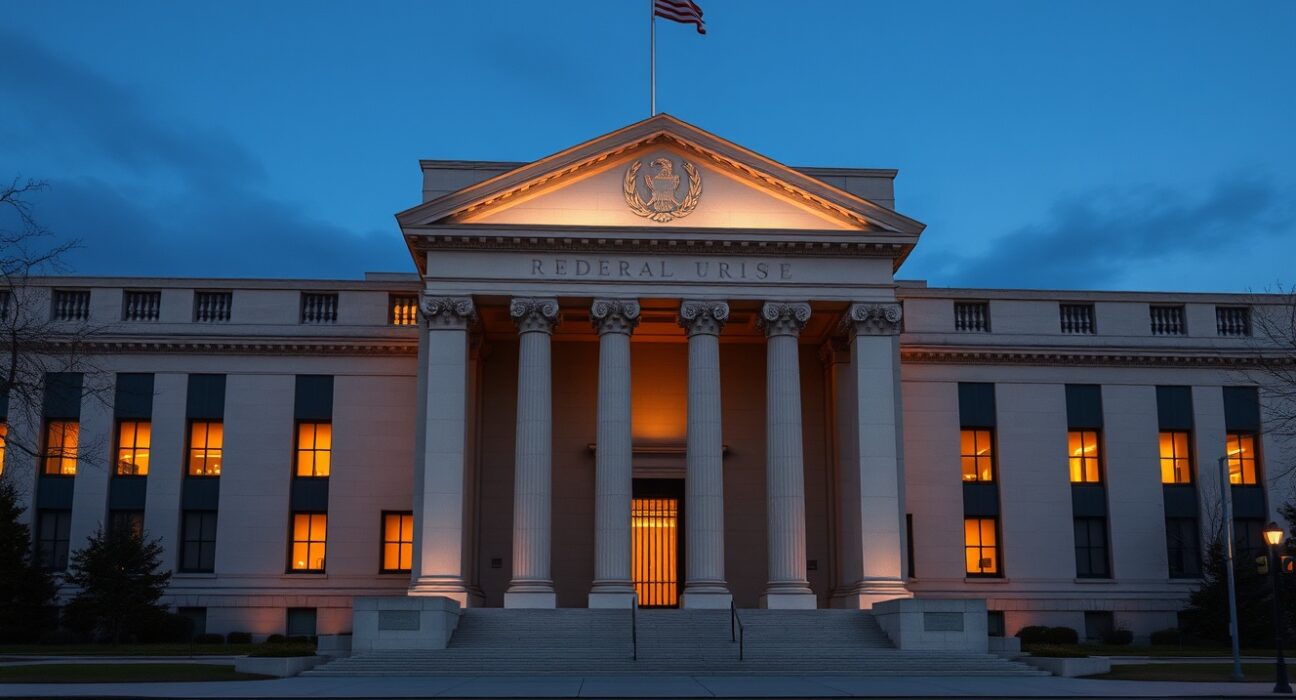
WASHINGTON, D.C. – March 2025: President Donald Trump has publicly urged Federal Reserve Chairman Jerome Powell to implement an immediate interest rate cut, bypassing the traditional policy meeting schedule and sparking significant debate about central bank independence. This unprecedented call for action comes amid evolving economic indicators and represents a notable development in the ongoing relationship between the executive branch and the nation’s monetary authority.
Trump’s Direct Appeal to Powell for Immediate Action
President Trump’s call for immediate rate reduction represents a departure from established Federal Reserve protocols. The Federal Open Market Committee typically meets on a predetermined schedule, with eight regularly scheduled meetings per year. However, the President’s statement suggests he believes current economic conditions warrant emergency intervention. This development follows several quarters of mixed economic data and shifting global financial dynamics.
Historically, presidents have generally avoided direct public pressure on Fed chairs regarding specific policy actions. The Federal Reserve operates with statutory independence to make monetary policy decisions without political interference. Nevertheless, President Trump’s public statement creates a notable precedent for executive-branch involvement in monetary policy discussions. The relationship between the two officials has experienced previous tensions during earlier administrations.
Federal Reserve Independence Under Scrutiny
The Federal Reserve’s independence represents a cornerstone of modern monetary policy. Congress established this independence to shield monetary decisions from short-term political pressures. Central bank autonomy allows for decisions based on long-term economic stability rather than electoral cycles. Many economists argue this independence proves crucial for maintaining price stability and economic growth.
However, presidential influence on monetary policy is not without historical precedent. Previous administrations have occasionally expressed preferences regarding interest rate directions. The current situation stands out due to the specific nature of the request and its public delivery. Chairman Powell now faces the complex task of balancing economic considerations with institutional norms.
Economic Context and Market Implications
The call for immediate rate cuts occurs against a backdrop of specific economic indicators. Recent data shows:
- Moderating inflation rates compared to previous years
- Mixed employment figures across different sectors
- Volatility in certain financial markets
- Changing global economic conditions affecting trade
Financial markets typically respond to both actual policy changes and expectations about future actions. The public nature of this request introduces additional variables for investors to consider. Market analysts will closely monitor how the Federal Reserve responds to this unusual public pressure.
Historical Precedents and Institutional Norms
The Federal Reserve has occasionally called emergency meetings throughout its history. These special sessions typically address urgent economic developments requiring immediate attention. However, external public pressure to convene such a meeting represents a different dynamic. The institution maintains established procedures for considering rate changes outside regular meetings.
| Year | Situation | Action Taken |
|---|---|---|
| 2020 | COVID-19 Pandemic | Emergency rate cut between meetings |
| 2008 | Global Financial Crisis | Coordinated emergency measures |
| 2001 | September 11 Attacks | Emergency liquidity provisions |
Each previous emergency action responded to clear, immediate economic crises. The current situation differs because the call for action comes from outside the Federal Reserve system. This distinction raises questions about decision-making criteria and institutional boundaries.
Potential Economic Impacts of Accelerated Rate Cuts
Interest rate decisions influence multiple aspects of the economy. Lower rates typically stimulate borrowing and investment while potentially affecting currency values and inflation. An accelerated timeline for rate changes could produce several effects:
First, businesses might accelerate investment decisions expecting lower borrowing costs. Second, consumers could increase spending on credit-sensitive purchases. Third, financial markets might experience increased volatility during the policy uncertainty period. Finally, international economic relationships could be affected by currency valuation changes.
The Federal Reserve must weigh these potential impacts against the risks of maintaining current policy. Economic modeling suggests different outcomes depending on the timing and magnitude of any policy change. The central bank’s dual mandate of maximum employment and price stability guides these complex calculations.
Expert Perspectives on Monetary Policy Timing
Economic analysts offer varied perspectives on optimal monetary policy timing. Some experts argue that preemptive action can prevent more severe economic adjustments later. Others caution against policy changes based on political rather than economic considerations. The diversity of professional opinions reflects the complexity of current economic conditions.
Most economists agree that monetary policy works with significant lags. Policy changes today typically affect the economy months later. This reality complicates decisions about timing, especially when considering accelerated action. The Federal Reserve’s extensive economic research staff provides data-driven analysis to inform these critical decisions.
Conclusion
President Trump’s public urging for an immediate interest rate cut places Chairman Powell and the Federal Reserve in a challenging position. This development tests the boundaries of central bank independence while highlighting ongoing debates about optimal monetary policy. The Federal Reserve’s response will signal its commitment to data-driven decision-making amid external pressures. Financial markets and economic observers will closely monitor whether this unprecedented public call for action influences the timing or substance of monetary policy decisions. The situation underscores the delicate balance between democratic accountability and technical expertise in economic governance.
FAQs
Q1: Can the President legally force the Federal Reserve to cut interest rates?
The Federal Reserve operates with statutory independence in monetary policy matters. While the President appoints Fed chairs and board members, the institution makes policy decisions independently. The President cannot legally mandate specific interest rate actions.
Q2: How often does the Federal Reserve typically change interest rates?
The Federal Open Market Committee meets eight times annually to review monetary policy. Rate changes typically occur during these scheduled meetings, though emergency meetings can be called for urgent situations requiring immediate action.
Q3: What economic conditions typically justify interest rate cuts?
The Federal Reserve considers multiple factors including inflation trends, employment data, economic growth indicators, and financial market conditions. Rate cuts often respond to economic slowdowns, rising unemployment, or deflationary pressures.
Q4: How quickly can the Federal Reserve implement an emergency rate cut?
The Fed can convene an emergency meeting with relatively short notice. Historical examples show emergency actions implemented within days of recognizing urgent economic situations requiring immediate policy response.
Q5: What are the potential risks of cutting interest rates too quickly?
Premature rate cuts could potentially reignite inflationary pressures, reduce policy flexibility for future economic challenges, create asset bubbles, or weaken the currency excessively. The Federal Reserve must balance these risks against the benefits of stimulus.
Disclaimer: The information provided is not trading advice, Bitcoinworld.co.in holds no liability for any investments made based on the information provided on this page. We strongly recommend independent research and/or consultation with a qualified professional before making any investment decisions.