

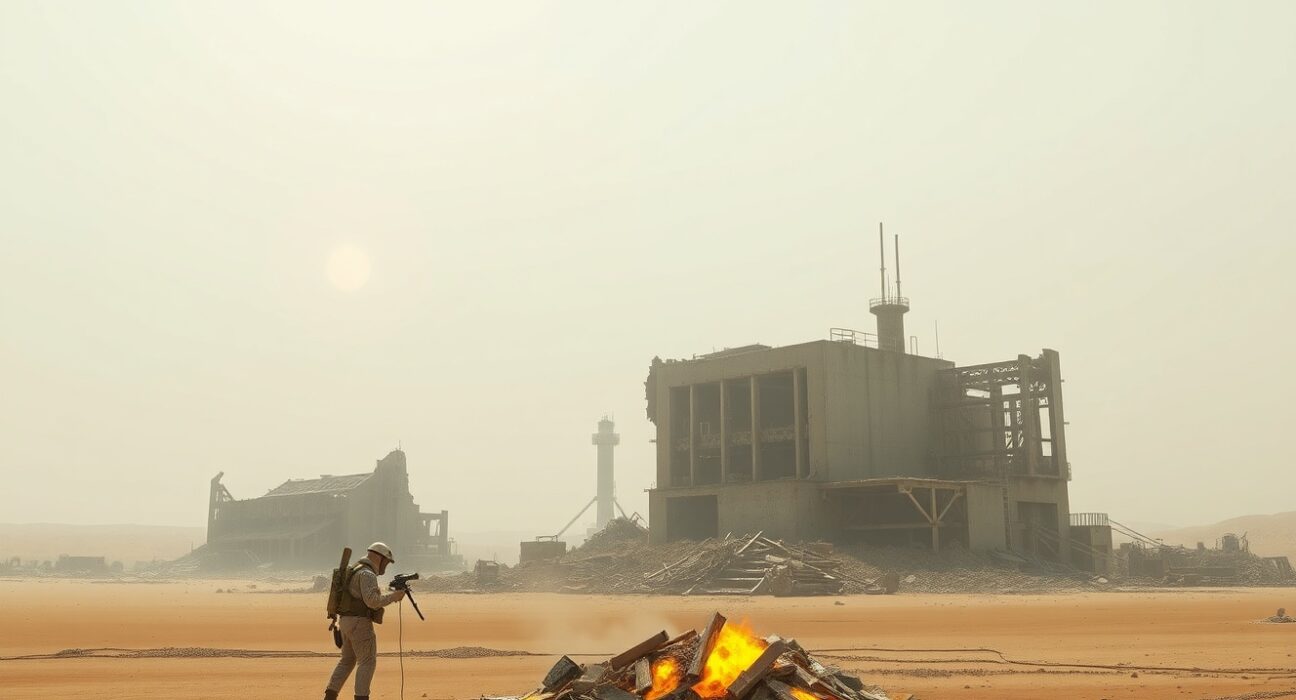
Washington, D.C. — Former President Donald Trump has indicated that the United States may revive Project Freedom, a previously suspended military operation aimed at securing and removing nuclear materials from damaged Iranian facilities. In an interview with Fox News, Trump stated that the U.S. must recover what he described as “nuclear dust” from Iran’s destroyed nuclear infrastructure, arguing that Iran lacks the technical capability to handle the materials safely.
Background of Project Freedom
Project Freedom was initially launched on May 4 as a military mission to rescue ships stranded in the Strait of Hormuz. However, the operation was abruptly suspended just two days later, on May 6, without public explanation. The mission’s scope appeared to shift after the suspension, with Trump now framing it as a nuclear safety and nonproliferation effort.
The Strait of Hormuz, a critical chokepoint for global oil shipments, has been a flashpoint for tensions between the U.S. and Iran for decades. The initial rescue mission was widely seen as a response to escalating maritime incidents in the region.
Renewed Regional Support
Speculation that the U.S. might reconsider the operation has grown significantly since May 7, when Saudi Arabia and Kuwait reauthorized the use of their military bases and airspace for U.S. forces. This decision by two key Gulf allies signals a potential shift in regional alignment and could provide the logistical foundation needed to restart a broader military mission.
The reauthorization is particularly noteworthy given the complex diplomatic relationships in the region. Both Saudi Arabia and Kuwait have historically been cautious about granting open-ended military access, making their recent decision a strong indicator of shared concern over Iran’s nuclear legacy.
Implications for Nonproliferation and Regional Stability
The mention of “nuclear dust” — a term not commonly used in official nuclear safety terminology — likely refers to radioactive debris and contaminated materials resulting from damaged or destroyed nuclear facilities. The safe handling, containment, and disposal of such materials require specialized equipment and expertise that Iran may lack, according to Trump’s statement.
If Project Freedom is resumed with a nuclear recovery mandate, it would represent a significant expansion of U.S. military involvement in Iran’s internal affairs. The operation would require coordination with international nuclear safety agencies, including the International Atomic Energy Agency (IAEA), and could set a precedent for post-conflict nuclear remediation efforts.
For readers, this development matters because it signals a potential escalation in U.S.-Iran tensions, with direct implications for global oil markets, regional security, and nuclear nonproliferation efforts. Any military operation involving the recovery of nuclear materials carries inherent risks, including the potential for accidental release of radioactive substances.
Conclusion
Trump’s renewed interest in Project Freedom, combined with renewed regional support from Saudi Arabia and Kuwait, suggests that the U.S. may be preparing for a more assertive posture in the Gulf. While details remain scarce and the operational timeline is unclear, the combination of nuclear safety concerns and strategic military positioning makes this a story worth monitoring closely. The coming weeks will likely reveal whether this signals a genuine policy shift or remains a rhetorical position.
FAQs
Q1: What is Project Freedom?
Project Freedom is a U.S. military operation initially launched on May 4 to rescue ships stranded in the Strait of Hormuz. It was suspended two days later. President Trump has now suggested the mission may be revived to include the recovery of nuclear materials from damaged Iranian facilities.
Q2: Why is the recovery of nuclear dust important?
Nuclear dust refers to radioactive debris and contaminated materials from destroyed nuclear facilities. If not properly contained and removed, such materials pose serious health and environmental risks, including potential radiation exposure and long-term contamination of the region.
Q3: How does Saudi Arabia and Kuwait’s decision affect the situation?
The reauthorization of U.S. military access to bases and airspace in Saudi Arabia and Kuwait provides the logistical infrastructure needed to support a large-scale operation in the region. This move signals that key Gulf allies are willing to support U.S. military action related to Iran’s nuclear situation.
Disclaimer: The information provided is not trading advice, Bitcoinworld.co.in holds no liability for any investments made based on the information provided on this page. We strongly recommend independent research and/or consultation with a qualified professional before making any investment decisions.
