

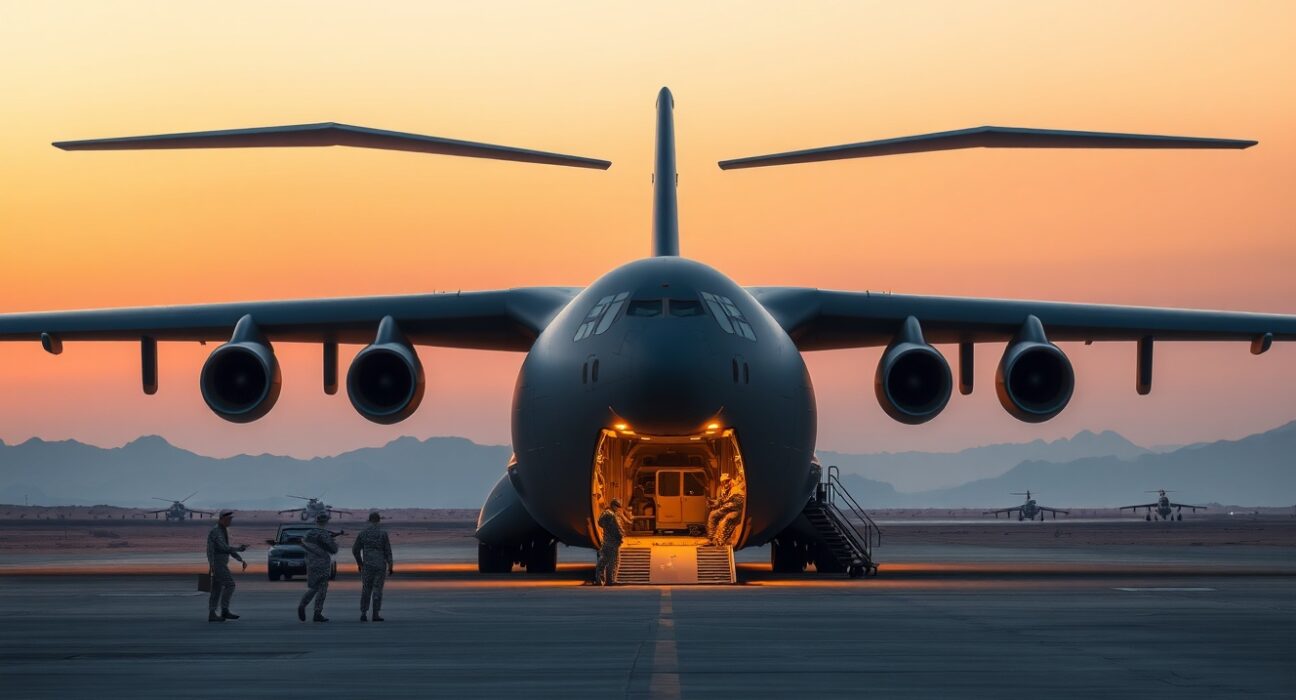
WASHINGTON, D.C. – In a significant escalation of military posture, President Donald Trump is authorizing the deployment of thousands of additional American troops to the Middle East, a strategic move explicitly designed to increase pressure on Iran, according to a detailed report from The Washington Post. This deployment, confirmed by multiple defense officials, marks a pivotal moment in the ongoing strategic competition between the United States and the Islamic Republic, directly impacting regional security dynamics from the Persian Gulf to the Levant.
Trump’s Troop Deployment to the Middle East
The Washington Post report outlines a substantial reinforcement of US military assets across the Central Command (CENTCOM) area of operations. Consequently, this decision follows a period of heightened tensions characterized by incidents involving commercial shipping, attacks on energy infrastructure, and the downing of unmanned aerial vehicles. The deployment includes a mix of personnel from various service branches, potentially encompassing infantry, aviation, naval, and logistical support units. Furthermore, their primary mission will be to enhance force protection for existing assets and to provide a more robust deterrent against what US officials describe as Iranian provocations. This move represents a clear shift from diplomatic and economic pressure to a more overt military signaling strategy.
Historically, the United States has maintained a significant force presence in the region since the 1990-1991 Gulf War. The current baseline includes approximately 60,000 to 80,000 troops across countries like Iraq, Syria, Kuwait, Qatar, Bahrain, and the United Arab Emirates. The new deployment could increase this number by a notable percentage, though specific figures remain classified. The Pentagon has consistently framed such deployments as “defensive in nature,” aimed at assuring regional allies of the US security commitment. However, analysts note that from Tehran’s perspective, any increase in US military capability nearby is perceived as an offensive threat, creating a classic security dilemma.
Strategic Context and Regional Pressure on Iran
This troop movement occurs within a complex geopolitical landscape defined by the US withdrawal from the 2015 Joint Comprehensive Plan of Action (JCPOA), commonly known as the Iran nuclear deal. The Trump administration subsequently reinstated a campaign of “maximum pressure” through sweeping economic sanctions targeting Iran’s oil exports, banking sector, and key individuals. The military deployment adds a tangible physical dimension to this campaign. Experts from think tanks like the International Institute for Strategic Studies (IISS) suggest the goal is multi-faceted: to deter direct Iranian military action, to reassure Gulf Cooperation Council (GCC) partners nervous about US commitment, and to complicate Iranian calculations regarding asymmetric warfare through proxy groups.
Key regional flashpoints directly influenced by this decision include:
- The Strait of Hormuz: A critical chokepoint for global oil shipments where Iran has previously threatened to disrupt navigation.
- Iraq and Syria: Where US forces and Iranian-backed militias operate in close, and sometimes hostile, proximity.
- Yemen: Where a Saudi-led coalition, supported by the US, fights the Iran-aligned Houthi movement.
European allies have expressed concern that military escalations could undermine remaining diplomatic efforts to salvage the nuclear deal. Meanwhile, regional actors have reacted divergently; Israel and Saudi Arabia have privately welcomed a stronger US stance, while Oman and Qatar continue to advocate for dialogue. The economic impact is immediate, with oil markets typically showing volatility following announcements of heightened military activity in the Gulf.
Military Analysis and Force Posture
From a defense planning perspective, deploying thousands of troops is a logistically intensive undertaking. It involves the movement of personnel, equipment, vehicles, and sustainment supplies across thousands of miles. The US military leverages a network of strategic airlift (C-5, C-17), sealift, and prepositioned stockpiles in theater to execute such movements. The specific units involved will determine the tactical implications. For instance, the deployment of additional Patriot missile defense batteries would signal a focus on countering rocket and drone threats, as seen in attacks on Saudi Aramco facilities. Conversely, sending more naval assets or maritime patrol aircraft would emphasize securing sea lanes.
The table below outlines potential unit types and their strategic purpose:
| Unit Type | Potential Strategic Purpose |
|---|---|
| Air Defense Artillery | Protect bases & allies from missile/drone attacks |
| Naval Expeditionary | Enhance maritime security & boarding operations |
| Cybersecurity Teams | Defend networks & conduct information operations |
| Logistics & Engineering | Improve base resilience & operational endurance |
This reinforcement also tests the US military’s capacity to manage multiple global commitments simultaneously, given ongoing priorities in Europe regarding Russia and in the Indo-Pacific regarding China. Military planners refer to this as “dynamic force employment,” aiming to make deployments less predictable and more responsive to emerging threats. The announcement, however, follows a traditional public disclosure pattern likely intended to maximize the deterrent message to Tehran.
Historical Precedents and Future Implications
The history of US force deployments in the Middle East is marked by cycles of buildup and drawdown, often in response to perceived Iranian actions. A notable precedent was the 2019 deployment of 14,000 additional troops following attacks on tankers and Saudi oil infrastructure. That deployment included bombers and an aircraft carrier strike group. The current move appears to fit a established pattern of using troop numbers as a diplomatic and coercive tool. However, each escalation carries the inherent risk of miscalculation. A 2020 report by the Congressional Research Service (CRS) highlighted the challenge of deterring Iran’s asymmetric “gray zone” tactics without triggering a conventional conflict neither side ostensibly wants.
Looking ahead, the implications are profound. For US domestic politics, the deployment renews debates about congressional war powers and the Authorization for Use of Military Force (AUMF). For the region, it solidifies a security architecture heavily dependent on American military power. For Iran, it likely reinforces the leadership’s narrative of American hostility, potentially strengthening hardline factions opposed to negotiation. The long-term sustainability of a heightened force posture is also a question, involving significant financial costs and strain on military personnel and families. Ultimately, the success of this pressure campaign will be measured not by troop numbers alone, but by whether it induces a change in Iranian behavior or simply deepens a dangerous and expensive stalemate.
Conclusion
The decision to send thousands more US troops to the Middle East represents a decisive and escalatory step in the Trump administration’s maximum pressure campaign against Iran. This military deployment, as reported by The Washington Post, directly translates economic and diplomatic sanctions into a tangible security presence. While aimed at deterrence and reassurance, it significantly alters the risk calculus in a volatile region. The move underscores the enduring centrality of the Middle East in US foreign policy and the continuing reliance on military tools to manage state rivalry. The coming months will reveal whether this increased pressure on Iran yields diplomatic leverage or further entrenches a cycle of action and reaction, with global energy and security stability hanging in the balance.
FAQs
Q1: How many troops is President Trump sending to the Middle East?
The exact number is classified, but The Washington Post report indicates it is in the range of “thousands” of additional personnel. This is a reinforcement of the existing US force presence in the region.
Q2: What is the stated reason for this troop deployment?
US officials state the deployment is defensive and intended to increase pressure on Iran by enhancing the US military’s ability to deter and respond to potential Iranian aggression or provocations against US forces or allies.
Q3: Where will these additional US troops be located?
They will likely be distributed across several countries in the US Central Command area, which could include bases in Kuwait, Qatar, Bahrain, the UAE, Iraq, and possibly Jordan or Saudi Arabia, depending on host-nation agreements.
Q4: How does this relate to the US “maximum pressure” campaign on Iran?
The troop deployment adds a direct military dimension to the campaign, which has primarily consisted of severe economic sanctions and diplomatic isolation. It signals a willingness to back diplomatic and economic pressure with military posture.
Q5: What has been the international reaction to this news?
Reactions are mixed. Key US allies in the region, like Israel and Saudi Arabia, are generally supportive. European allies express concern about escalation harming diplomacy. Iran condemns it as provocative and a threat to regional security.
Disclaimer: The information provided is not trading advice, Bitcoinworld.co.in holds no liability for any investments made based on the information provided on this page. We strongly recommend independent research and/or consultation with a qualified professional before making any investment decisions.
