
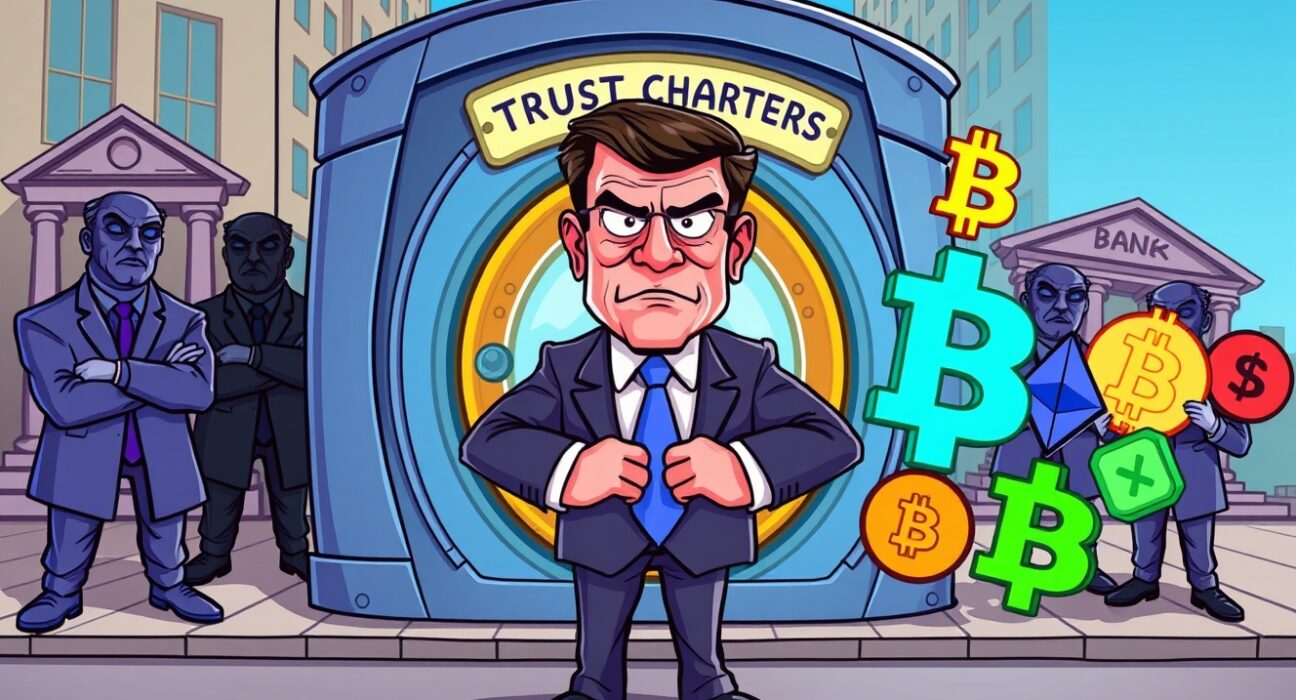
In a powerful move that could reshape the financial landscape, the U.S. Comptroller of the Currency has issued a stark warning to traditional banks. Jonathan Gould has criticized the industry for actively blocking cryptocurrency firms from obtaining vital crypto trust charters. This stand challenges the status quo and signals a potential new era of integration between digital assets and mainstream finance. Why are banks resisting, and what does this mean for the future of money?
What Are Crypto Trust Charters and Why Do They Matter?
Think of a trust charter as a special banking license. It allows a company to act as a fiduciary, holding and managing assets on behalf of clients. For crypto companies, securing a crypto trust charter is a game-changer. It provides a regulated pathway to offer custodial services, legitimizes their operations, and bridges the gap to the traditional financial system. Without it, they often face an uphill battle for credibility and access.
Gould’s core argument is simple yet revolutionary: there is no valid reason to treat digital assets differently from traditional ones like stocks or bonds. He insists that banks should not be confined to outdated technologies or business models that exclude innovation. This principle is at the heart of the debate over crypto trust charters.
Why Are Traditional Banks Pushing Back?
The resistance from established banks isn’t surprising, but the Comptroller is calling it out. Banks may fear the competition, the perceived risk of a new asset class, or the complexity of compliance. However, Gould points to the data: over the past year, new charter applications rose to 14, with many tied to digital assets and fintech. The demand is clearly there.
Moreover, the Office of the Comptroller of the Currency (OCC) is now investigating ‘de-banking’—where banks abruptly cut off services to crypto-related firms. This practice can stifle innovation and push activity into less regulated spaces. The warning against obstructing crypto trust charters is part of a broader push for fair access.
What Does This Mean for the Future of Crypto Banking?
This regulatory stance could unlock significant growth. If more firms secure crypto trust charters, we could see:
- Enhanced Consumer Protection: Assets held under a charter are subject to strict regulatory oversight and capital requirements.
- Mainstream Adoption: Easier for traditional investors and institutions to participate through trusted, regulated entities.
- Innovation in Financial Services: New products blending crypto efficiency with banking stability.
The Comptroller’s position acts as a catalyst. It encourages banks to adapt rather than obstruct, fostering an environment where crypto trust charters can be evaluated on their merits, not fear.
Navigating the Path Forward for Digital Assets
The message from the top is clear: obstruction is not a strategy. The financial system must evolve. For crypto companies, this opens a door, but the path still requires navigating complex regulatory standards to prove they are safe, sound, and fair custodians worthy of a charter.
For traditional banks, the warning is an invitation—or perhaps an ultimatum—to engage with the future. They can choose to be gatekeepers of the past or architects of a modern, inclusive financial system that includes digital assets. The push for equitable access to crypto trust charters is a central battleground in this transformation.
Conclusion: A Turning Point for Finance
Jonathan Gould’s warning is more than regulatory commentary; it’s a bold declaration of principle. By challenging banks to stop obstructing crypto trust charters, he advocates for a financial ecosystem defined by technological neutrality and competitive fairness. This stance, if upheld, could accelerate the merger of traditional and digital finance, creating a more robust and innovative market for everyone. The era of walls between old and new money may finally be ending.
Frequently Asked Questions (FAQs)
What is a crypto trust charter?
A crypto trust charter is a special banking license granted by a state or federal regulator (like the OCC) that allows a company to operate as a fiduciary, legally holding and safeguarding cryptocurrency assets for clients, similar to how a trust company holds traditional assets.
Why is the US Comptroller getting involved?
As the head of the OCC, which charters and supervises national banks, the Comptroller ensures the federal banking system is safe, sound, and fair. He sees unequal access to charters and practices like de-banking as threats to competition and innovation.
What is ‘de-banking’ in the crypto context?
De-banking refers to when traditional banks refuse to provide or suddenly withdraw basic services (like bank accounts or payment processing) from businesses solely because they are involved with cryptocurrencies, often without clear cause.
Will this make cryptocurrencies more mainstream?
Yes, potentially. If more regulated entities can offer custodial services via trust charters, it reduces risk and complexity for large institutions and everyday investors, paving the way for broader adoption.
What are the biggest challenges for a crypto firm getting a charter?
The main hurdles are meeting stringent capital requirements, proving robust anti-money laundering (AML) and know-your-customer (KYC) systems, and demonstrating a comprehensive risk management framework for holding digital assets.
Found this insight into the future of crypto banking compelling? Help others understand this critical shift by sharing this article on your social media channels. Spark a conversation about innovation, regulation, and the future of finance!
To learn more about the latest trends in cryptocurrency regulation, explore our article on key developments shaping institutional adoption and market maturity.
Disclaimer: The information provided is not trading advice, Bitcoinworld.co.in holds no liability for any investments made based on the information provided on this page. We strongly recommend independent research and/or consultation with a qualified professional before making any investment decisions.