
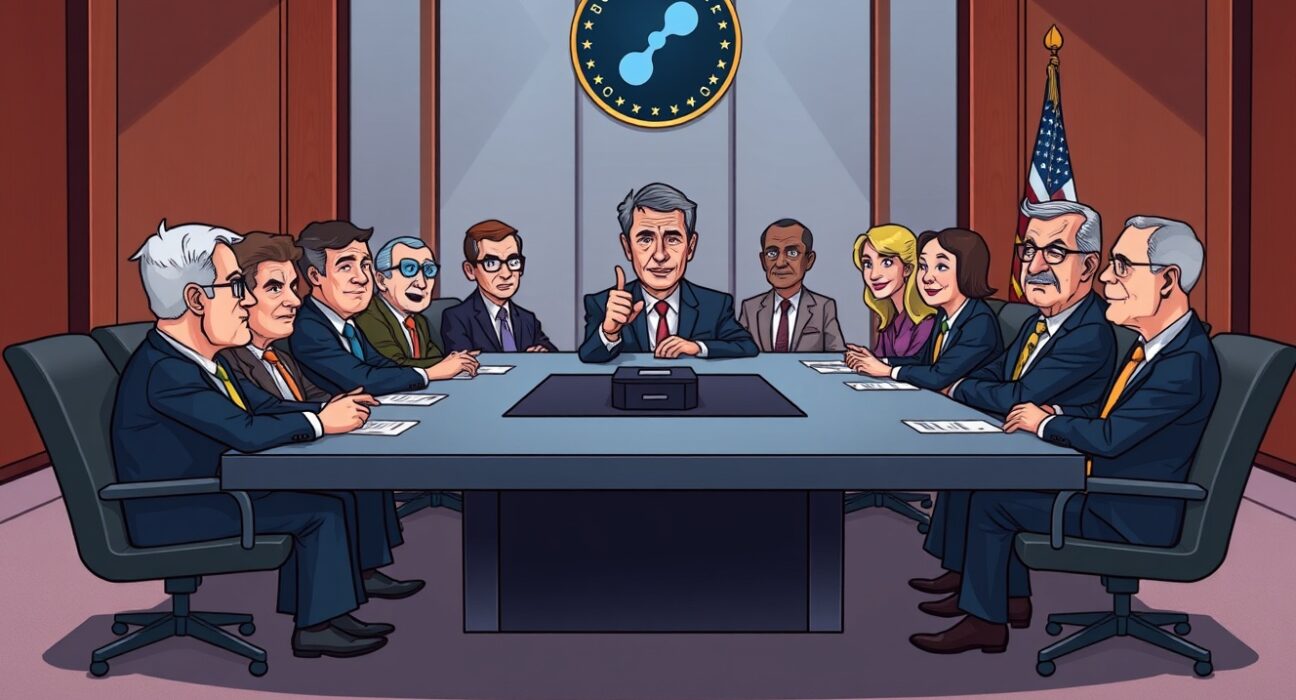
A pivotal moment for the future of US crypto regulation recently unfolded as the U.S. Senate Banking Committee convened a significant roundtable with prominent figures from the cryptocurrency industry. This 90-minute closed-door session marks a crucial step in bridging the gap between innovative digital asset companies and the lawmakers tasked with overseeing them. The discussions aim to refine and improve proposed legislation, laying the groundwork for a more defined regulatory landscape.
Why is This US Crypto Regulation Roundtable So Significant?
The conclusion of the roundtable meeting, as reported by Eleanor Terrett of Crypto in America, signals a deepening engagement between Washington D.C. and the rapidly evolving crypto sector. This isn’t just another meeting; it represents a direct line of communication between policymakers and those actively building and innovating within the digital asset space. For effective US crypto regulation to emerge, such dialogues are absolutely essential.
The committee’s leadership engaged directly with a diverse group of industry heavyweights, ensuring a broad spectrum of perspectives were heard. This direct interaction is vital for crafting legislation that is both effective in protecting consumers and fostering innovation.
Attendees at this landmark event included:
- Cardano founder Charles Hoskinson: A leading voice in blockchain development.
- Officials from Ripple: Key players in cross-border payments.
- Representatives from a16z, Kraken, Coinbase, Multicoin Capital, Paradigm, and Circle: A powerful mix of venture capital, exchanges, and stablecoin providers.
This comprehensive representation underscores the committee’s intent to gather well-rounded input on the complexities of the digital asset market.
What Key Topics Were Discussed for Improving US Crypto Regulation?
The primary focus of the intensive 90-minute discussion was to improve the proposed digital asset market structure legislation. This involves a deep dive into various aspects of how cryptocurrencies and blockchain technology should be governed in the United States. Policymakers are keen to understand the nuances of the technology, its potential benefits, and the inherent risks that require careful consideration.
Key areas of discussion likely included:
- Defining what constitutes a ‘security’ versus a ‘commodity’ in the crypto space.
- Establishing clear frameworks for stablecoins.
- Addressing consumer protection and market integrity concerns.
- Fostering innovation while mitigating systemic risks.
- Exploring the role of various regulatory bodies in overseeing digital assets.
The goal is to create a regulatory environment that provides clarity for businesses, safeguards for investors, and maintains the competitive edge of the U.S. in the global digital economy. Achieving effective US crypto regulation requires a balanced approach, considering both the transformative potential and the challenges.
What Does This Mean for the Future of US Crypto Regulation?
The conclusion of this roundtable is a positive indicator that U.S. lawmakers are committed to developing thoughtful and comprehensive US crypto regulation. While a single meeting won’t resolve all outstanding issues, it signifies a willingness to listen, learn, and collaborate. Such interactions are crucial for avoiding knee-jerk reactions and instead fostering legislation that is well-informed and forward-looking.
The industry leaders present had the opportunity to directly convey their insights, concerns, and suggestions, potentially influencing the direction of future bills. This collaborative approach can lead to more robust and workable regulations, benefiting both the industry and the broader public. Continued engagement between the public and private sectors will be paramount as these legislative efforts progress.
In summary, the Senate Banking Committee’s roundtable with crypto leaders represents a significant and encouraging step toward establishing clear and effective US crypto regulation. By bringing together diverse perspectives, policymakers are better equipped to craft legislation that supports innovation, protects consumers, and solidifies the United States’ position in the global digital asset landscape. This collaborative spirit is exactly what is needed to navigate the complexities of this groundbreaking technology and build a secure, thriving future for digital assets.
Frequently Asked Questions (FAQs)
Q1: What was the primary purpose of the Senate Banking Committee’s roundtable?
A1: The primary purpose was to engage directly with cryptocurrency industry leaders to gather insights and improve proposed digital asset market structure legislation, aiming for more effective US crypto regulation.
Q2: Which prominent crypto figures and companies attended the meeting?
A2: Key attendees included Cardano founder Charles Hoskinson, along with officials from Ripple, a16z, Kraken, Coinbase, Multicoin Capital, Paradigm, and Circle, representing a broad spectrum of the industry.
Q3: How long did the roundtable discussion last?
A3: The intensive discussion between the committee and industry representatives lasted for 90 minutes.
Q4: Why is direct dialogue between lawmakers and crypto leaders important for US crypto regulation?
A4: Direct dialogue is crucial because it allows policymakers to gain a deeper understanding of the technology, its applications, and its challenges directly from those building in the space, leading to more informed and balanced legislation.
Q5: What are the potential benefits of clearer US crypto regulation?
A5: Clearer regulation can provide certainty for businesses, foster innovation, enhance consumer protection, promote market integrity, and solidify the U.S.’s competitive position in the global digital economy.
Enjoyed this insightful update on US crypto regulation? Share this article with your network on social media to keep others informed about these crucial developments in the digital asset space!
To learn more about the latest crypto market trends, explore our article on key developments shaping digital asset institutional adoption.
Disclaimer: The information provided is not trading advice, Bitcoinworld.co.in holds no liability for any investments made based on the information provided on this page. We strongly recommend independent research and/or consultation with a qualified professional before making any investment decisions.