

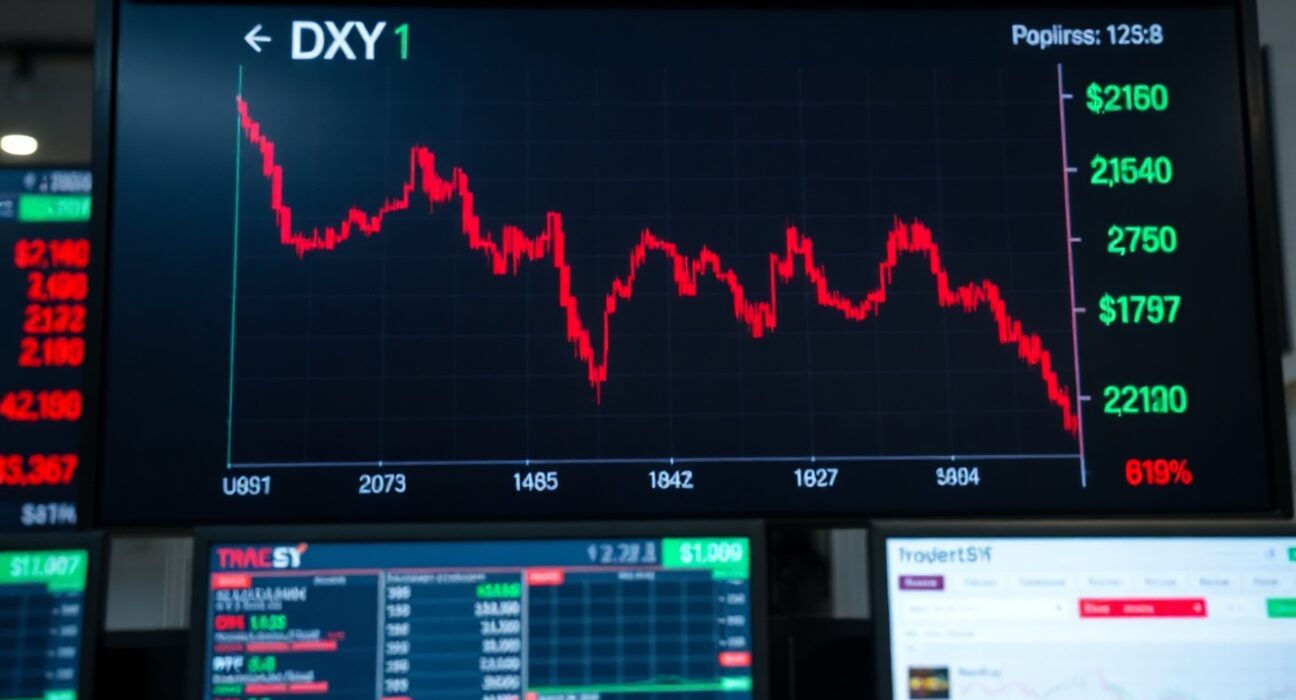
The US Dollar Index (DXY), a key measure of the greenback’s value against a basket of major currencies, has edged lower in recent trading sessions. This decline is occurring despite two typically supportive factors: rising safe-haven demand amid global uncertainty and increasing market expectations for further interest rate hikes by the Federal Reserve.
Unpacking the Dollar’s Divergent Move
The dollar’s weakness is notable because safe-haven demand usually boosts the currency. However, other dynamics are at play. A significant factor is the strengthening of other major currencies, particularly the euro and the Japanese yen, which are key components of the DXY basket. The euro has found support from more hawkish signals from the European Central Bank (ECB), while the yen has benefited from speculation that the Bank of Japan (BOJ) may finally move away from its ultra-loose monetary policy. This relative strength in competing currencies is directly weighing on the DXY index.
Furthermore, while odds of a Fed rate hike have risen, the market may be pricing in that the peak of the current tightening cycle is near. This ‘peak rate’ narrative can cap the dollar’s upside, as investors look ahead to potential rate cuts in the future. The dollar’s decline, therefore, reflects a complex interplay of global monetary policy divergence and shifting investor expectations, rather than a simple rejection of US economic strength.
Implications for Traders and the Broader Market
For currency traders, the DXY’s move lower signals a potential shift in momentum. A weaker dollar typically benefits emerging market currencies and commodities priced in dollars, such as gold and oil. It can also provide a tailwind for US multinational corporations that earn a significant portion of their revenue overseas, as their foreign earnings become more valuable when converted back to dollars.
However, the situation remains fluid. The dollar’s safe-haven appeal could quickly reassert itself if geopolitical tensions escalate or if economic data deteriorates sharply. The market is closely watching upcoming US inflation data and Fed commentary for further clues on the path of interest rates. Any surprise in either direction could trigger a sharp reversal in the DXY.
What This Means for Investors
The current decline in the DXY is a reminder that currency markets are driven by relative value. Even a strong economy with a hawkish central bank can see its currency fall if other economies offer even stronger prospects or if global risk appetite shifts. Investors should monitor the DXY as a key barometer of global financial conditions, as its movements have far-reaching implications for asset prices from stocks to bonds to commodities.
Conclusion
The US Dollar Index’s decline, in the face of safe-haven demand and rate hike odds, highlights the nuanced and multi-faceted nature of the global currency market. The move is primarily a story of other major currencies gaining strength, coupled with market expectations that the Fed’s tightening cycle may be nearing its end. This divergence from traditional drivers underscores the importance of a comprehensive analysis that goes beyond simple correlations.
FAQs
Q1: Why is the US Dollar Index falling if the Fed is expected to raise rates?
The decline is largely due to other major currencies, like the euro and yen, strengthening even more. Markets may also be looking past the next rate hike to the end of the tightening cycle, which can limit the dollar’s upside.
Q2: What does a falling DXY mean for the stock market?
A weaker dollar can be positive for US stocks, especially large multinational companies, as their foreign earnings increase in value. It can also reduce the cost of imported goods, potentially easing inflationary pressures.
Q3: Could the US Dollar Index rebound soon?
Yes, the dollar’s safe-haven status means it could strengthen quickly if global uncertainty rises unexpectedly. The release of key US economic data or a shift in Fed rhetoric could also trigger a reversal in the DXY.
Disclaimer: The information provided is not trading advice, Bitcoinworld.co.in holds no liability for any investments made based on the information provided on this page. We strongly recommend independent research and/or consultation with a qualified professional before making any investment decisions.
