

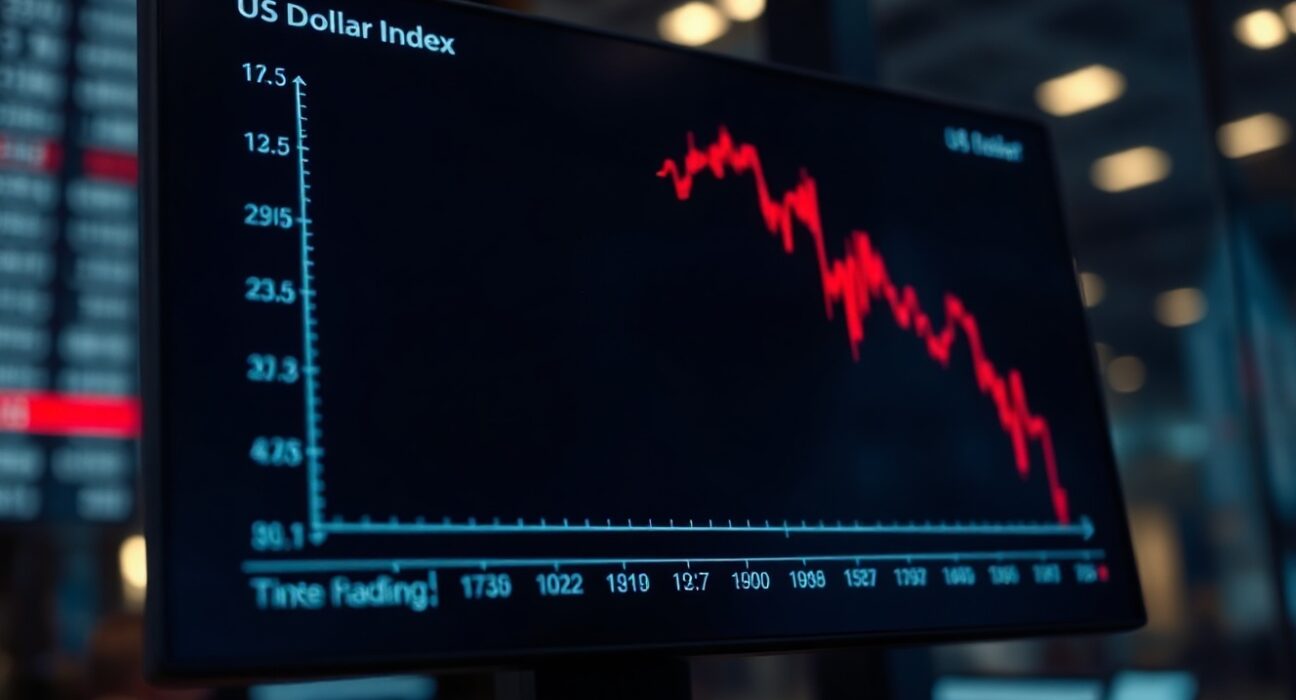
The US Dollar Index (DXY) declined on [date], as easing geopolitical tensions and improving risk appetite reduced demand for the safe-haven currency. The index, which measures the dollar against a basket of six major currencies, slipped [percentage]% to [level] during [timezone] trading, according to market data.
What’s Driving the Dollar’s Decline?
The dollar’s retreat comes as investors rotate toward riskier assets, with equity markets posting gains and bond yields stabilizing. The shift follows a period of heightened uncertainty that had previously boosted the greenback’s appeal as a safe haven.
Market participants are also adjusting positions ahead of upcoming central bank meetings, particularly the Federal Reserve’s policy decision. Expectations of a potential pause in rate hikes have weighed on the dollar, as traders price in a less aggressive monetary policy stance.
Market Reactions and Broader Implications
The decline in the dollar index has been accompanied by gains in major currencies such as the euro, British pound, and Japanese yen. A weaker dollar typically supports commodity prices, as they are priced in the US currency, and can ease financial conditions globally.
However, analysts caution that the move could be temporary, as economic data and central bank communications may shift sentiment quickly. The dollar’s trajectory will likely depend on upcoming inflation reports and the Fed’s guidance on future rate moves.
What This Means for Investors
For investors, a softer dollar can have mixed effects. Multinational companies with overseas revenue may benefit from currency translation gains, while importers could see lower costs. Conversely, a weaker dollar may add to inflationary pressures in the US, potentially influencing the Fed’s policy path.
Conclusion
The US Dollar Index’s decline reflects a broader shift in market sentiment toward risk-on assets, driven by easing safe-haven demand. While the near-term direction remains uncertain, the currency’s performance will be closely tied to economic data and central bank signals in the coming weeks.
FAQs
Q1: What is the US Dollar Index?
The US Dollar Index (DXY) measures the value of the US dollar relative to a basket of six major currencies: the euro, Japanese yen, British pound, Canadian dollar, Swedish krona, and Swiss franc. It is a widely used benchmark for the dollar’s global strength.
Q2: Why does the dollar decline when safe-haven demand eases?
During times of geopolitical or economic uncertainty, investors often buy US dollars as a safe haven, which strengthens the currency. When tensions ease and risk appetite improves, investors move funds into higher-yielding or riskier assets, reducing demand for the dollar and causing its value to fall.
Q3: How does a weaker dollar affect global markets?
A weaker dollar can boost commodity prices, as they are typically priced in dollars, making them cheaper for holders of other currencies. It can also improve the competitiveness of US exports but may increase import costs and contribute to domestic inflation.
Disclaimer: The information provided is not trading advice, Bitcoinworld.co.in holds no liability for any investments made based on the information provided on this page. We strongly recommend independent research and/or consultation with a qualified professional before making any investment decisions.
