

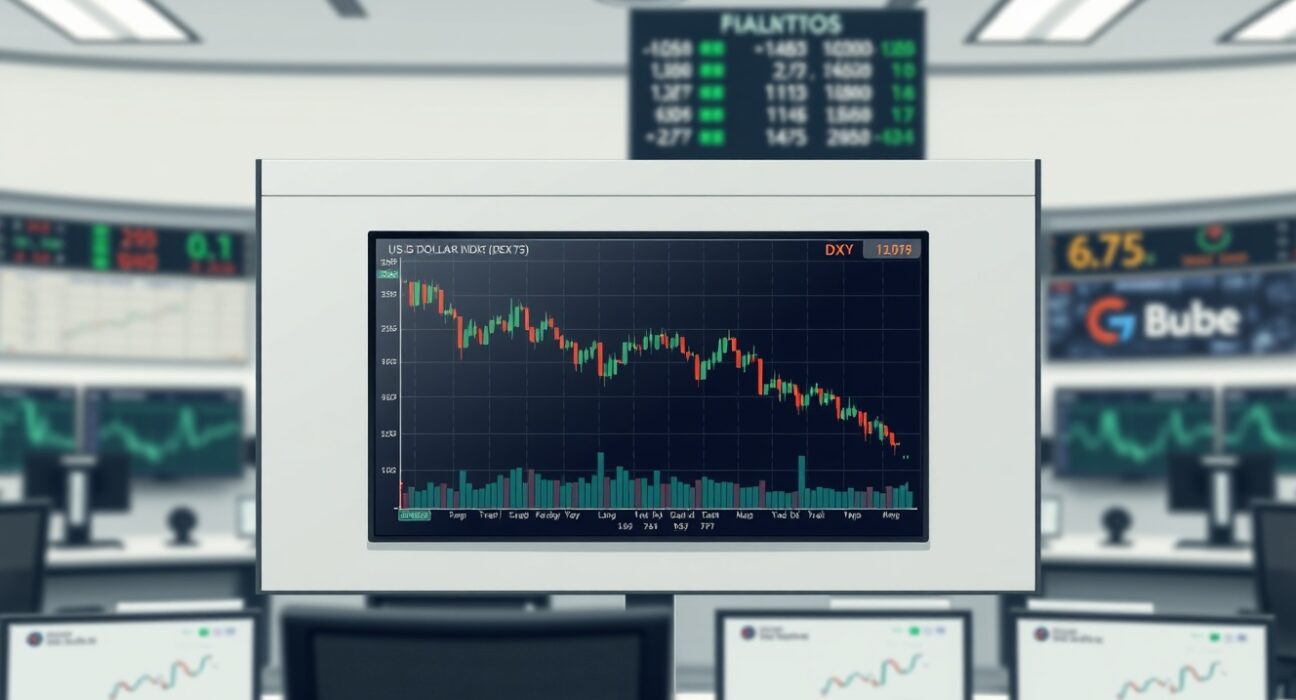
The US Dollar Index (DXY) is expected to remain under pressure in the near term as traders and investors await the Federal Reserve’s upcoming policy decision. The greenback has been trading in a narrow, subdued range, reflecting market caution and a lack of clear directional catalysts ahead of the central bank’s announcement on interest rates and forward guidance.
Market Context and Federal Reserve Expectations
The DXY, which measures the dollar against a basket of six major currencies, has been trending lower in recent weeks. Market participants are pricing in a high probability that the Federal Reserve will hold interest rates steady at its next meeting, as inflation data shows signs of moderating while the labor market remains resilient. This expectation has limited the dollar’s upside potential, as traders weigh the timing of potential rate cuts later this year.
Federal Reserve Chair Jerome Powell’s press conference will be closely scrutinized for any hints about the central bank’s policy path. A dovish tone could further weaken the dollar, while a more hawkish stance might provide temporary support. However, the broader trend suggests that the dollar is likely to remain subdued as the rate-cutting cycle approaches.
Technical Analysis of DXY
From a technical perspective, the US Dollar Index is trading below key moving averages, indicating bearish momentum. The index has been unable to break above the resistance level near 104.50, while support is seen around the 103.00 mark. A break below this support level could open the door for further declines toward the 102.00 area.
The Relative Strength Index (RSI) on the daily chart is hovering near the neutral 50 level, suggesting that the market is not yet oversold. This leaves room for additional downside if selling pressure intensifies. Traders are advised to watch for a decisive move following the Fed’s decision to confirm the next directional trend.
Implications for Traders and Investors
The subdued DXY outlook has implications for currency pairs and broader financial markets. A weaker dollar typically supports commodity prices, including gold and oil, as they become cheaper for holders of other currencies. It also tends to boost emerging market currencies and risk-sensitive assets.
For forex traders, the focus remains on the euro (EUR/USD) and the Japanese yen (USD/JPY), which are highly sensitive to dollar movements. A continued decline in the DXY could push EUR/USD toward the 1.0900 level, while USD/JPY may test support near 150.00.
Conclusion
The US Dollar Index is likely to remain subdued as the market awaits the Federal Reserve’s policy decision. With expectations of a rate hold and potential dovish signals, the greenback faces headwinds in the near term. Traders should monitor the Fed’s announcement and subsequent commentary for clearer direction, while technical levels suggest a bearish bias persists.
FAQs
Q1: Why is the US Dollar Index subdued right now?
The DXY is subdued because traders are waiting for the Federal Reserve’s policy decision, with expectations that the central bank will hold interest rates steady. Market caution and a lack of strong catalysts have kept the dollar in a narrow trading range.
Q2: What technical levels are key for the DXY?
Key resistance is near 104.50, while support is around 103.00. A break below 103.00 could lead to further declines toward 102.00. The RSI near 50 indicates the market is not oversold, leaving room for more downside.
Q3: How does a weaker dollar affect other markets?
A weaker dollar typically supports commodity prices like gold and oil, boosts emerging market currencies, and strengthens risk-sensitive assets. It also impacts major currency pairs like EUR/USD and USD/JPY.
Disclaimer: The information provided is not trading advice, Bitcoinworld.co.in holds no liability for any investments made based on the information provided on this page. We strongly recommend independent research and/or consultation with a qualified professional before making any investment decisions.
