

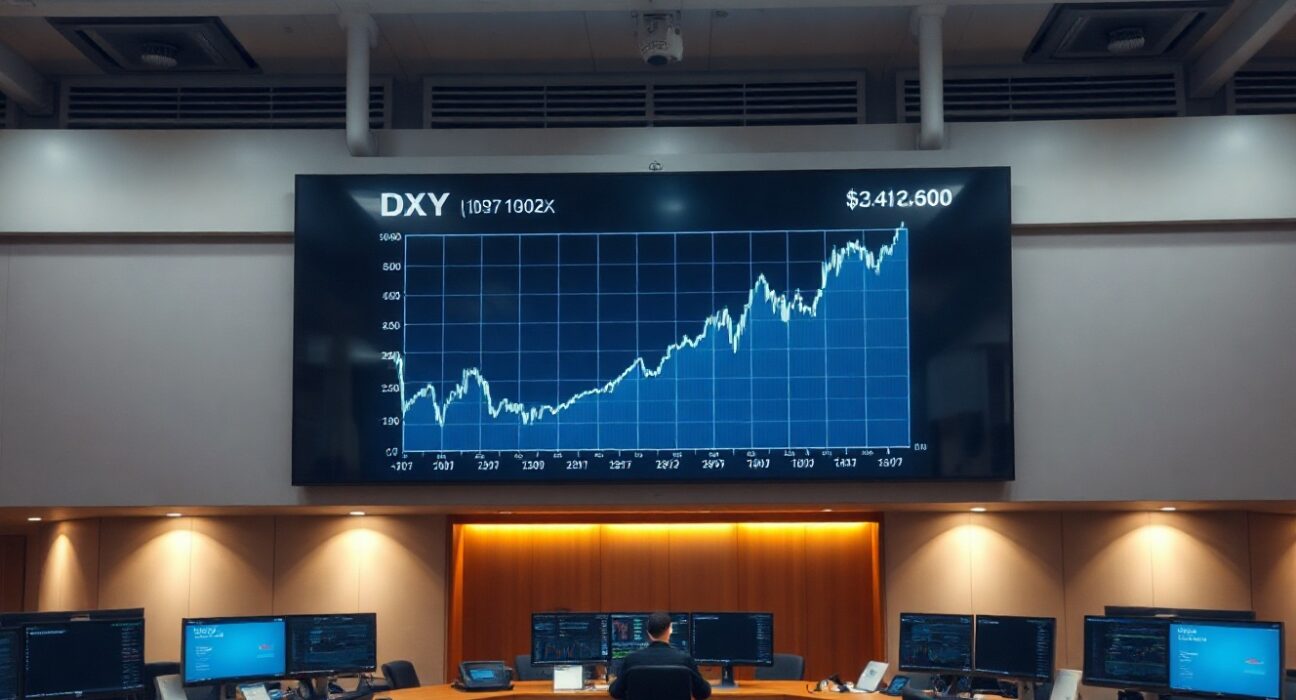
The US Dollar Index (DXY) traded in a narrow range on Wednesday, holding near recent levels as a batch of mixed US economic data limited the greenback’s upside potential. The index, which measures the dollar against a basket of six major currencies, struggled to establish a clear directional bias amid conflicting signals from the labor market, manufacturing, and consumer spending reports.
Mixed Data Provides No Clear Catalyst
Data released this week painted an uneven picture of the US economy. While jobless claims remained low, suggesting continued labor market resilience, manufacturing activity indicators showed signs of softening. Consumer spending figures, meanwhile, came in slightly below consensus expectations, raising questions about the durability of domestic demand. This combination of data points prevented the dollar from gaining meaningful traction, as traders weighed the implications for the Federal Reserve’s next policy moves.
Market participants are closely watching for any signals from Fed officials that could provide direction. The central bank has maintained a cautious stance, emphasizing that future rate decisions will depend on incoming data. With inflation still above the 2% target but showing gradual progress, the dollar has been caught between expectations for eventual rate cuts and the reality of still-elevated borrowing costs.
Technical Resistance and Support Levels
From a technical perspective, the US Dollar Index is facing resistance near the 105.50 level, a threshold that has capped gains in recent sessions. On the downside, support is seen around the 104.80 mark, where buying interest has emerged during previous pullbacks. The index remains within a well-defined range, and a breakout above or below these levels may be needed to establish a clearer trend.
Currency analysts note that the dollar’s performance is also being influenced by external factors, including developments in the eurozone and Japan. The euro has shown relative strength on expectations of tighter European Central Bank policy, while the yen remains under pressure from the Bank of Japan’s ultra-loose monetary stance. These cross-currents have contributed to the dollar’s recent lack of direction.
Market Implications for Traders and Investors
For forex traders, the current environment underscores the importance of monitoring economic data releases and Fed commentary. The absence of a strong trend means that positioning and risk management become critical. A sustained move above resistance could signal renewed dollar strength, while a breakdown below support might open the door for further losses.
Investors with exposure to US assets should also consider the dollar’s trajectory. A weaker dollar tends to benefit multinational companies with overseas earnings, while a stronger dollar can weigh on export-oriented sectors. The mixed data backdrop suggests that currency markets may remain range-bound until clearer economic signals emerge.
Conclusion
The US Dollar Index’s inability to push higher despite mixed data reflects a market in wait-and-see mode. With no single catalyst strong enough to drive a decisive move, the dollar is likely to remain tethered to incoming economic reports and Fed guidance. Traders and investors should prepare for continued volatility as the market digests the next wave of data.
FAQs
Q1: What is the US Dollar Index (DXY)?
The US Dollar Index (DXY) measures the value of the US dollar relative to a basket of six major foreign currencies: the euro, Japanese yen, British pound, Canadian dollar, Swedish krona, and Swiss franc. It is a widely used benchmark for the dollar’s overall strength in global currency markets.
Q2: Why does mixed economic data affect the dollar?
Mixed data creates uncertainty about the Federal Reserve’s next policy moves. Strong data may support rate hikes, boosting the dollar, while weak data can fuel expectations for rate cuts, weakening it. When data sends conflicting signals, the dollar often trades in a narrow range as traders wait for clarity.
Q3: What are the key levels to watch for the US Dollar Index?
Currently, the index faces resistance near 105.50 and finds support around 104.80. A break above resistance could signal renewed dollar strength, while a move below support may indicate further downside. These levels are closely monitored by technical traders.
Frequently Asked Questions
What is the US Dollar Index (DXY) and why did it trade in a narrow range?
The DXY measures the dollar against six major currencies, and it traded in a narrow range because mixed US economic data—showing a resilient labor market but softening manufacturing and consumer spending—failed to provide a clear catalyst for direction.
What specific economic data points are causing the dollar to struggle for momentum?
Jobless claims remained low, indicating labor market strength, but manufacturing activity softened and consumer spending came in below expectations, creating conflicting signals that capped the dollar’s upside.
How are Federal Reserve policy expectations affecting the dollar’s performance?
Traders are weighing the mixed data against the Fed’s cautious stance on rate cuts, with inflation still above target but showing progress, leaving the dollar caught between expectations for eventual cuts and still-elevated borrowing costs.
What are the key technical resistance and support levels for the US Dollar Index?
The index faces resistance near 105.50, which has capped recent gains, and support around 104.80, where buying interest has emerged during pullbacks, keeping it in a well-defined range.
What external factors are also influencing the dollar’s performance?
Developments in the eurozone and Japan, such as the euro’s relative strength or weakness, are also affecting the dollar’s performance alongside domestic data.
Disclaimer: The information provided is not trading advice, Bitcoinworld.co.in holds no liability for any investments made based on the information provided on this page. We strongly recommend independent research and/or consultation with a qualified professional before making any investment decisions.
