
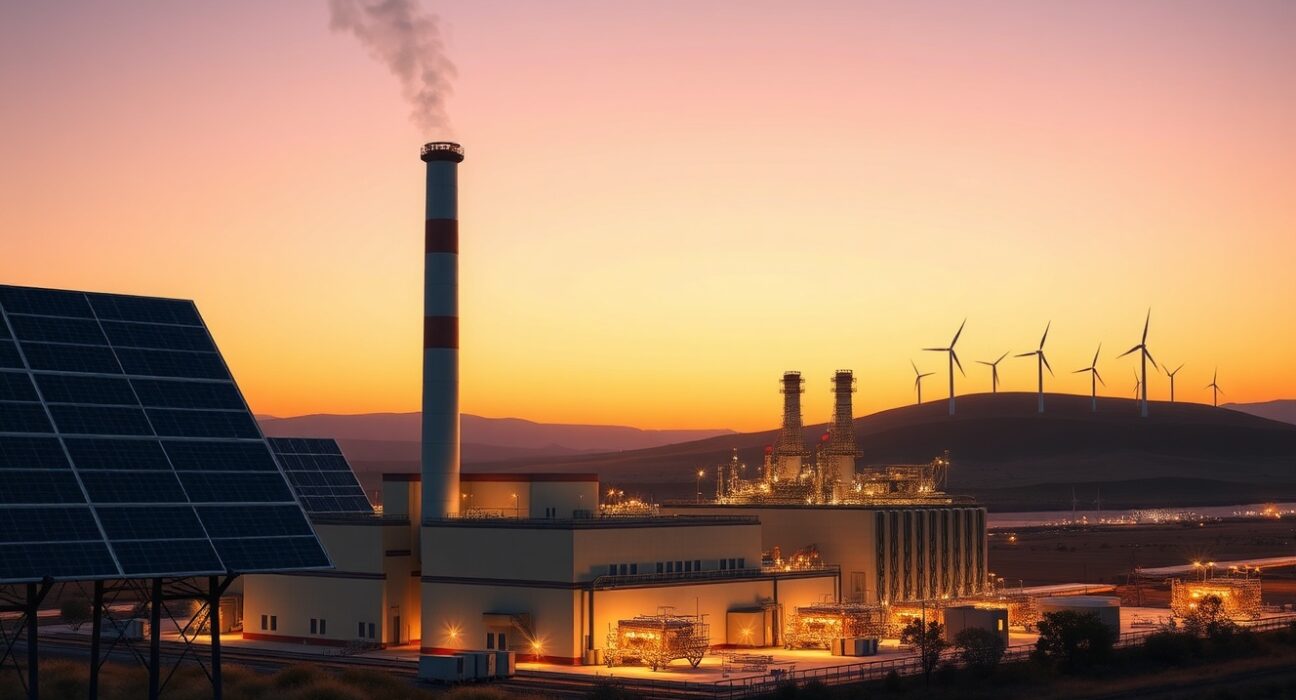
WASHINGTON, D.C. – March 2025: A comprehensive Deutsche Bank analysis reveals a significant economic paradox emerging in the United States. The nation’s increasing energy insulation, while strengthening national security, simultaneously creates substantial inflation pressures that could impact consumers and policymakers through 2026. This development represents a critical juncture for economic strategy as the country balances energy independence against price stability.
Understanding the US Energy Insulation Phenomenon
The United States has achieved remarkable progress in energy insulation over the past decade. Domestic production now meets approximately 95% of national energy consumption, according to Energy Information Administration data. This represents a dramatic shift from 2005, when net imports accounted for 30% of consumption. The transformation stems from multiple factors including technological advancements in shale extraction, renewable energy expansion, and strategic policy initiatives.
Several key developments drive this insulation trend. First, the shale revolution fundamentally altered the energy landscape. Second, renewable capacity has expanded exponentially, with solar and wind generation increasing by 250% since 2015. Third, energy efficiency improvements across industrial and residential sectors have reduced overall demand growth. However, these achievements come with complex economic trade-offs that Deutsche Bank economists have quantified in their latest analysis.
Deutsche Bank’s Inflation Pressure Analysis
Deutsche Bank’s research team, led by Chief Economist David Folkerts-Landau, identifies three primary channels through which energy insulation generates inflation pressures. Their analysis incorporates data from the Federal Reserve, Bureau of Labor Statistics, and Department of Energy spanning 2010-2024.
The Domestic Investment Channel
Massive capital investment in domestic energy infrastructure creates inflationary pressures through several mechanisms. The construction of pipelines, refineries, renewable installations, and transmission networks requires substantial resources. Consequently, this demand increases prices for materials, labor, and financing. Deutsche Bank estimates that energy sector investment now represents 8% of total private non-residential investment, up from 4% in 2010.
This investment surge creates competition for limited economic resources. Skilled labor shortages in engineering and construction sectors have emerged as a particular concern. Additionally, supply chain constraints for specialized equipment further exacerbate cost pressures. These factors collectively contribute to broader inflationary trends beyond the energy sector itself.
Structural Cost Implications
The transition to domestic energy sources involves structural cost differences with significant implications. Domestic production, while more secure, often carries higher marginal costs than global alternatives. Renewable energy infrastructure requires substantial upfront capital despite lower operating costs. Similarly, maintaining strategic petroleum reserves and supporting domestic producers involves ongoing fiscal commitments.
Deutsche Bank’s analysis identifies specific cost differentials:
- Natural Gas: Domestic prices average 15-20% above global LNG spot prices
- Renewable Integration: Grid modernization costs add 2-3% to electricity rates
- Strategic Reserves: Maintenance costs exceed $2 billion annually
- Regulatory Compliance: Environmental and safety regulations add 5-7% to production costs
These cost structures inevitably translate into higher consumer prices across multiple sectors. The transportation sector experiences direct impacts through fuel costs. Meanwhile, manufacturing and agriculture face increased input costs that frequently pass through to final products.
Global Market Decoupling Effects
Reduced dependence on global energy markets creates another inflation channel through market fragmentation. Historically, global markets provided price stability through diversification and competition. Domestic markets, while more controlled, exhibit less price elasticity and competitive pressure. This reduced elasticity means domestic supply disruptions or demand spikes create more pronounced price movements.
Deutsche Bank economists note that domestic energy markets now demonstrate greater price volatility during extreme weather events or supply interruptions. The February 2024 cold snap, for example, caused natural gas price spikes 40% higher than comparable global market movements would have produced. This volatility directly impacts consumer energy bills and business operating costs.
Monetary Policy Considerations
The Federal Reserve faces additional complexity in managing inflation expectations. Energy insulation reduces the traditional transmission mechanism of global energy prices to domestic inflation. Consequently, monetary policy must account for structurally higher domestic energy costs rather than temporary import-driven fluctuations. This represents a fundamental shift in inflation dynamics that requires adjusted policy approaches.
Deutsche Bank’s analysis suggests the Federal Reserve may need to maintain slightly higher interest rates to account for these structural factors. Their models indicate that neutral interest rates could be 25-50 basis points higher than pre-insulation levels. This adjustment reflects the persistent nature of domestically-generated energy inflation pressures.
Sector-Specific Impacts and Projections
Different economic sectors experience varying impacts from the energy insulation-inflation relationship. Deutsche Bank’s sectoral analysis reveals distinct patterns:
- Manufacturing: Energy-intensive industries face 3-5% higher production costs
- Transportation: Logistics companies experience 4-6% increased operating expenses
- Agriculture: Fertilizer and equipment costs rise 2-4%, affecting food prices
- Residential: Household energy expenditures increase 5-8% annually
- Commercial: Office and retail operations absorb 3-7% higher utility costs
These sectoral impacts create broader economic effects through supply chains and consumer spending patterns. The analysis projects that continued energy insulation could add 0.3-0.5 percentage points to core inflation measures through 2026. This projection assumes current policy frameworks and technological trajectories remain consistent.
Policy Implications and Strategic Considerations
Policymakers face complex trade-offs between energy security and price stability. The Deutsche Bank report outlines several strategic considerations for balancing these competing priorities. First, targeted investments in energy efficiency can mitigate consumer impacts. Second, strategic petroleum reserve management can provide price stabilization during market disruptions. Third, regulatory frameworks must balance security objectives with cost considerations.
The analysis recommends a multi-pronged approach including technology innovation support, infrastructure modernization, and market mechanism refinements. Specifically, the report suggests enhancing energy storage capacity to reduce renewable integration costs. Additionally, it recommends refining capacity market designs to ensure reliability without excessive consumer costs.
Conclusion
The Deutsche Bank analysis presents a nuanced picture of US energy insulation and its economic consequences. While energy independence strengthens national security and economic resilience, it simultaneously creates persistent inflation pressures through multiple channels. These pressures manifest across sectors and influence monetary policy considerations. Moving forward, policymakers must carefully balance security objectives with price stability concerns. The energy insulation paradox requires sophisticated policy responses that acknowledge both the benefits of independence and the costs of reduced global market integration. As the United States continues its energy transition, managing these inflation pressures will remain a critical economic challenge through 2026 and beyond.
FAQs
Q1: What exactly does “energy insulation” mean in this context?
Energy insulation refers to reduced dependence on imported energy through increased domestic production, diversified sources, and efficiency improvements. It measures how protected an economy is from global energy market disruptions.
Q2: How does domestic energy production create inflation if it reduces import costs?
While reducing import costs, domestic production often involves higher extraction, transportation, and regulatory compliance expenses. These costs transfer to consumers through energy prices and broader economic channels.
Q3: Which sectors are most affected by these inflation pressures?
Energy-intensive manufacturing, transportation, and agriculture experience the most direct impacts. However, all sectors face indirect effects through supply chains and consumer spending patterns.
Q4: Can renewable energy expansion help reduce these inflation pressures?
Renewables reduce fuel cost volatility but require substantial upfront investment and grid integration expenses. Their long-term deflationary potential depends on technology cost reductions and efficient integration.
Q5: What policy measures could mitigate these inflation pressures?
Potential measures include strategic reserve management, efficiency incentives, technology innovation support, and refined market designs that balance reliability with affordability objectives.
Disclaimer: The information provided is not trading advice, Bitcoinworld.co.in holds no liability for any investments made based on the information provided on this page. We strongly recommend independent research and/or consultation with a qualified professional before making any investment decisions.