
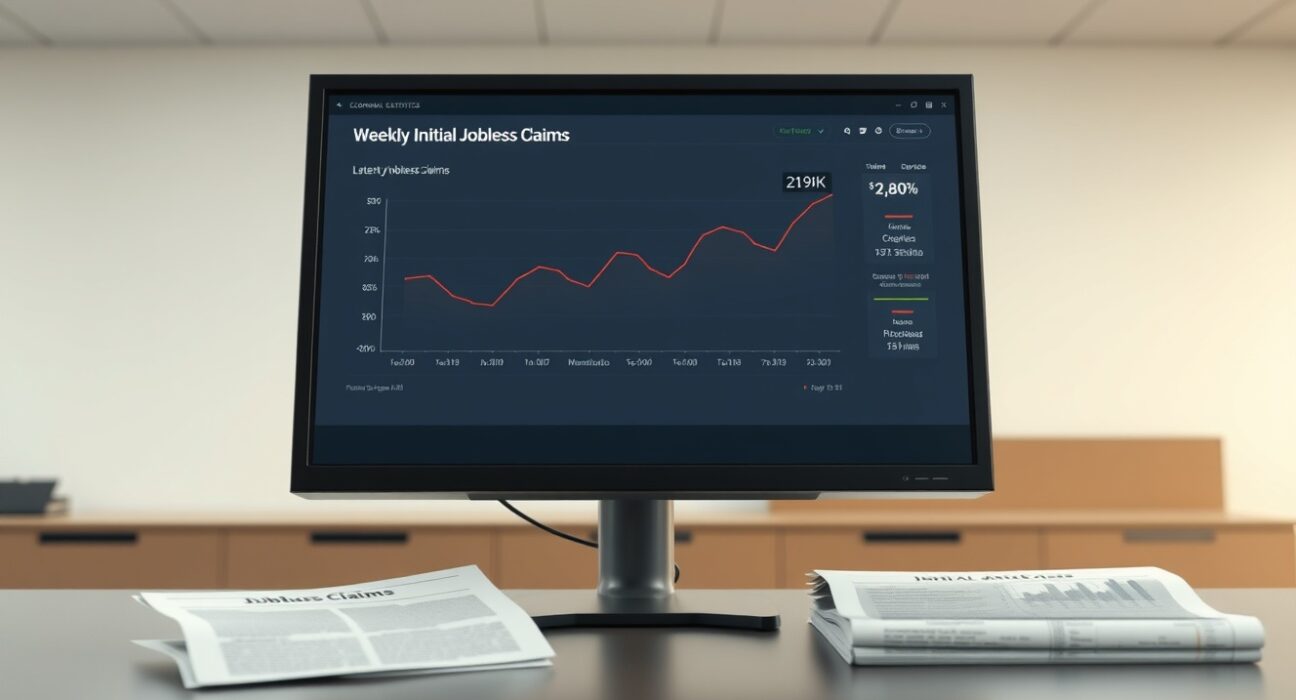
WASHINGTON, D.C. — The latest employment data reveals a significant development as initial jobless claims rose to 219,000 last week, marking a notable shift in labor market dynamics that economists are closely monitoring. This increase represents the highest level in several weeks and comes at a crucial juncture for Federal Reserve policy decisions. The Department of Labor released these figures on Thursday, providing fresh insights into employment trends across the United States.
Initial Jobless Claims Reach 219,000: Breaking Down the Numbers
The Department of Labor’s weekly report shows initial claims for state unemployment benefits increased by 8,000 from the previous week’s revised level. Specifically, the advance figure for seasonally adjusted initial claims reached 219,000 for the week ending March 8, 2025. Meanwhile, the four-week moving average, which smooths weekly volatility, stood at 214,250. This represents an increase of 500 from the previous week’s revised average. Continuing claims, which measure people already receiving benefits, totaled 1.906 million for the week ending March 1.
Several key factors contributed to this increase. First, seasonal adjustments played a role in the calculation. Second, specific industries showed increased layoff activity. Third, regional variations emerged across different states. The data indicates particular strength in certain sectors while revealing vulnerabilities in others. Manufacturing and technology sectors showed mixed signals according to supplemental reports.
Historical Context and Labor Market Analysis
Understanding the 219,000 figure requires historical perspective. During the pandemic peak in 2020, initial claims soared above 6 million weekly. By contrast, pre-pandemic levels typically ranged between 200,000 and 225,000. The current reading sits within that historical range but represents an upward movement from recent lows. Economists consider claims below 300,000 as indicative of a healthy labor market. However, sustained increases warrant attention.
The labor market has demonstrated remarkable resilience through recent economic challenges. Employers added substantial numbers of jobs throughout 2024. Wage growth has moderated but remains above pre-pandemic trends. Labor force participation has stabilized near pre-pandemic levels. These factors create a complex backdrop for interpreting the latest claims data.
Expert Perspectives on Labor Market Signals
Leading economists emphasize the importance of context when analyzing weekly claims data. “Single-week movements require cautious interpretation,” notes Dr. Sarah Chen, labor economist at the Economic Policy Institute. “We need to observe trends over multiple weeks before drawing firm conclusions about labor market direction.” Chen points to three key indicators beyond initial claims: continuing claims duration, hiring rates, and job openings data.
Federal Reserve officials monitor this data closely for policy implications. The central bank balances inflation concerns against employment objectives. Recent statements suggest attention to labor market cooling as part of broader economic stabilization efforts. Market participants adjust expectations based on these employment indicators.
Economic Implications and Federal Reserve Policy
The rising jobless claims data carries several important implications. First, it may signal early labor market softening. Second, it could influence Federal Reserve interest rate decisions. Third, it affects consumer spending projections. Fourth, it impacts business investment confidence. Fifth, it shapes fiscal policy discussions in Congress.
Federal Reserve Chair recently emphasized data-dependent policy approaches. The central bank’s dual mandate requires balancing maximum employment with price stability. Current inflation readings remain above the 2% target while employment conditions show gradual evolution. Monetary policy committee members consider multiple data points before making decisions.
Key economic indicators to watch include:
- Monthly non-farm payroll reports
- Unemployment rate movements
- Wage growth metrics
- Job openings and labor turnover
- Productivity measurements
Sector Analysis and Regional Variations
Different economic sectors show varying employment patterns. Technology companies continue adjusting workforces after pandemic-era expansion. Manufacturing faces supply chain and demand challenges. Healthcare maintains steady hiring needs. Retail experiences seasonal fluctuations. Construction responds to housing market conditions.
Regional data reveals important variations. Some states report increased claims due to industry-specific challenges. Others maintain strong employment conditions. Geographic mobility patterns influence local labor markets. Migration trends affect regional employment dynamics. State-level policies create different employment environments.
Data Collection Methodology and Accuracy
The Department of Labor employs rigorous methodology for claims data collection. State workforce agencies process initial claims applications. The department aggregates and seasonally adjusts this information. Technical factors occasionally influence weekly readings. Holiday adjustments, processing delays, and administrative changes can create volatility. Economists recommend focusing on multi-week trends rather than single data points.
Historical revisions sometimes occur as states submit corrected information. The department publishes both seasonally adjusted and unadjusted figures. Analysts use different approaches depending on their analytical needs. Academic researchers often work with raw data for longitudinal studies.
Market Reactions and Investor Considerations
Financial markets respond to employment data releases. Equity markets consider implications for corporate earnings. Bond markets adjust interest rate expectations. Currency markets evaluate relative economic strength. Commodity markets assess demand projections. These reactions demonstrate the interconnected nature of economic indicators.
Investors monitor several key relationships. First, employment data influences consumer spending forecasts. Second, it affects corporate revenue projections. Third, it shapes monetary policy expectations. Fourth, it impacts sector rotation decisions. Fifth, it informs risk assessment models. Professional investors incorporate multiple data sources in their analysis.
Conclusion
The increase in initial jobless claims to 219,000 represents an important data point in ongoing labor market analysis. While remaining within historical norms, this movement warrants monitoring for emerging trends. The Federal Reserve will consider this information alongside other economic indicators. Continued observation of weekly claims data will provide clearer signals about labor market direction. Economic policymakers balance multiple objectives in their decision-making processes. The coming weeks will reveal whether this increase represents temporary volatility or the beginning of a broader trend in initial jobless claims.
FAQs
Q1: What are initial jobless claims?
Initial jobless claims represent the number of people filing for unemployment benefits for the first time during a given week. This serves as a timely indicator of labor market conditions.
Q2: Why did claims increase to 219,000?
The increase resulted from multiple factors including seasonal adjustments, industry-specific layoffs, and regional economic variations. Single-week movements require cautious interpretation within broader trends.
Q3: How does this affect Federal Reserve policy?
The Federal Reserve monitors employment data as part of its dual mandate. Rising claims could influence interest rate decisions if they signal labor market softening that affects inflation projections.
Q4: Is 219,000 a concerning level for jobless claims?
Historically, claims below 300,000 indicate healthy labor markets. However, sustained increases from recent lows warrant attention from economists and policymakers monitoring trends.
Q5: What other employment data should I watch?
Important complementary data includes monthly payroll reports, unemployment rates, wage growth, job openings, and labor force participation rates for comprehensive labor market analysis.
Disclaimer: The information provided is not trading advice, Bitcoinworld.co.in holds no liability for any investments made based on the information provided on this page. We strongly recommend independent research and/or consultation with a qualified professional before making any investment decisions.