

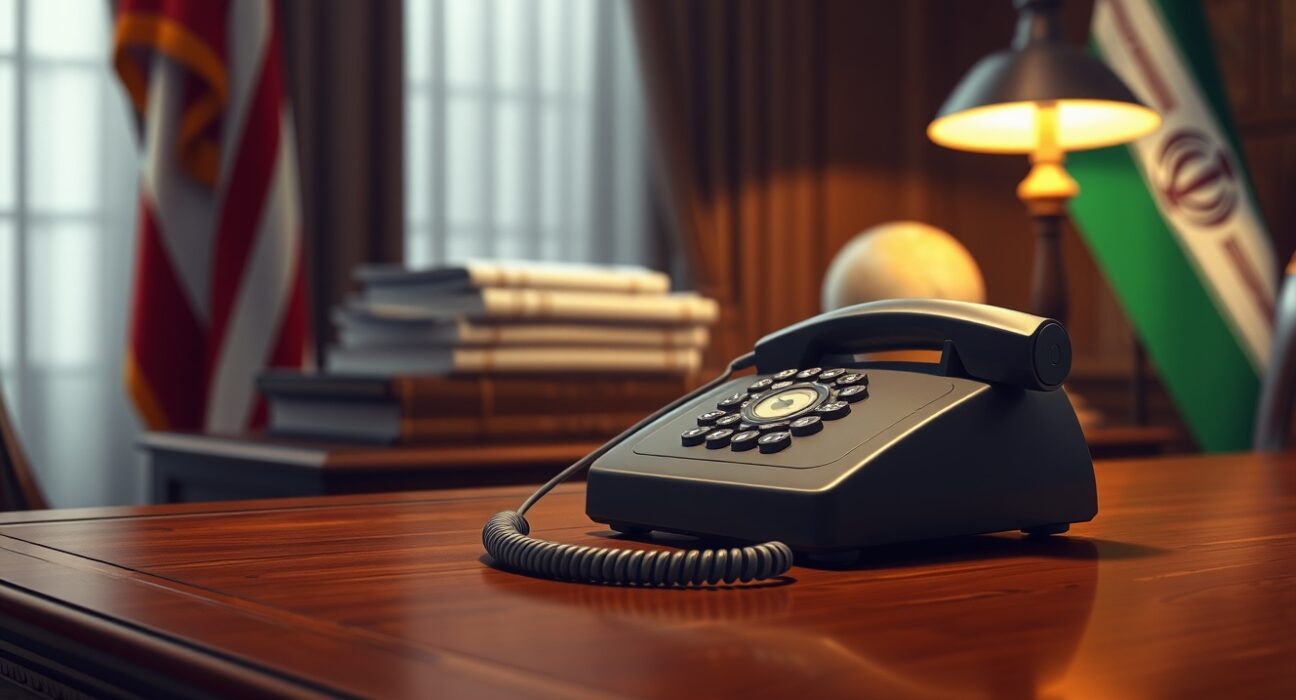
In a significant diplomatic development, US Iran phone negotiations have entered a new phase, with President Donald Trump confirming on April 29 that direct telephone conversations are underway between Washington and Tehran. Speaking to reporters, Trump described the approach as highly efficient, noting that a single call can yield an answer within 15 minutes. However, he emphasized that no agreement is possible unless Iran explicitly promises to completely abandon its nuclear weapons program. This revelation marks a critical moment in US-Iran relations, as both sides navigate complex diplomatic channels amid heightened global scrutiny.
Trump Confirms US Iran Phone Negotiations: Key Details
President Trump’s announcement came during a press briefing in Washington, D.C., on April 29. He stated that the United States and Iran are conducting negotiations over the phone, a method he personally finds effective for rapid decision-making. Trump added that while he prefers face-to-face communication, the phone talks have shown some progress. The crucial factor, he stressed, is whether Iran’s concessions will meet U.S. demands. Specifically, Trump insisted that Iran must completely abandon its nuclear weapons ambitions for any deal to materialize. This position aligns with long-standing U.S. policy, which has consistently sought to prevent Iran from acquiring nuclear capabilities.
Background of US Iran Nuclear Talks
The US Iran phone negotiations are the latest chapter in a decades-long saga of diplomatic efforts to curb Iran’s nuclear program. The Joint Comprehensive Plan of Action (JCPOA), signed in 2015, imposed strict limits on Iran’s uranium enrichment in exchange for sanctions relief. However, the United States withdrew from the deal in 2018 under Trump’s first term, citing insufficient restrictions on Iran’s ballistic missile program and regional activities. Iran subsequently began enriching uranium to higher levels, breaching JCPOA limits. Since 2021, indirect talks through European intermediaries have attempted to revive the agreement, but progress has been slow. The current phone negotiations represent a direct shift in communication style, potentially accelerating the process.
Expert Analysis on US Iran Diplomacy 2025
Foreign policy experts view the US Iran phone negotiations as a pragmatic move. Dr. Sarah Johnson, a Middle East analyst at the Center for Strategic Studies, explains: “Direct phone talks reduce misunderstandings and allow for real-time adjustments. This is a positive sign, but the core issue remains Iran’s nuclear enrichment capacity.” Another expert, Professor Mark Williams from Georgetown University, notes that Trump’s demand for a complete abandonment of nuclear weapons is a high bar. “Iran has historically insisted on its right to peaceful nuclear energy. A complete ban on enrichment would require significant concessions from Tehran.” These expert insights underscore the complexity of the talks, where trust and verification remain paramount.
Key Demands in the Trump Iran Negotiations Update
Trump’s negotiation update highlights several non-negotiable points:
- Complete nuclear disarmament: Iran must abandon all nuclear weapons development and enrichment activities.
- Verifiable compliance: International inspectors must have unrestricted access to Iranian facilities.
- No phased approach: The deal must be comprehensive, not incremental.
- Sanctions relief: The U.S. may offer sanctions relief only after full compliance is verified.
These demands represent a hardline stance, reflecting Trump’s “maximum pressure” strategy. Iran, meanwhile, seeks immediate sanctions relief and recognition of its nuclear rights under the Non-Proliferation Treaty (NPT). The gap between these positions remains wide, but the phone negotiations suggest both sides are willing to engage directly.
Impact on Global Markets and Geopolitics
The US Iran phone negotiations have immediate implications for global oil markets and regional stability. Iran, a major oil producer, has seen its exports limited by U.S. sanctions. Any progress toward a deal could increase global oil supply, potentially lowering prices. Conversely, a breakdown could lead to higher oil prices and increased tensions in the Middle East. Additionally, Israel and Gulf Arab states are closely monitoring the talks, as they view Iran’s nuclear program as an existential threat. The U.S. has assured its allies that any agreement will address their security concerns, but the phone negotiations remain opaque, causing uncertainty.
Timeline of Key Events in Iran Nuclear Diplomacy
A brief timeline contextualizes the current US Iran phone negotiations:
| Year | Event |
|---|---|
| 2015 | JCPOA signed between Iran and P5+1 |
| 2018 | U.S. withdraws from JCPOA, reimposes sanctions |
| 2020 | Iran begins exceeding JCPOA enrichment limits |
| 2021-2024 | Indirect talks in Vienna fail to revive deal |
| 2025 | Trump confirms direct US Iran phone negotiations |
This timeline shows the cyclical nature of negotiations, with direct talks representing a potential breakthrough after years of stalemate.
Challenges Ahead for Iran Nuclear Weapons Deal
Despite the positive step of direct phone negotiations, significant hurdles remain. Iran’s leadership, particularly Supreme Leader Ayatollah Ali Khamenei, has historically opposed direct talks with the U.S., viewing them as a sign of weakness. The phone negotiations may face internal opposition from hardliners in Tehran. Additionally, verification mechanisms remain a contentious issue. Iran has previously restricted IAEA access, raising doubts about its willingness to comply with inspections. Trump’s demand for complete nuclear abandonment also clashes with Iran’s stated position, making a compromise difficult. Nevertheless, the mere fact that both sides are talking directly suggests a mutual recognition of the stakes involved.
Conclusion
The US Iran phone negotiations represent a pivotal moment in international diplomacy. President Trump’s confirmation of direct talks, combined with his insistence on complete nuclear disarmament, sets a clear framework for potential progress. While the outcome remains uncertain, the shift from indirect to direct communication could accelerate decision-making and reduce misunderstandings. As the world watches, the success of these negotiations will depend on Iran’s willingness to meet U.S. demands and the ability of both sides to build trust. The stakes are high, with implications for global security, energy markets, and regional stability. Continued monitoring and expert analysis will be essential as this story develops.
FAQs
Q1: What are the US Iran phone negotiations about?
A1: The US Iran phone negotiations are direct telephone talks between President Trump and Iranian officials focused on Iran’s nuclear program. Trump demands that Iran completely abandon its nuclear weapons ambitions in exchange for sanctions relief.
Q2: Why did Trump choose phone negotiations over in-person talks?
A2: Trump described phone negotiations as highly efficient, allowing for rapid answers within 15 minutes per call. However, he stated a personal preference for face-to-face communication, suggesting the phone format is a practical compromise.
Q3: What is Iran’s position on the nuclear weapons demand?
A3: Iran has historically insisted on its right to peaceful nuclear energy under the NPT. It has not publicly agreed to completely abandon enrichment, making Trump’s demand a major sticking point in the negotiations.
Q4: How do the US Iran phone negotiations affect oil prices?
A4: Progress in negotiations could lead to sanctions relief, increasing Iran’s oil exports and potentially lowering global oil prices. A breakdown could cause prices to rise due to supply concerns and geopolitical tensions.
Q5: Are other countries involved in the talks?
A5: The current phone negotiations appear to be bilateral between the U.S. and Iran. However, allies like Israel and Gulf states are being consulted, and European intermediaries may play a role in verification or confidence-building measures.
Disclaimer: The information provided is not trading advice, Bitcoinworld.co.in holds no liability for any investments made based on the information provided on this page. We strongly recommend independent research and/or consultation with a qualified professional before making any investment decisions.
