

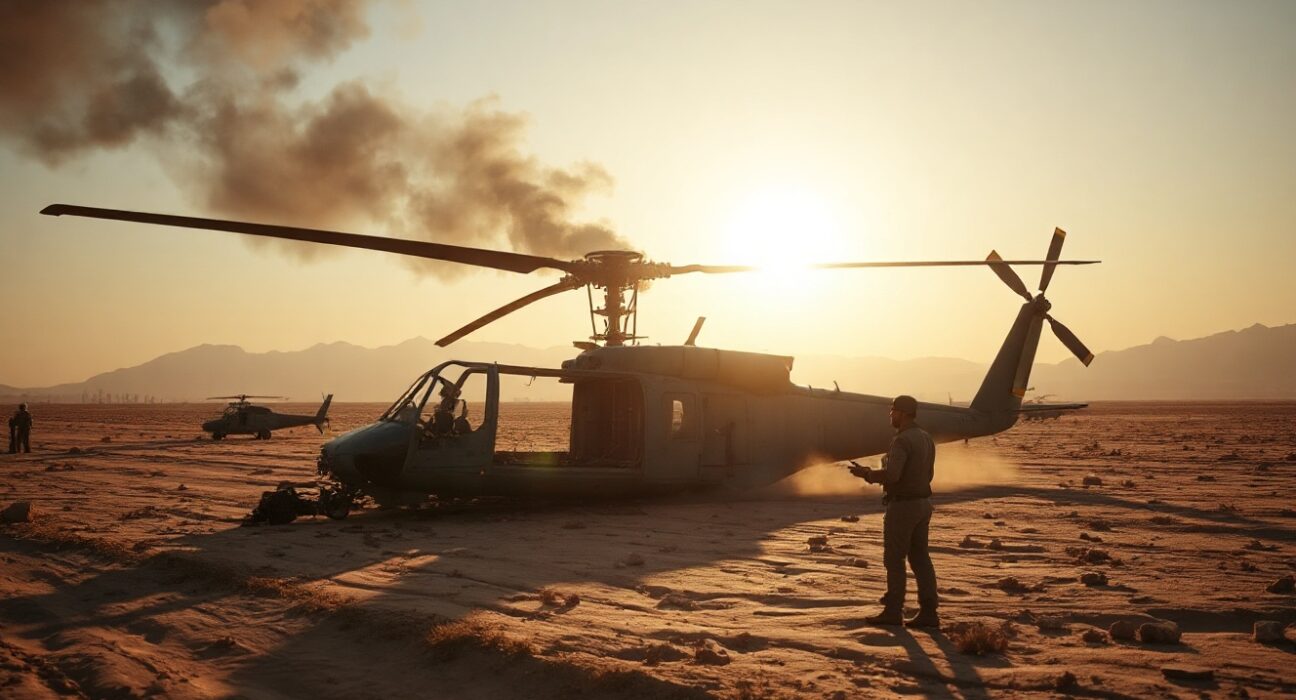
In a significant escalation of tensions in the Middle East, the United States military has launched a series of retaliatory strikes against targets in Iran. The operation comes in direct response to the downing of an American helicopter, which officials have confirmed was struck by Iranian fire. The strikes mark one of the most direct military confrontations between the two nations in recent years.
Background of the Incident
The chain of events began earlier this week when a US military helicopter, conducting routine reconnaissance operations near the Persian Gulf, was shot down by Iranian air defenses. All crew members aboard were killed, according to initial Pentagon reports. The incident occurred in an area where US and Iranian forces have frequently operated in close proximity, raising longstanding concerns about accidental escalation.
Details of the US Retaliation
According to defense officials, the US strikes targeted multiple Iranian military installations, including radar sites, air defense batteries, and command-and-control centers. The operation involved both manned aircraft and long-range precision munitions launched from naval vessels stationed in the region. The Pentagon described the strikes as “proportional and deliberate,” aimed at degrading Iran’s ability to threaten US assets without triggering a broader war.
Initial reports from Iranian state media confirm explosions near military sites in the southern provinces, though official casualty figures have not yet been released. International observers have noted that both sides appear to be calibrating their responses to avoid a full-scale conflict.
Regional and Global Implications
The strikes have drawn immediate reactions from global powers. The United Nations Security Council has called for an emergency session to discuss the escalation. European allies have urged restraint, while Russia and China have criticized the US action as a violation of Iranian sovereignty. Oil prices spiked briefly on the news, reflecting market anxiety over potential disruptions to shipping lanes in the Strait of Hormuz.
What This Means for Regional Stability
This incident represents a dangerous turning point in US-Iran relations, which have been characterized by proxy conflicts and diplomatic standoffs rather than direct military exchanges. Analysts warn that the cycle of retaliation could spiral, drawing in other regional actors such as Israel, Saudi Arabia, and various militia groups. The situation remains fluid, with both nations maintaining heightened alert levels.
Conclusion
The US military’s retaliatory strikes on Iran following the downing of a helicopter have pushed the Middle East to the brink of a broader confrontation. While both sides have signaled a desire to avoid all-out war, the risk of miscalculation remains high. The international community is closely monitoring developments, as the region braces for potential further escalation.
FAQs
Q1: Why did the US launch strikes on Iran?
The US military launched retaliatory strikes after an American helicopter was shot down by Iranian forces, killing all crew members. The Pentagon described the action as a proportional response to protect US personnel and assets.
Q2: What targets were hit in the strikes?
US forces targeted Iranian military installations, including radar sites, air defense systems, and command centers, primarily in southern Iran. The operation used precision munitions to minimize collateral damage.
Q3: Could this lead to a larger war?
While the risk of escalation is significant, both the US and Iran have publicly expressed a desire to avoid a full-scale conflict. However, the cycle of retaliation and the involvement of regional proxies could increase the likelihood of further clashes.
Disclaimer: The information provided is not trading advice, Bitcoinworld.co.in holds no liability for any investments made based on the information provided on this page. We strongly recommend independent research and/or consultation with a qualified professional before making any investment decisions.
