

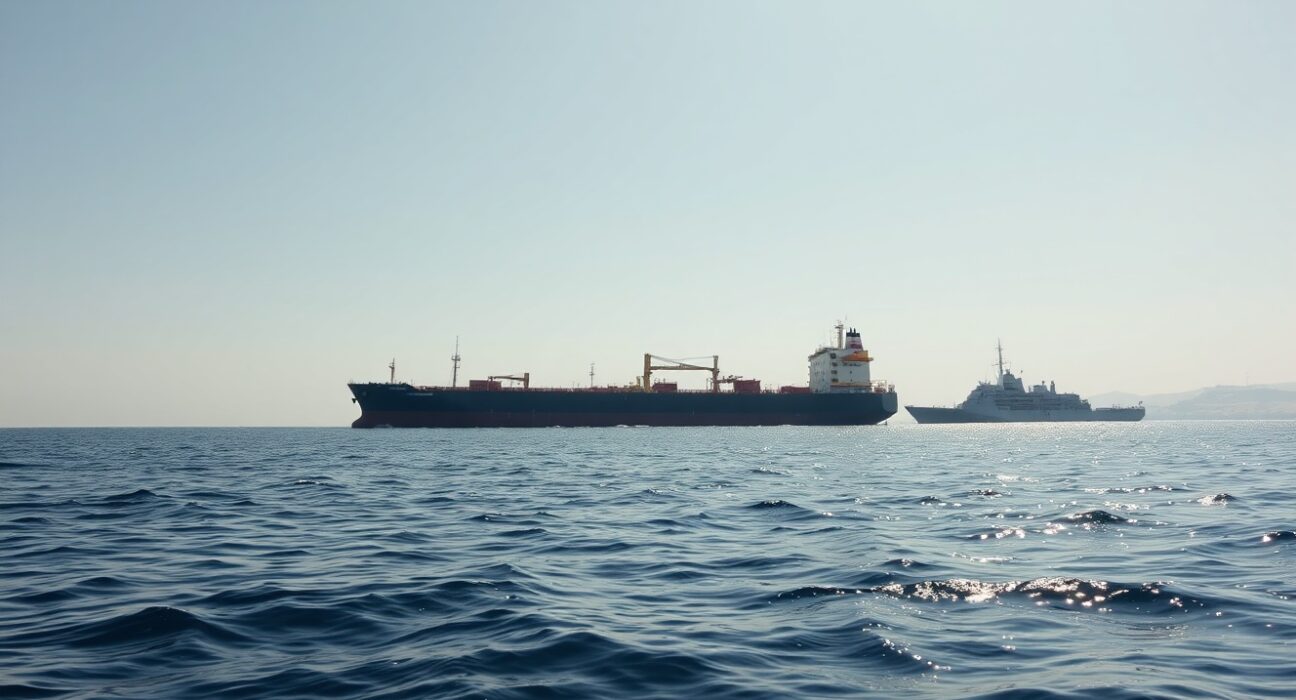
The U.S. Navy has resumed escorting commercial vessels through the Strait of Hormuz, a critical maritime chokepoint for global oil shipments. According to U.S. military officials cited by The Wall Street Journal, the first vessel to receive support under the renewed initiative was a Greek-owned Very Large Crude Carrier (VLCC) carrying approximately two million barrels of crude oil.
Freedom Plan Restarted After Brief Suspension
The escort operation marks the reactivation of the so-called “Freedom Plan,” a U.S. initiative designed to ensure safe passage for merchant ships through the strategically vital waterway. The plan had initially been launched but was suspended roughly 36 hours later. Officials have not publicly detailed the reasons for the suspension, but the resumption signals a renewed commitment to maintaining freedom of navigation in the region.
The VLCC, which had been stranded in the Middle East Gulf since early March, was escorted through waters near Oman. It is now en route to India to deliver its cargo. The successful transit represents a tangible outcome of the revived security framework.
Strategic Implications for Global Oil Routes
The Strait of Hormuz is one of the world’s most important energy transit points, with roughly 20% of global oil consumption passing through its narrow channel. Any disruption to shipping there can have immediate effects on global oil prices and energy security. The U.S. Navy’s decision to resume escorts comes amid heightened tensions in the region, where naval forces from multiple nations maintain a presence to deter potential threats from state and non-state actors.
Officials added that the U.S. Navy plans to assist approximately 10 more ships in the coming days, including additional VLCCs and container vessels. This indicates a sustained operational tempo rather than a one-off event.
Why This Matters for Markets and Trade
For energy markets, the resumption of naval escorts provides a degree of reassurance that major oil shipments can proceed without prolonged delays. The VLCC’s cargo—two million barrels—represents a significant volume, and its delivery to India underscores the continued reliance on Middle Eastern crude for Asian refiners. The ability to move such cargoes reliably is essential for maintaining supply chain stability.
Conclusion
The U.S. Navy’s renewed escort operations in the Strait of Hormuz represent a practical step toward safeguarding commercial shipping in a high-risk environment. While the Freedom Plan’s earlier suspension raised questions about its durability, the current resumption suggests an adaptive approach to maritime security. The coming days will test whether this operational tempo can be sustained, but for now, the immediate passage of a major oil tanker signals that the waterway remains open for business under military protection.
FAQs
Q1: What is the Freedom Plan?
The Freedom Plan is a U.S. initiative to provide naval escort and support for commercial vessels transiting the Strait of Hormuz, aimed at ensuring safe passage amid regional security concerns.
Q2: Why was the plan suspended initially?
Officials have not publicly explained the 36-hour suspension after the plan’s initial launch. It may have been due to operational assessments or tactical considerations.
Q3: How many ships will be escorted?
U.S. officials stated that approximately 10 more ships, including VLCCs and container vessels, are scheduled for escort in the coming days.
Disclaimer: The information provided is not trading advice, Bitcoinworld.co.in holds no liability for any investments made based on the information provided on this page. We strongly recommend independent research and/or consultation with a qualified professional before making any investment decisions.
