

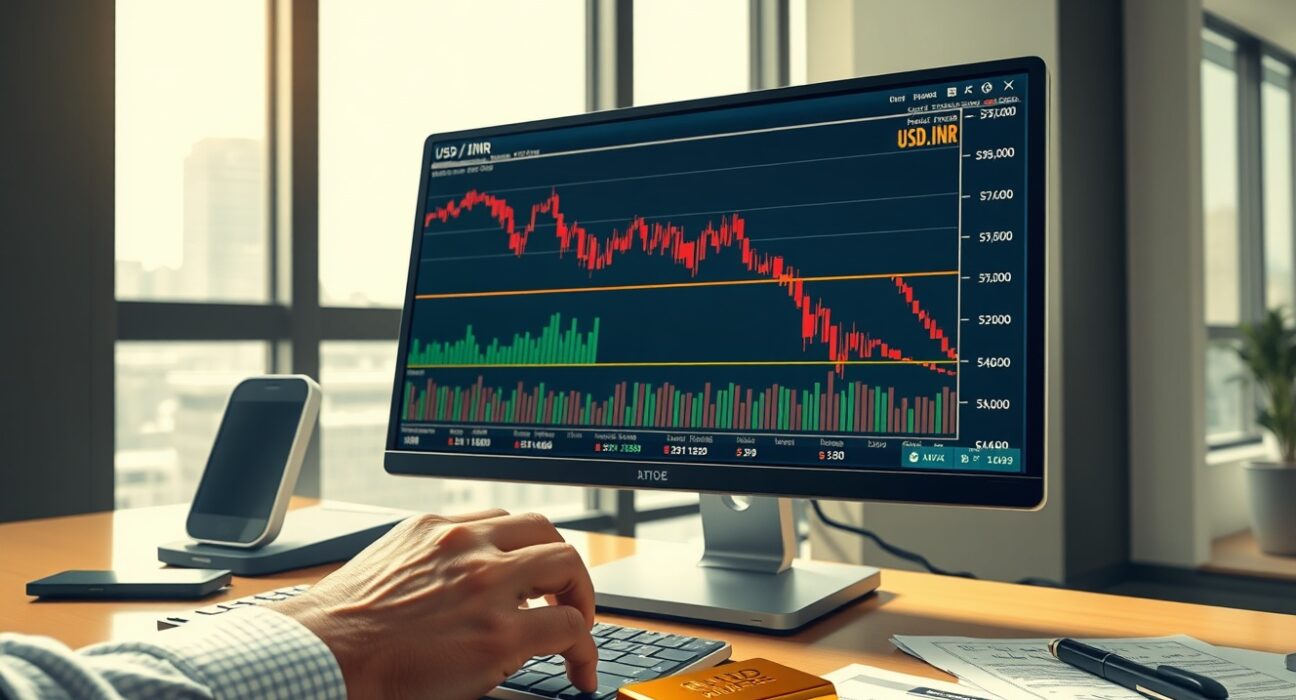
MUMBAI, INDIA – March 2025: The Indian rupee weakened significantly against the US dollar in early trading sessions today. This notable decline follows a sharp increase in dollar demand from importers, particularly after a substantial gold import order was processed. Consequently, the USD/INR pair breached a key psychological level, drawing immediate attention from traders and analysts across global forex markets.
USD/INR Pair Reacts to Gold-Driven Dollar Demand
The USD/INR exchange rate opened higher and continued its ascent throughout the morning. Market data from the Reserve Bank of India (RBI) showed the rupee trading at its lowest level in several weeks. This movement directly correlates with heightened activity from bullion importers securing US dollars for payments. Typically, large commodity orders necessitate significant foreign currency conversion, thereby applying upward pressure on the dollar’s value.
Forex analysts immediately noted the timing and scale of the demand. “The market is reacting to a tangible, physical need for dollars,” explained a senior dealer at a leading private bank, who requested anonymity per company policy. “When a major gold order hits the system, it creates a temporary but powerful imbalance between supply and demand for USD.” This real-world event provides a clear example of how trade flows directly influence currency valuations.
Understanding the Gold Import Mechanism and Forex Impact
India remains one of the world’s largest consumers of gold, primarily for jewelry and investment. The country imports nearly all of its gold, paying for it in US dollars. Therefore, a large import order triggers a specific chain of events in the financial system.
- An importer places an order with an international supplier.
- The importer must then purchase US dollars from the local forex market to make the payment.
- This sudden purchase increases demand for the dollar relative to the rupee.
- Increased demand pushes the USD/INR exchange rate higher, meaning it takes more rupees to buy one dollar.
This process is a fundamental driver of currency pairs tied to major commodity-importing nations. The RBI often monitors such flows to ensure orderly market conditions. Historical data indicates similar rupee volatility often follows festive seasons or periods of high gold demand.
Expert Analysis on Market Dynamics and Intervention
Financial experts emphasize the difference between speculative trading and trade-driven demand. “Speculation can cause short-term noise, but genuine import payments represent a concrete transfer of capital,” stated Dr. Anika Sharma, a professor of international finance. “This creates a more sustained pressure on the exchange rate until the transaction is fully absorbed by the market.”
Furthermore, market participants watch for potential intervention from the Reserve Bank of India. The central bank maintains substantial foreign exchange reserves, which it can deploy to smooth excessive volatility. However, analysts suggest intervention is more likely if the move is disorderly or threatens broader financial stability, rather than simply reflecting legitimate trade activity.
Broader Economic Context and Comparative Currency Performance
The rupee’s movement also occurs within a wider global forex landscape. Recently, the US dollar has shown strength against several emerging market currencies due to shifting interest rate expectations. The table below provides a snapshot of key Asian currency performances against the USD on the same trading day:
| Currency Pair | Change (%) | Primary Driver |
|---|---|---|
| USD/INR | +0.45% | Gold import dollar demand |
| USD/CNY | +0.15% | Broad USD strength |
| USD/IDR | +0.30% | Commodity price shifts |
This comparison illustrates that while the rupee faced unique domestic pressures, a firmer US dollar provided a supportive backdrop. Additionally, fluctuations in global crude oil prices—another major import for India—can compound forex market pressures. A simultaneous rise in oil prices would further increase the nation’s dollar requirements, potentially exacerbating rupee weakness.
Potential Implications for Trade and Inflation
A weaker rupee has immediate and delayed consequences for the Indian economy. Firstly, it makes all imports more expensive in rupee terms. This includes essential items like electronics, machinery, and crude oil. Over time, these higher costs can feed into domestic inflation, a key metric monitored by the RBI.
Conversely, a depreciated currency can benefit exporters. Indian software services, pharmaceuticals, and textile companies earn revenues in dollars, which then convert into more rupees. This can improve their profit margins and competitiveness abroad. However, the net effect depends on the balance between import and export sectors, as India typically runs a trade deficit.
Market observers will now scrutinize upcoming trade balance data and inflation reports. These figures will reveal whether the current forex movement is a brief spike or the start of a more sustained trend. The government’s policies on gold import duties may also face renewed discussion if such orders consistently trigger market volatility.
Conclusion
The USD/INR pair’s recent ascent underscores the direct link between physical trade flows and currency valuation. The Indian rupee weakened demonstrably as dollar demand surged following a significant gold import order. This event highlights the ongoing influence of traditional trade mechanics in modern forex markets, even amidst high-frequency electronic trading. Monitoring such fundamental drivers remains crucial for understanding the trajectory of the rupee against the dollar in the coming weeks.
FAQs
Q1: Why does a gold import order weaken the Indian rupee?
A1: India pays for gold imports in US dollars. Importers must buy dollars from the forex market, increasing demand for USD and decreasing demand for INR, which pushes the USD/INR exchange rate higher (a weaker rupee).
Q2: How does the Reserve Bank of India (RBI) respond to such rupee volatility?
A2: The RBI monitors the market and may intervene by selling US dollars from its foreign exchange reserves. This action increases dollar supply, potentially stabilizing or lowering the USD/INR rate to prevent disorderly movements.
Q3: Does a weaker rupee only have negative effects?
A3: No. While it makes imports more expensive, a weaker rupee benefits exporters by increasing the rupee value of their foreign earnings, potentially boosting sectors like IT services and manufacturing.
Q4: Are gold imports the only factor affecting the USD/INR rate?
A4: No. The rate is influenced by many factors including: US Federal Reserve policy, global oil prices, foreign investment flows (FII), India’s domestic interest rates, and broader economic growth indicators.
Q5: What is the difference between trade-driven dollar demand and speculative demand?
A5: Trade-driven demand comes from businesses needing dollars for actual transactions like imports. Speculative demand comes from traders and investors betting on future currency movements. Trade demand often has a more immediate and tangible impact on the spot market.
Disclaimer: The information provided is not trading advice, Bitcoinworld.co.in holds no liability for any investments made based on the information provided on this page. We strongly recommend independent research and/or consultation with a qualified professional before making any investment decisions.
