
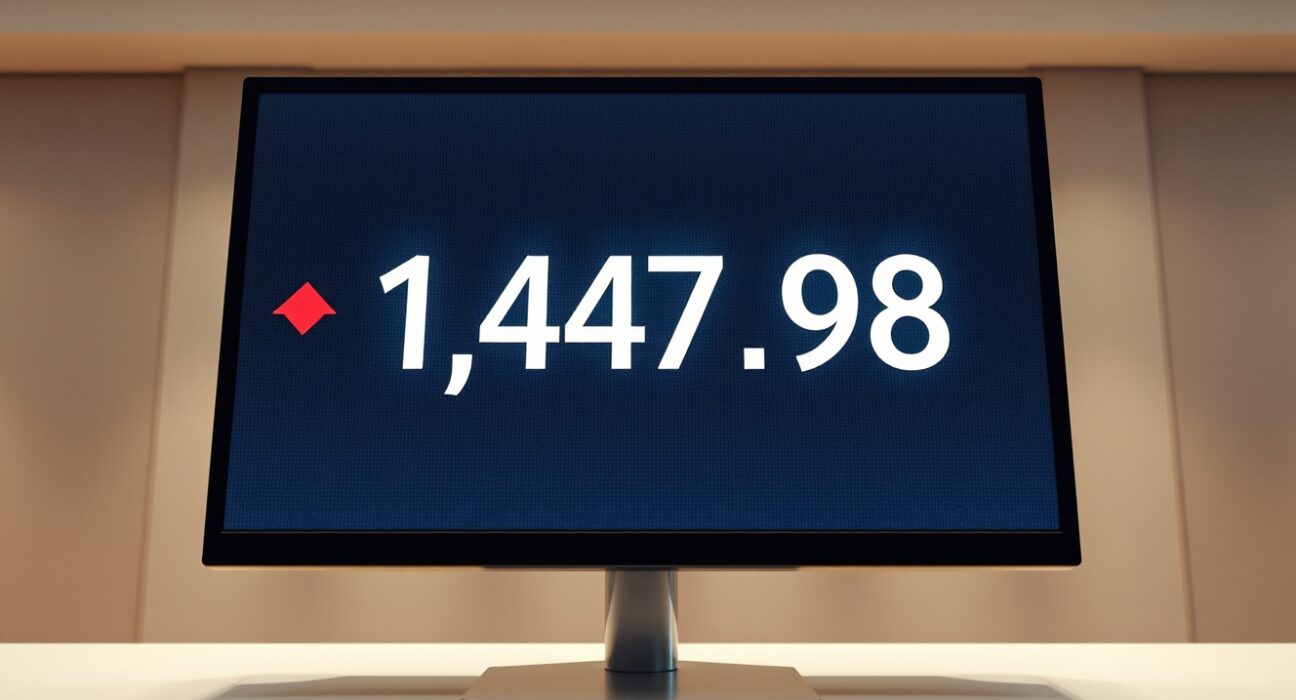
SEOUL, South Korea – The U.S. dollar to South Korean won (USD/KRW) exchange rate has decisively broken below the critical 1,475 won level, marking a significant shift in regional currency dynamics. Currently trading at 1,473.98 won, the dollar’s 1.68% single-day decline against the won sends immediate ripples through traditional finance and the local cryptocurrency ecosystem. Consequently, major exchanges like Upbit and Bithumb show correlated declines in the Korean won price of the stablecoin USDT. This movement prompts a deeper analysis of the underlying economic drivers and their broader market implications.
USD/KRW Exchange Rate Drops: A Technical and Fundamental Breakdown
The sudden descent of the USD/KRW pair below 1,475 represents more than a routine fluctuation. Firstly, this level has acted as a key psychological and technical support zone throughout recent trading sessions. The breach signals strong selling pressure on the dollar and corresponding buying interest in the Korean won. Market analysts immediately point to several concurrent factors. For instance, recent trade data showing a stronger-than-expected South Korean current account surplus has bolstered the won. Simultaneously, shifting expectations regarding the timing of U.S. Federal Reserve interest rate adjustments have softened the dollar’s global appeal.
Furthermore, the Bank of Korea’s (BOK) recent hawkish commentary on inflation has reinforced expectations for a stable or potentially tighter monetary policy. This stance contrasts with a perceived dovish tilt from other major central banks. The following table illustrates the immediate market moves across different venues:
| Market/Venue | Rate/Price | Daily Change |
|---|---|---|
| Interbank Forex (USD/KRW) | 1,473.98 won | -1.68% |
| Upbit (USDT/KRW) | 1,483 won | -0.54% |
| Bithumb (USDT/KRW) | 1,482 won | -1.79% |
Notably, the premium for USDT on crypto exchanges, which typically trades at a slight markup to the official forex rate, also compressed significantly. This compression indicates a rapid market adjustment and a potential reduction in arbitrage opportunities between traditional and digital asset markets.
Impact on South Korean Cryptocurrency Markets
The correlation between the traditional forex market and cryptocurrency pricing in South Korea remains exceptionally strong. A stronger won directly affects the local currency valuation of crypto assets, which are often paired against USDT or the dollar. The observed declines on Upbit and Bithumb demonstrate this linkage clearly. When the won appreciates, the Korean won price of dollar-pegged assets like USDT logically falls. This movement can trigger a series of market behaviors:
- Arbitrage Closure: Traders quickly close positions that bet on a persistent premium for USDT in the crypto market.
- Altered Buying Patterns: Domestic investors may perceive a stronger won as increasing their purchasing power for dollar-denominated assets like Bitcoin.
- Liquidity Shifts: Rapid forex moves can cause temporary liquidity mismatches on exchanges as market makers adjust their quotes.
Moreover, this event highlights the mature integration of crypto markets into the broader Korean financial landscape. Market participants now routinely watch forex indicators as leading signals for crypto market sentiment and flow dynamics.
Expert Analysis on Central Bank Policy and Capital Flows
Financial economists point to capital flow reversals as a primary driver. “The movement suggests renewed confidence in South Korean assets and a potential recalibration of global capital allocation,” explains a senior analyst from a major Seoul-based investment bank. “Investors are reacting to relative monetary policy trajectories and robust export performance.” Additionally, the narrowing interest rate differential between the U.S. and South Korea reduces the carry trade appeal of holding dollars, prompting unwinding of those positions.
Historical context is also crucial. The USD/KRW rate has experienced high volatility in recent years, driven by global risk sentiment, trade tensions, and pandemic-era policies. The current drop below 1,475 brings the pair to levels not consistently seen since before several aggressive Fed hiking cycles. This retreat may indicate a market belief that the era of relentless dollar strength is moderating, at least against certain Asian currencies with strong fundamentals.
Broader Economic Implications and Market Outlook
A sustained stronger won carries significant implications for Asia’s fourth-largest economy. Positively, it reduces import costs, helping to curb inflationary pressures on energy and raw materials. Conversely, it poses a challenge for export-driven sectors like semiconductors, automobiles, and shipbuilding, as their goods become more expensive for foreign buyers. Policymakers at the BOK and the Ministry of Economy and Finance therefore monitor such sharp moves closely for potential disruptive effects.
For the cryptocurrency sector, the event reinforces the importance of macro-economic literacy for traders. The days of crypto operating in a complete vacuum from traditional finance are over, especially in regulated markets like South Korea. Future volatility in the USD/KRW pair will likely continue to transmit directly to the quoted prices on Upbit, Bithumb, Korbit, and Coinone. Market participants should consider:
- Monitoring BOK policy statements and U.S. inflation data.
- Understanding the basis spread between interbank forex and crypto exchange USDT prices.
- Recognizing that sharp won appreciation can temporarily depress KRW-denominated crypto charts, independent of global USD-based Bitcoin price action.
Conclusion
The USD/KRW exchange rate breaking below the 1,475 won level is a noteworthy financial event with clear cross-market consequences. It underscores the won’s recent strength driven by fundamental economic factors and shifting global monetary policy expectations. The immediate, correlated response in the South Korean cryptocurrency market, evidenced by falling USDT prices on Upbit and Bithumb, demonstrates the deep interconnection between traditional forex and digital asset trading. Moving forward, market participants in both spheres must account for this linkage, as the USD/KRW rate will remain a key indicator for local market liquidity, investor sentiment, and arbitrage opportunities.
FAQs
Q1: Why does the USD/KRW exchange rate affect cryptocurrency prices in South Korea?
The Korean won (KRW) is the primary trading currency on domestic exchanges. Assets like Bitcoin are often traded via KRW pairs or via USDT/KRW. Therefore, if the won strengthens against the dollar, the KRW price of a dollar-pegged stablecoin like USDT will fall, affecting all KRW-denominated crypto valuations.
Q2: What does it mean when USDT trades at a premium on Upbit or Bithumb?
A premium occurs when the USDT/KRW price on a crypto exchange is higher than the official USD/KRW interbank forex rate. This often indicates high local demand to convert won into crypto assets, sometimes exceeding available liquidity, or reflecting capital flow restrictions.
Q3: What major factors influence the USD/KRW exchange rate?
Key factors include interest rate differentials between the Bank of Korea and the U.S. Federal Reserve, South Korea’s trade balance and current account data, global risk sentiment (which affects demand for safe-haven dollars), and direct intervention or verbal guidance from Korean financial authorities.
Q4: Could this won strength hurt South Korea’s economy?
While it helps fight inflation by making imports cheaper, a persistently strong won can hurt the competitiveness of South Korea’s vital export sectors. Policymakers generally prefer exchange rate stability to support balanced economic growth.
Q5: How quickly do crypto exchanges like Upbit adjust their USDT prices after a forex move?
Adjustments are typically very fast, often in real-time, due to automated market-making systems and arbitrage traders who exploit any mispricing between the forex and crypto markets, ensuring tight correlation.
Disclaimer: The information provided is not trading advice, Bitcoinworld.co.in holds no liability for any investments made based on the information provided on this page. We strongly recommend independent research and/or consultation with a qualified professional before making any investment decisions.