

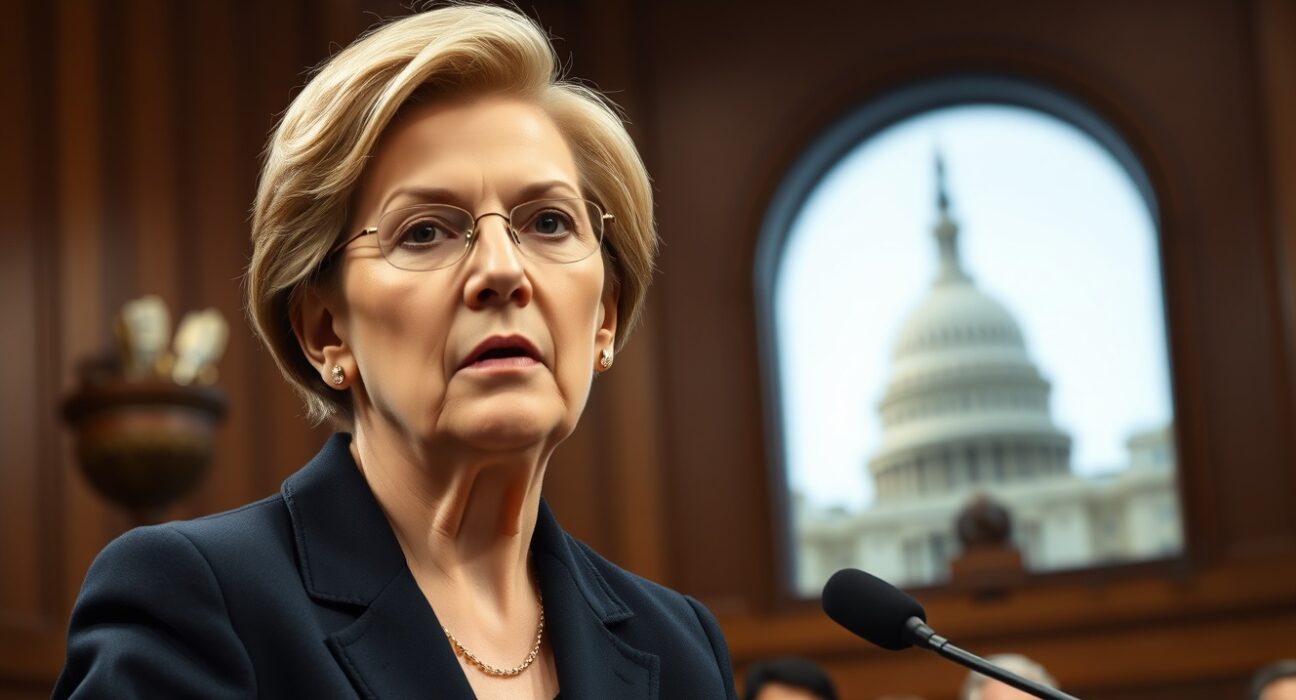
WASHINGTON, D.C. – March 2025: A recent Securities and Exchange Commission decision has ignited a fierce political debate about regulatory independence in the cryptocurrency sector. Senator Elizabeth Warren has publicly criticized the SEC’s dismissal of its lawsuit against Tron founder Justin Sun, arguing the move raises serious concerns about the agency’s autonomy. The Massachusetts Democrat contends the SEC must not become a puppet for former President Donald Trump’s billionaire friends, creating immediate implications for cryptocurrency legislation.
SEC Lawsuit Dismissal Creates Political Firestorm
The Securities and Exchange Commission initially filed its lawsuit against Justin Sun in March 2023. The regulatory agency accused the Tron founder of market manipulation and unregistered securities offerings. According to court documents, the SEC alleged Sun orchestrated wash trading on his platform. The agency also claimed he distributed unregistered securities through initial coin offerings. However, the SEC voluntarily dismissed this lawsuit in February 2025 without providing detailed public explanations. This unexpected development immediately drew scrutiny from congressional oversight committees.
Senator Warren responded forcefully to the SEC’s decision through official statements and media interviews. She specifically referenced President Trump’s public statements about cryptocurrency regulation. The former president has repeatedly criticized what he calls regulatory overreach in the technology sector. Warren emphasized that any cryptocurrency legislation passed by Congress must address presidential corruption issues. Her comments reflect growing concerns about political influence on independent regulatory agencies.
Historical Context of SEC Independence
The Securities and Exchange Commission has operated as an independent federal agency since 1934. Congress established the SEC following the stock market crash of 1929. The agency’s founding mission involves protecting investors and maintaining fair markets. Historically, SEC commissioners serve staggered five-year terms to ensure continuity. This structure theoretically insulates the agency from direct political pressure. However, presidential administrations have always influenced SEC priorities through appointments.
Recent administrations have demonstrated different approaches to cryptocurrency regulation. The Obama administration generally favored cautious oversight of emerging technologies. The Trump administration initially showed skepticism toward cryptocurrency markets. However, Trump’s position evolved significantly during his 2024 presidential campaign. The Biden administration pursued aggressive enforcement actions against several cryptocurrency firms. This regulatory pendulum swing creates uncertainty for market participants.
Expert Analysis of Regulatory Capture Concerns
Financial regulation experts have analyzed the potential implications of Warren’s statements. Dr. Michael Carter, a Georgetown University law professor specializing in securities regulation, explains the concept of regulatory capture. “Regulatory capture occurs when agencies advance the interests of industries they regulate,” Carter states. “The concern here involves political rather than industry capture.” He notes that independent agencies must demonstrate consistent enforcement regardless of political affiliations.
Several former SEC officials have commented anonymously about the situation. One former enforcement division attorney suggests the dismissal might reflect legitimate prosecutorial discretion. “Not every filed lawsuit proceeds to trial,” the former official notes. “However, the timing and political context inevitably raise questions.” The SEC has not publicly responded to Warren’s specific allegations about presidential influence.
Cryptocurrency Regulation Landscape in 2025
The cryptocurrency regulatory environment remains fragmented as of early 2025. Multiple federal agencies claim jurisdiction over different aspects of digital assets. The SEC focuses on securities law violations within cryptocurrency markets. The Commodity Futures Trading Commission regulates cryptocurrency derivatives and commodities. Meanwhile, the Treasury Department addresses money laundering concerns through FinCEN. This regulatory overlap creates confusion for companies operating in the space.
Congress has considered several comprehensive cryptocurrency bills during the current session. Key legislative proposals include:
- The Digital Asset Market Structure Act: Creates clear jurisdictional boundaries between agencies
- The Blockchain Regulatory Certainty Act: Provides safe harbors for certain blockchain activities
- The Crypto Consumer Protection Act: Enhances disclosure requirements for cryptocurrency offerings
None of these bills has advanced to floor votes amid political disagreements. The recent SEC controversy further complicates legislative negotiations. Industry advocates worry about regulatory uncertainty stifling innovation. Consumer protection groups emphasize the need for stronger investor safeguards.
Justin Sun’s Legal History and Tron’s Position
Justin Sun founded the Tron blockchain platform in 2017. The platform initially focused on entertainment content distribution. Tron later expanded into decentralized finance applications and stablecoin issuance. Sun has faced multiple regulatory challenges across different jurisdictions. The SEC lawsuit represented his most significant legal threat in the United States. Sun also settled charges with the CFTC in 2021 regarding BitTorrent token offerings.
The dismissed SEC lawsuit specifically alleged several violations:
| Allegation | SEC Claim | Status |
|---|---|---|
| Wash Trading | Artificial trading volume creation | Dismissed |
| Unregistered ICO | TRX token offering violated securities laws | Dismissed |
| Market Manipulation | Coordinated trading to influence prices | Dismissed |
| Celebrity Endorsements | Failure to disclose compensation | Dismissed |
Tron’s native token, TRX, experienced significant price volatility following the lawsuit dismissal. The token price increased approximately 15% within 24 hours of the news. Market analysts attribute this movement to reduced regulatory uncertainty. However, Tron still faces regulatory scrutiny in other countries including China and South Korea.
Political Implications for 2026 Elections
The cryptocurrency regulation debate has become increasingly politicized ahead of the 2026 midterm elections. Republican candidates generally advocate for lighter cryptocurrency regulation to foster innovation. Democratic candidates typically emphasize consumer protection and systemic risk mitigation. Senator Warren represents the progressive wing of the Democratic Party on financial regulation issues. Her statements about SEC independence reflect broader concerns about executive branch overreach.
Political action committees associated with cryptocurrency interests have significantly increased campaign contributions. These groups donated over $80 million during the 2024 election cycle according to OpenSecrets data. The industry seeks to influence regulatory outcomes through legislative and electoral channels. This financial involvement raises additional questions about regulatory capture beyond presidential influence.
International Regulatory Comparisons
Other countries have developed distinct approaches to cryptocurrency regulation. The European Union implemented its Markets in Crypto-Assets (MiCA) framework in 2024. This comprehensive regulation establishes uniform rules across member states. MiCA emphasizes consumer protection while providing regulatory clarity for businesses. The United Kingdom has pursued a phased approach to cryptocurrency regulation through its Financial Conduct Authority.
Asian jurisdictions demonstrate particularly diverse regulatory strategies. Japan recognized cryptocurrency as legal property under its Payment Services Act. Singapore has established licensing frameworks for cryptocurrency exchanges through its Monetary Authority. China maintains its comprehensive ban on cryptocurrency trading and mining activities. These international differences create challenges for global cryptocurrency businesses operating across borders.
Conclusion
The SEC lawsuit dismissal against Justin Sun has triggered important conversations about regulatory independence. Senator Elizabeth Warren’s warnings about the SEC becoming a puppet for political interests highlight systemic concerns. The cryptocurrency regulation landscape remains uncertain as multiple agencies assert jurisdiction. Congressional action appears necessary to establish clear regulatory frameworks. However, political divisions complicate legislative progress on comprehensive cryptocurrency bills. The ultimate resolution of these issues will significantly impact investor protection, market integrity, and technological innovation. The SEC must demonstrate its independence through transparent decision-making processes regardless of political pressure.
FAQs
Q1: What specific lawsuit did the SEC dismiss?
The Securities and Exchange Commission dismissed its lawsuit against Justin Sun, founder of the Tron blockchain platform. The SEC had accused Sun of market manipulation and unregistered securities offerings.
Q2: Why is Senator Warren concerned about this dismissal?
Senator Warren believes the dismissal raises questions about the SEC’s independence from political influence. She specifically referenced President Trump’s stance on cryptocurrency regulation as potentially influencing the decision.
Q3: Has the SEC responded to these allegations?
The SEC has not publicly responded to Senator Warren’s specific allegations about presidential influence. The agency typically does not comment on ongoing enforcement decisions or political criticisms.
Q4: What is regulatory capture in this context?
Regulatory capture refers to situations where regulatory agencies advance the interests of those they regulate rather than the public interest. In this case, the concern involves potential political influence rather than industry influence.
Q5: How might this affect cryptocurrency legislation?
This controversy could complicate already difficult negotiations over comprehensive cryptocurrency legislation. Political disagreements about regulatory independence may delay or alter proposed bills currently under consideration in Congress.
Disclaimer: The information provided is not trading advice, Bitcoinworld.co.in holds no liability for any investments made based on the information provided on this page. We strongly recommend independent research and/or consultation with a qualified professional before making any investment decisions.
