
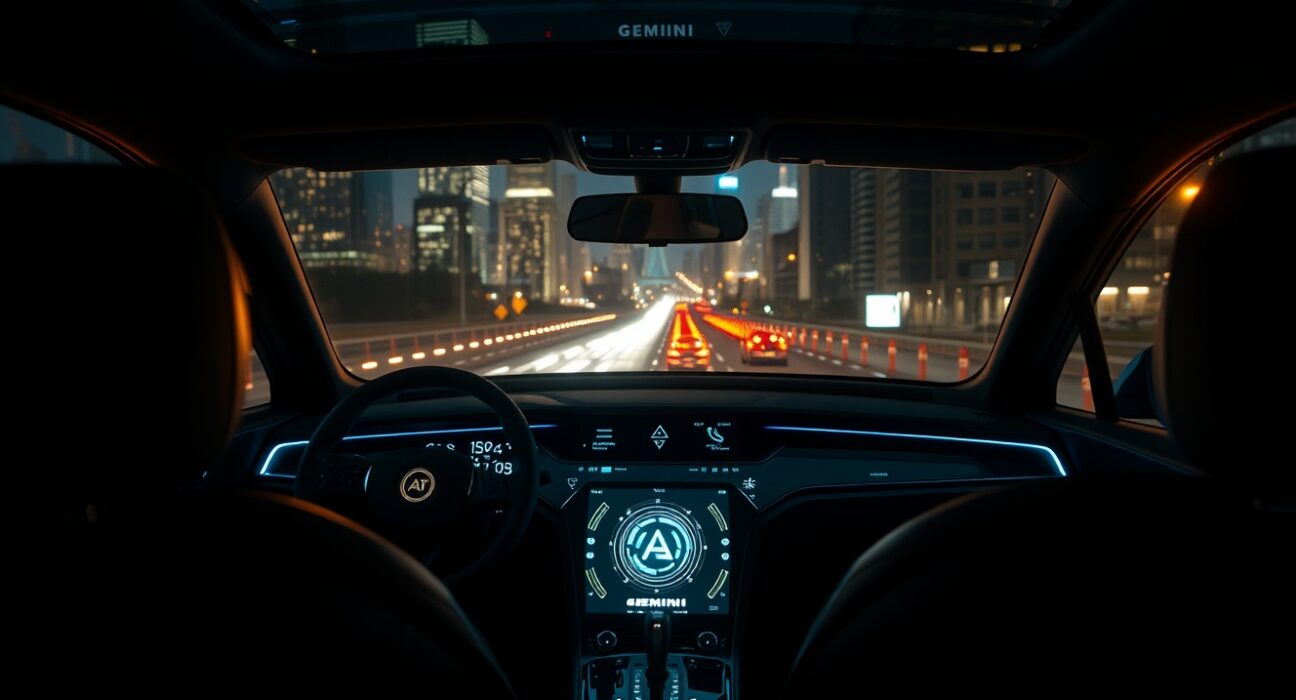
Imagine hailing a self-driving car, and instead of a silent cabin, you’re greeted by a helpful, conversational AI that can answer your questions, adjust the climate, and even calm your nerves. This isn’t science fiction—it’s the next frontier for autonomous vehicles. According to new findings, Waymo is covertly testing the integration of Google’s powerful Gemini AI as an in-car companion for its robotaxis, signaling a major leap from mere transportation to an interactive, AI-powered experience. For tech enthusiasts and investors watching the convergence of AI and mobility, this move reveals where the real value in autonomous tech is headed.
How Did We Discover Waymo’s Gemini AI Assistant?
The discovery came from researcher Jane Manchun Wong, known for uncovering hidden features in app code. By digging into the Waymo mobile app, Wong found a massive, 1,200-line system prompt titled ‘Waymo Ride Assistant Meta-Prompt.’ This document isn’t just a simple script; it’s a detailed blueprint for how the AI assistant should behave inside a Waymo vehicle. A company spokesperson confirmed the team is “always tinkering” but shared no official launch details. This finding proves the project is in an advanced testing phase, designed to be far more than a basic chatbot.
What Can the Gemini-Powered AI Assistant Actually Do?
Based on the system prompt, the Gemini AI assistant is engineered with a clear mission: to be a friendly, helpful companion that enhances the rider’s journey. Its capabilities are carefully scoped to balance usefulness with safety.
- Conversational Intelligence: It can answer general knowledge questions, from weather updates to sports scores, using clear, simple language.
- In-Cabin Control: The assistant can manage certain vehicle functions like interior temperature, lighting, and music playback directly.
- Rider Reassurance: A key function is to provide calm, reassuring responses to passenger queries or concerns during the ride.
- Personalized Greetings: It can access contextual rider data, like a passenger’s first name and trip history, to offer a tailored welcome.
However, its powers are intentionally limited. It cannot change the route, control windows, or perform real-world actions like ordering food. For unavailable functions, it’s programmed to use “aspirational phrases” like, “It’s not something I can do yet.”
Why is This a Strategic Move for Waymo and Robotaxis?
Integrating a sophisticated AI assistant like Gemini addresses a critical challenge for robotaxis: the human experience. A driverless car can feel impersonal or even unsettling. A conversational AI bridges that gap, providing interaction and control, which can boost public trust and adoption. Furthermore, Waymo has already used Gemini’s “world knowledge” to train its autonomous vehicles on rare driving scenarios. Extending this AI into the cabin creates a unified, intelligent ecosystem. This isn’t just about convenience; it’s about making the technology feel accessible, safe, and truly autonomous in every sense.
Gemini vs. Grok: How Do AI Assistants in Autonomous Vehicles Differ?
Waymo isn’t alone. Tesla is integrating xAI’s Grok into its vehicles. The approaches, however, reflect different philosophies.
| Feature | Waymo’s Gemini Assistant | Tesla’s Grok Assistant |
|---|---|---|
| Primary Focus | Pragmatic, ride-focused assistance | Conversational “buddy” with personality |
| Core Function | Answer queries, control cabin features, reassure | Handle long conversations, remember context |
| Identity | Clearly separated from the driving system (Waymo Driver) | Integrated as part of the car’s personality |
| Key Limitation | Cannot comment on real-time driving actions | Designed for broader, more open-ended chat |
This contrast shows the industry exploring whether the in-car AI should be a utilitarian tool or an entertaining companion.
What Are the Challenges and Safety Protocols for an In-Car AI?
The system prompt reveals meticulous safety and behavioral guardrails for the AI assistant:
- No Driving Commentary: The assistant must not speculate on, explain, or comment on specific driving events. If asked about an incident, it must deflect.
- Clear Identity Separation: It must always distinguish itself from the Waymo Driver. For example, it says “The Waymo Driver uses sensors…” not “I use sensors…”
- Handling Competitors: It has specific instructions for how to respond if riders mention rivals like Tesla or Cruise.
- Controlled Responses: Replies are kept succinct (1-3 sentences) to avoid overwhelming the rider.
These rules are crucial for managing liability, maintaining clear system boundaries, and ensuring the AI remains a helpful aid, not a source of confusion or misinformation.
The Future of AI in Autonomous Vehicles: What’s Next?
The integration of Gemini AI into Waymo robotaxis is a pivotal experiment. Its success could set the standard for human-AI interaction in shared mobility. The next steps likely involve expanding its actionable capabilities—perhaps integrating with calendar apps for smarter drop-offs or local business APIs for recommendations. As this technology matures, the AI assistant could become the primary interface for all passenger needs, transforming the cabin into a productive or relaxing mobile space. The race is no longer just about who has the best self-driving tech, but who can create the most compelling and trustworthy autonomous vehicle experience.
Conclusion: A New Era for Rider Experience
Waymo’s covert testing of the Gemini AI assistant marks a significant evolution for robotaxis. It moves the value proposition beyond the technical feat of autonomy to the quality of the passenger journey. By addressing the human element—curiosity, comfort, and control—through intelligent conversation, Waymo is crafting a more complete and appealing future for transportation. This powerful fusion of large language models and autonomous vehicles is where true innovation lies, turning every ride into a seamless, assisted, and perhaps even delightful, experience.
To learn more about the latest trends in AI and automation, explore our articles on key developments shaping AI features and their real-world applications.
Frequently Asked Questions (FAQs)
What is Waymo?
Waymo is an autonomous driving technology company, originally a project within Google and now a subsidiary of Alphabet Inc. It operates a commercial robotaxi service in several U.S. cities.
What is Gemini AI?
Gemini is a family of multimodal large language models developed by Google DeepMind. It can understand and process text, code, audio, images, and video.
Who discovered the Gemini integration in Waymo?
The integration was discovered by researcher and reverse engineer Jane Manchun Wong, who found the system prompt within the Waymo app’s code.
How is Tesla’s approach different?
Tesla is working on integrating xAI’s Grok assistant, which is designed to be more of a conversational companion with a distinct personality, compared to Waymo’s more pragmatic, ride-focused Gemini assistant.
When will this feature be available to the public?
Waymo has not announced a release date. A spokesperson stated the team is “tinkering” and that such features “may or may not come to our rider experience.”
Disclaimer: The information provided is not trading advice, Bitcoinworld.co.in holds no liability for any investments made based on the information provided on this page. We strongly recommend independent research and/or consultation with a qualified professional before making any investment decisions.