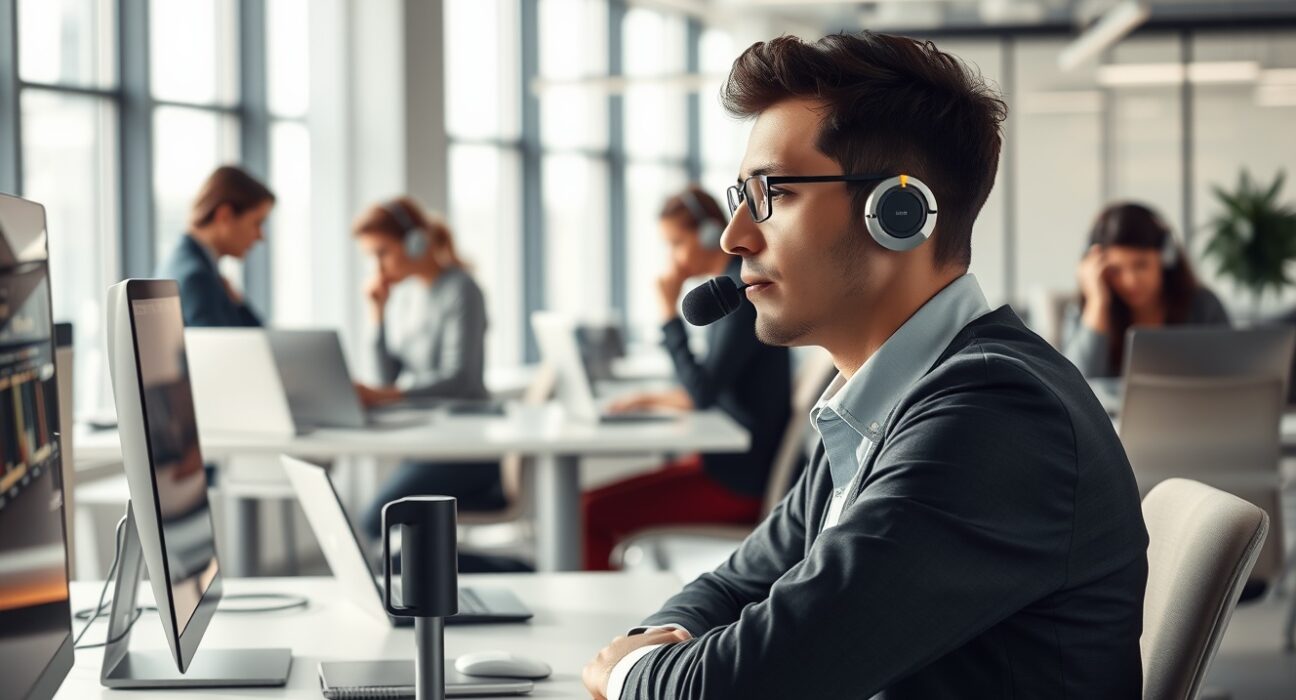
The sound of the modern office is changing. Once dominated by keyboard clatter and phone rings, workplaces are increasingly filled with a quieter, more intimate noise: the sound of people talking to their computers. Voice dictation tools, supercharged by generative AI, are moving from niche productivity hacks to mainstream office fixtures, prompting a re-evaluation of workplace etiquette, design, and culture.
From Keyboard to Conversation
Applications like Wispr are at the forefront of this shift, allowing users to dictate emails, documents, and code at speeds far exceeding typing. When combined with emerging ‘vibe coding’ tools—where developers describe functionality in natural language—the potential for hands-free work expands dramatically. The Wall Street Journal recently highlighted this trend, noting that some venture capitalists now describe visiting startup offices as stepping into ‘a high-end call center.’
Gusto co-founder Edward Kim has reportedly told his team to anticipate a future where offices sound ‘more like a sales floor.’ Kim himself claims he now only types when absolutely necessary, though he admits that constant dictation in an open office can feel ‘just a little awkward.’
The Etiquette of the Whispered Word
This new mode of working isn’t without its social friction. Mollie Amkraut Mueller, an AI entrepreneur, shared that her husband became annoyed with her habit of whispering to her computer during late-night work sessions. Their solution—sitting apart or one person retreating to a separate office—reflects a growing need to negotiate personal space in a world where work and conversation are increasingly intertwined.
Wispr founder Tanay Kothari, however, remains optimistic. He argues that whispering to computers will eventually seem as normal as staring at a smartphone for hours, a behavior that was itself once considered odd. The key, he suggests, is adaptation and the gradual normalization of new routines.
Implications for Office Design and Culture
The rise of voice dictation has practical consequences beyond personal habits. Open-plan offices, already criticized for noise and lack of privacy, may need to be rethought. Dedicated ‘voice zones,’ soundproof pods, or even shifts in architectural design could become necessary to accommodate workers who need to speak to their devices without disturbing colleagues. Companies may also need to update their workplace policies to address acceptable noise levels and the use of personal microphones or headsets.
For knowledge workers, the efficiency gains are clear. Dictation can be faster than typing, reduces strain on hands and wrists, and allows for a more natural flow of ideas. However, the trade-off involves a loss of silence and the potential for increased cognitive load from managing a constant stream of spoken input.
Conclusion
The whisper-filled office is not a distant sci-fi concept; it is an emerging reality driven by practical AI tools. As voice dictation becomes more accurate and integrated into workflows, the sound of work will inevitably change. The challenge for companies and employees alike will be to balance the productivity benefits of speaking to machines with the human need for quiet, focus, and respectful shared space. Whether this leads to a more collaborative environment or a cacophony of hushed conversations remains to be seen, but one thing is clear: the future of work will be heard, not just typed.
FAQs
Q1: What is driving the increase in voice dictation in offices?
The primary driver is the improved accuracy and integration of AI-powered dictation tools like Wispr, combined with the rise of natural language interfaces for coding and other tasks. These tools offer significant speed and ergonomic benefits over traditional typing.
Q2: What are the main etiquette challenges with voice dictation?
Key challenges include noise pollution in open-plan offices, privacy concerns when speaking sensitive information aloud, and the need to negotiate personal space with colleagues who may be disturbed by nearby dictation.
Q3: How might office design change to accommodate voice dictation?
Offices may need to incorporate more soundproofing, dedicated ‘voice-friendly’ zones, private phone-booth-style pods, or flexible seating arrangements that allow workers to choose quiet or conversational areas based on their tasks.
Disclaimer: The information provided is not trading advice, Bitcoinworld.co.in holds no liability for any investments made based on the information provided on this page. We strongly recommend independent research and/or consultation with a qualified professional before making any investment decisions.