
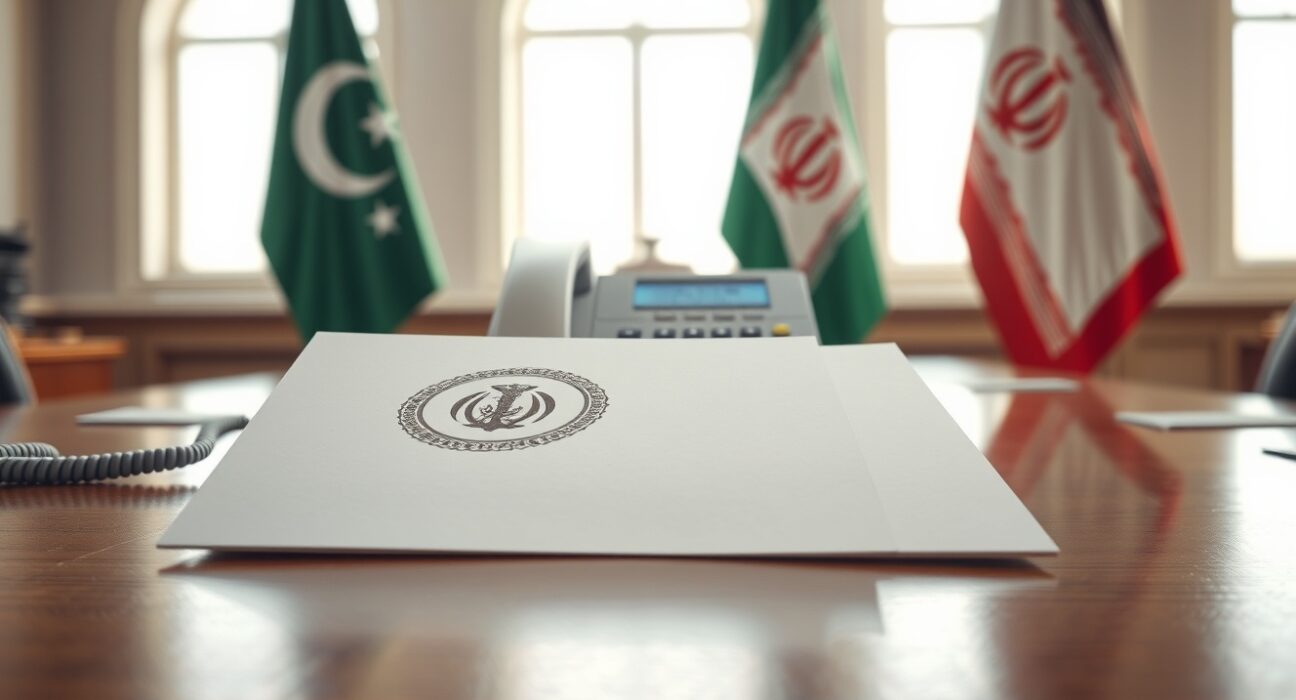
WASHINGTON, D.C. – In a significant diplomatic development, the White House has confirmed that President Donald Trump is aware of a formal proposal from Pakistan regarding Iran and will respond to it soon. This announcement, made by White House spokesperson Levitt and reported by Axios, signals a potential shift in the complex geopolitical landscape of the Middle East and South Asia. The proposal arrives during a period of heightened regional tension, placing Pakistan in a unique mediating position between Washington and Tehran.
White House Acknowledges Pakistan’s Iran Proposal
White House spokesperson Levitt formally acknowledged the Pakistani initiative during a press briefing. Consequently, this marks a notable moment in U.S. diplomatic channels. The administration confirmed President Trump’s awareness of the proposal’s details. However, officials have not yet disclosed the specific contents or the expected timeline for a formal U.S. response. Historically, Pakistan has maintained complex relationships with both the United States and Iran. Therefore, this proposal likely represents a calculated diplomatic effort. The State Department typically reviews such initiatives through multiple security and policy frameworks. Meanwhile, regional analysts are scrutinizing the potential implications.
Historical Context of Pakistan-Iran-US Relations
Understanding this proposal requires examining the tripartite relationship’s history. Pakistan and Iran share a long, porous border and deep cultural ties. Conversely, U.S.-Iran relations have remained strained for decades. Pakistan has often navigated a delicate balance between its strategic alliance with Washington and its geographical and religious connections to Tehran. The following timeline highlights key events shaping this dynamic:
- 1979: Iranian Revolution and U.S. Embassy seizure fundamentally alter U.S.-Iran relations.
- 1980s: Pakistan receives significant U.S. aid during the Soviet-Afghan War, while maintaining ties with Iran.
- 1990s: U.S. sanctions on Iran create diplomatic challenges for Pakistan.
- 2001-2021: Pakistan is a major non-NATO ally in the U.S.-led War on Terror, complicating its Iran policy.
- 2015: Joint Comprehensive Plan of Action (JCPOA) signed; U.S. withdraws in 2018 under President Trump.
- 2020-2024: Period of escalated U.S.-Iran tensions, including the Soleimani strike and nuclear deal negotiations.
Expert Analysis on Pakistan’s Diplomatic Calculus
Foreign policy experts point to several motivating factors for Pakistan’s initiative. Firstly, regional stability directly impacts Pakistan’s security, particularly along its western border. Secondly, Pakistan seeks to bolster its international standing as a diplomatic actor beyond security issues. Dr. Anisa Rahman, a senior fellow at the Center for Strategic and International Studies, notes, “Pakistan’s proposal likely aims to de-escalate regional tensions, which serve its economic and security interests. A conflict between the U.S. and Iran would be disastrous for Pakistani trade and energy security.” Furthermore, Pakistan may be positioning itself as an indispensable intermediary, enhancing its leverage with both capitals.
Potential Contents and Implications of the Proposal
While the proposal’s specifics remain confidential, analysts suggest several probable focus areas based on Pakistan’s stated interests and past diplomatic behavior. The initiative could address one or more of the following key issues:
| Potential Focus Area | Rationale | Likely U.S. Concerns |
|---|---|---|
| Nuclear De-escalation | Pakistan is a nuclear power with experience in regional confidence-building. | Verification mechanisms and alignment with maximum pressure campaign. |
| Afghanistan Stability | Both the U.S. and Iran seek influence in post-withdrawal Afghanistan. | Countering Iranian support for anti-U.S. factions. |
| Energy Security | Pakistan has pursued energy projects with Iran, like the IP gas pipeline, despite U.S. sanctions. | Sanctions enforcement and global energy market impacts. |
| Security Cooperation | Addressing cross-border militant threats benefits all three nations. | Intelligence sharing protocols and trust in Pakistani assurances. |
The U.S. response will hinge on how the proposal aligns with its core policy objectives toward Iran. The Trump administration has consistently emphasized a “maximum pressure” strategy. Therefore, any initiative perceived as offering sanctions relief without concrete concessions would likely face rejection. Conversely, a proposal that advances regional security or isolates Iranian hardliners might receive serious consideration. The decision will also reflect the broader U.S. strategic posture in the Indo-Pacific, where Pakistan’s role is being reassessed.
Regional Reactions and Geopolitical Ramifications
Neighboring states are closely monitoring this development. India, a strategic U.S. partner and regional rival of Pakistan, will likely view the mediation attempt with skepticism. Saudi Arabia and the United Arab Emirates, key U.S. allies opposed to Iranian influence, may pressure Washington to reject any deal perceived as strengthening Tehran. Conversely, China and Russia, which have cultivated closer ties with both Iran and Pakistan, might support the diplomatic effort as a counterbalance to U.S. dominance. The proposal’s very existence underscores the multipolar nature of contemporary geopolitics, where middle powers like Pakistan are increasingly asserting diplomatic agency.
The Role of Axios and Modern News Diplomacy
The fact that Axios first reported the spokesperson’s comments is itself noteworthy. In the modern era, news outlets often serve as informal diplomatic channels, allowing governments to float trial balloons and gauge reactions. The White House’s decision to confirm the story to a reputable outlet like Axios suggests a desire to manage the narrative publicly. This approach provides the administration with flexibility—it can acknowledge the proposal’s existence without committing to a specific outcome. It also places subtle public expectation on Tehran to respond constructively to Pakistan’s overture, knowing the world is watching.
Conclusion
The White House confirmation regarding Pakistan’s Iran proposal represents a critical juncture in Middle Eastern diplomacy. President Trump’s awareness and pending response underscore the proposal’s significance within the administration’s foreign policy agenda. Pakistan’s attempt to mediate reflects its complex national interests and desire for a stable regional environment. The U.S. response, when it comes, will send a powerful signal about the future of its Iran strategy and its willingness to engage in multilateral diplomacy facilitated by regional partners. Ultimately, this development highlights the ongoing recalibration of alliances and influence in a rapidly evolving geopolitical landscape.
FAQs
Q1: What is the main subject of Pakistan’s proposal to the U.S. regarding Iran?
The exact contents are not public, but analysts believe it likely addresses regional security, nuclear de-escalation, Afghanistan’s stability, or energy cooperation, given Pakistan’s interests and the longstanding tensions between the U.S. and Iran.
Q2: Why is Pakistan involved in diplomacy between the U.S. and Iran?
Pakistan shares a border with Iran and is a long-standing, though complex, ally of the United States. It has a direct interest in preventing regional conflict that would threaten its security and economy, positioning it as a potential intermediary.
Q3: How has the White House responded so far?
White House spokesperson Levitt confirmed that President Trump is aware of the proposal and that the administration will respond to it soon. No further details on the response’s nature or timing have been provided.
Q4: What are the potential hurdles for this diplomatic initiative?
Major hurdles include the U.S.’s “maximum pressure” policy on Iran, skepticism from U.S. allies like Saudi Arabia and Israel, the need for verifiable concessions from Iran, and the inherent complexity of trilateral negotiations.
Q5: How could this proposal affect global oil markets and energy security?
If the proposal leads to any reduction in U.S.-Iran tensions, it could potentially ease sanctions enforcement and affect global oil supply, impacting prices. For Pakistan, it might revive stalled energy projects like the Iran-Pakistan gas pipeline.
Disclaimer: The information provided is not trading advice, Bitcoinworld.co.in holds no liability for any investments made based on the information provided on this page. We strongly recommend independent research and/or consultation with a qualified professional before making any investment decisions.