

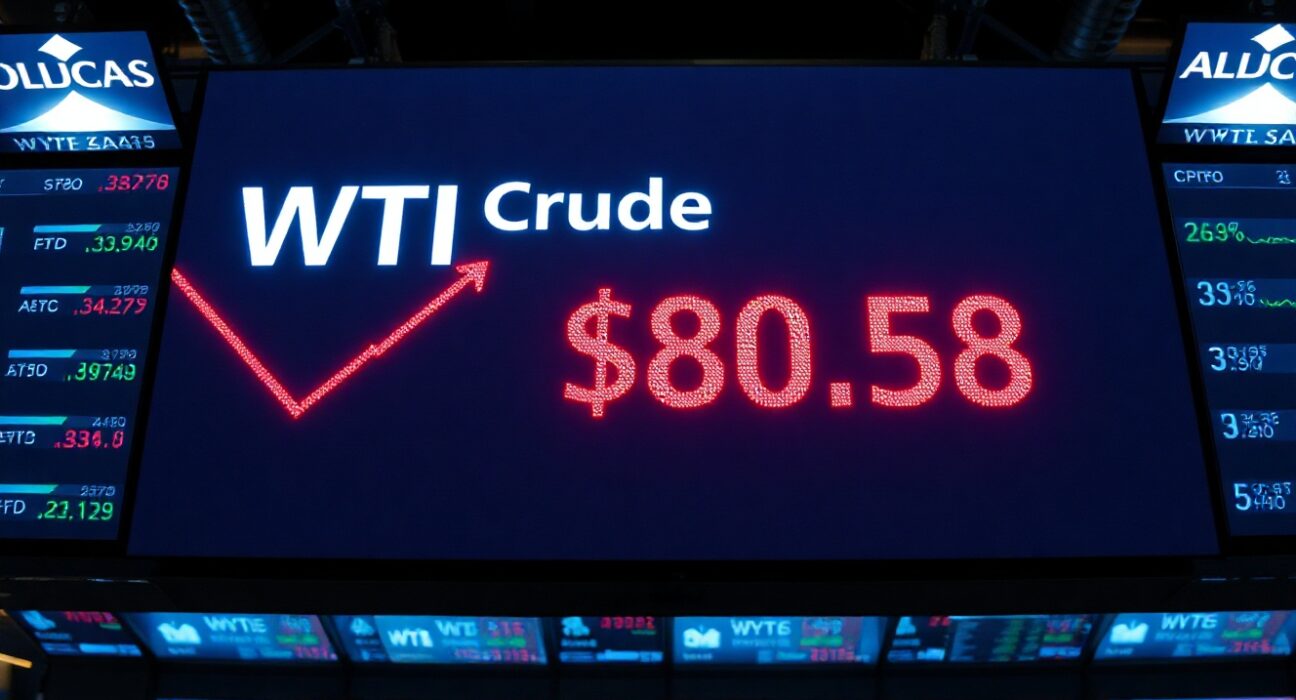
West Texas Intermediate (WTI) crude oil futures experienced a sharp intraday decline on [Current Date], falling 5% to trade at $80.58 per barrel. The sudden move marks a significant break below the $81 support level, a price point that had held relatively steady over the previous trading sessions.
Drivers Behind the Sharp Decline
The sell-off appears to be driven by a confluence of macroeconomic pressures and shifting supply-demand expectations. Traders are reacting to a stronger U.S. dollar, which makes dollar-denominated commodities like oil more expensive for holders of other currencies, typically dampening demand. Additionally, fresh economic data from major consuming nations has raised concerns about a potential slowdown in industrial activity, which could curtail near-term crude consumption.
Market participants are also closely monitoring signals from OPEC+ regarding future production levels. Recent commentary from key member states has introduced uncertainty about the group’s commitment to extending current output cuts, with some analysts speculating that a gradual unwinding of restrictions could be on the horizon later this year.
Market Reaction and Technical Breakdown
The move below $81 is technically significant. Prior to this session, WTI had been consolidating in a narrow range between $83 and $85 for much of the past week. The breach of the lower boundary triggered a cascade of stop-loss orders, accelerating the decline. Trading volumes spiked well above the 20-day average, confirming the intensity of the sell-off.
Other energy benchmarks followed suit. Brent crude, the international standard, also fell sharply, though its decline was slightly less severe on a percentage basis, reflecting regional supply dynamics. Gasoline and heating oil futures also moved lower in sympathy.
Implications for Consumers and the Broader Economy
For consumers, a sustained drop in crude prices could translate to lower costs at the pump in the coming weeks, provided the decline holds. This would offer some relief to households grappling with persistent inflation in other sectors. However, the speed of the decline raises questions about the health of the global economy. A sharp, demand-driven sell-off is often interpreted as a warning signal of a broader economic slowdown, which could have negative implications for corporate earnings and employment.
From an investment perspective, energy sector equities are likely to face headwinds in the near term, as lower crude prices compress margins for exploration and production companies. Conversely, sectors sensitive to fuel costs, such as airlines and logistics, may see a temporary boost in market sentiment.
Conclusion
The 5% intraday plunge in WTI crude oil to $80.58 is a significant market event, driven by a combination of a stronger dollar, demand concerns, and technical selling. While lower oil prices can benefit consumers, the underlying macroeconomic signals warrant close observation. The sustainability of this move will depend on upcoming economic data releases and clarity from OPEC+ on its production strategy.
FAQs
Q1: What caused the sudden drop in WTI crude oil prices?
The decline is attributed to a stronger U.S. dollar, fresh economic data suggesting a potential slowdown in demand, and technical selling after the price broke below a key support level.
Q2: How does this affect gasoline prices for consumers?
A sustained drop in crude oil prices typically leads to lower gasoline prices at the pump, though the pass-through effect can take one to two weeks to materialize fully.
Q3: Is this a buying opportunity for oil?
Market opinion is divided. Some traders view the sharp sell-off as an overreaction and a potential buying opportunity, while others caution that further downside is possible if economic data continues to weaken. Investors should conduct their own research and consider their risk tolerance.
Disclaimer: The information provided is not trading advice, Bitcoinworld.co.in holds no liability for any investments made based on the information provided on this page. We strongly recommend independent research and/or consultation with a qualified professional before making any investment decisions.
