

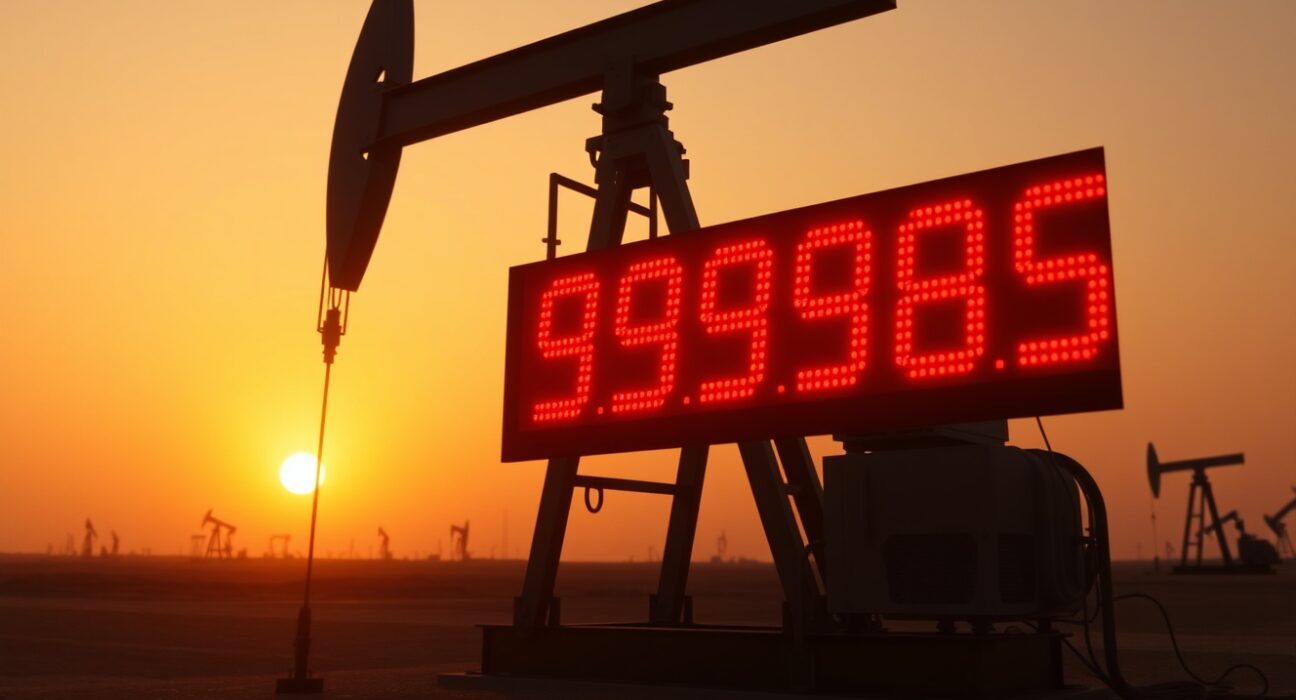
West Texas Intermediate crude oil continues to trade below the psychologically significant $100 per barrel mark, as the market weighs tightening global supply against growing concerns over demand destruction. Despite multiple attempts to breach the threshold, WTI has struggled to sustain upward momentum, leaving traders and analysts debating the near-term direction.
Supply Constraints Provide Underlying Support
Ongoing production cuts from OPEC+ and voluntary reductions by key producers have kept supply relatively tight. Geopolitical risks in the Middle East and disruptions to Russian oil flows have further contributed to a market that remains sensitive to any supply-side shock. Inventory data from the U.S. Energy Information Administration has shown draws in commercial crude stocks, which typically supports higher prices. However, these fundamentals have not been enough to push WTI decisively past the $100 resistance level.
Demand Concerns Cap Upside Potential
On the demand side, slowing economic growth in major economies, particularly China and parts of Europe, has raised concerns about reduced oil consumption. The International Energy Agency has revised its demand growth forecasts downward, citing weaker industrial activity and a shift toward energy efficiency. Additionally, higher interest rates in the U.S. and Europe are expected to cool economic activity, further dampening the outlook for oil demand. This tug-of-war between supply tightness and demand weakness has created a narrow trading range for WTI.
Key Technical Levels to Watch
From a technical perspective, WTI has found support near the $92-$95 range, with resistance firmly established at the $100 level. A sustained break above $100 could open the door to the $105-$110 zone, but would likely require a clear catalyst, such as a major supply disruption or a significant shift in demand expectations. Conversely, a drop below $90 could signal a deeper correction, driven by a deteriorating macroeconomic outlook.
Why This Matters for Traders and the Broader Economy
The direction of crude oil prices has far-reaching implications. For consumers, sustained high oil prices translate to elevated gasoline and heating costs, feeding into broader inflation concerns. For central banks, oil price movements influence monetary policy decisions, particularly regarding interest rates. For energy sector investors, the current stalemate presents both risks and opportunities, as volatility remains elevated. The outcome of this price struggle will also affect the profitability of oil producers and the pace of the global energy transition.
Conclusion
WTI crude oil remains in a delicate balance, supported by supply constraints but capped by demand fears. The $100 level serves as both a psychological barrier and a key technical resistance. A clear breakout in either direction will likely depend on upcoming economic data, OPEC+ decisions, and geopolitical developments. Traders should remain cautious and watch for catalysts that could break the current range.
FAQs
Q1: Why is WTI struggling to stay above $100?
The $100 level is a major psychological and technical resistance point. While supply cuts and geopolitical risks support prices, concerns about slowing global demand and higher interest rates have prevented a sustained breakout.
Q2: What could push WTI above $100?
A significant supply disruption, such as a major geopolitical event or an unexpected production outage, combined with stronger-than-expected demand data, could provide the catalyst needed for a breakout above $100.
Q3: How do oil prices affect the broader economy?
Higher oil prices increase costs for transportation, manufacturing, and heating, contributing to inflation. This can lead central banks to raise interest rates, which slows economic growth. Lower oil prices generally ease inflationary pressures but can hurt energy-producing economies.
Disclaimer: The information provided is not trading advice, Bitcoinworld.co.in holds no liability for any investments made based on the information provided on this page. We strongly recommend independent research and/or consultation with a qualified professional before making any investment decisions.
