

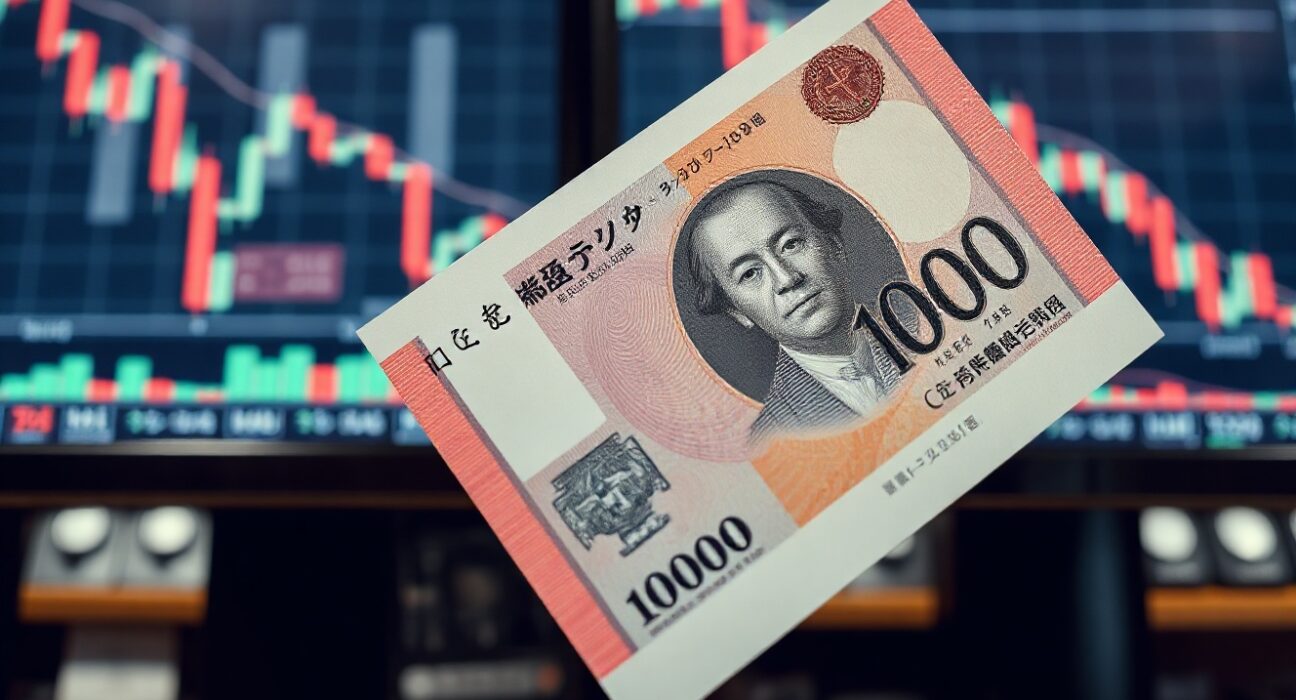
The Japanese yen has surrendered roughly half of the gains it made following Tokyo’s record currency intervention last week, as traders quickly re-test the government’s commitment to stemming the currency’s decline.
What happened after the intervention
On October 21, Japan’s Ministry of Finance confirmed it had spent over 5.6 trillion yen (approximately $37 billion) in a single day to prop up the currency, marking the largest daily intervention on record. The move initially sent the dollar-yen pair tumbling from near 151.00 to around 145.00. However, as of this week, the pair has climbed back to the 148.00–149.00 range, erasing about half of the intervention’s initial impact.
Market participants attribute the pullback to persistent interest rate differentials between Japan and the United States. While the Bank of Japan has maintained its ultra-loose monetary policy, the Federal Reserve’s elevated rate environment continues to attract capital into dollar-denominated assets, keeping structural pressure on the yen.
Why the intervention effect is fading
Currency interventions often provide only temporary relief unless backed by coordinated policy shifts. In this case, the BOJ has not altered its yield curve control stance, and the government has signaled no immediate plans to change fiscal policy. Traders are interpreting the lack of follow-through as a sign that Tokyo may be unwilling or unable to sustain repeated large-scale interventions.
Moreover, the speed of the reversal suggests that market participants view the intervention as a one-off measure rather than a shift in policy direction. The dollar’s resilience, supported by robust U.S. economic data and ongoing Fed tightening expectations, has further undermined the yen’s rebound.
What this means for traders and policymakers
For traders, the episode highlights the risks of chasing intervention-driven moves. The initial sharp drop in USD/JPY offered a tempting entry point for yen bulls, but those positions are now underwater as the pair recovers. For Japanese policymakers, the fading effect underscores the difficulty of fighting macro trends with isolated actions.
The intervention also raises questions about Japan’s fiscal headroom. With foreign reserves standing at around $1.2 trillion, Tokyo can technically afford more interventions, but each one carries diminishing returns and risks inviting criticism from trading partners, particularly the U.S., over currency manipulation.
Conclusion
The yen’s partial reversal of its post-intervention gains is a clear signal that market forces remain dominant. While Japan has demonstrated its willingness to act, the underlying economic fundamentals—chiefly the rate gap—continue to weigh on the currency. Until the BOJ shifts its monetary policy stance or the Fed signals a pause, the yen is likely to remain under pressure, with intervention serving as a temporary brake rather than a lasting solution.
FAQs
Q1: How much did Japan spend on the recent yen intervention?
Japan spent over 5.6 trillion yen (about $37 billion) on October 21, marking the largest single-day intervention on record.
Q2: Why did the yen give back half of its gains?
The yen gave back gains due to persistent interest rate differentials between Japan and the U.S., with the Fed’s higher rates attracting capital into the dollar, and a lack of policy follow-through from Japan.
Q3: Can Japan intervene again to support the yen?
Yes, Japan has ample foreign reserves to intervene again, but repeated interventions have diminishing returns and may face international criticism. The effectiveness depends on whether the BOJ also adjusts its monetary policy.
Disclaimer: The information provided is not trading advice, Bitcoinworld.co.in holds no liability for any investments made based on the information provided on this page. We strongly recommend independent research and/or consultation with a qualified professional before making any investment decisions.
