

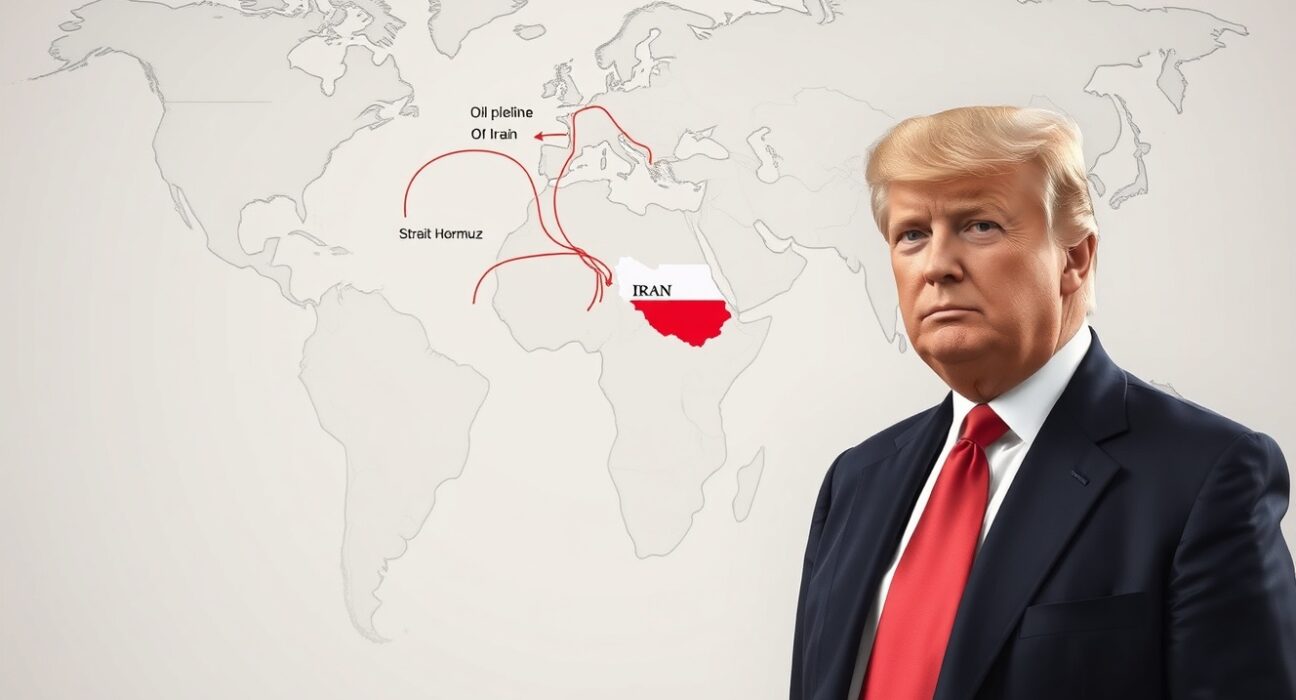
Former President Donald Trump’s recent statement that the United States could ‘take the oil in Iran’ has ignited intense geopolitical analysis and raised profound questions about international law, energy security, and Middle Eastern stability. This declaration, made during a campaign rally in Michigan on March 15, 2025, represents a significant escalation in rhetoric toward Tehran and revisits controversial proposals from his previous administration.
Trump’s Iran Oil Statement and Historical Context
President Trump’s suggestion about seizing Iranian oil resources echoes similar statements he made during his 2016 campaign and presidency. During a 2016 presidential debate, he explicitly stated, “We should have kept the oil” in reference to Iraq, suggesting a precedent for resource seizure. Furthermore, his administration maintained maximum pressure on Iran through sanctions that specifically targeted oil exports, reducing Iran’s crude shipments from approximately 2.5 million barrels per day in 2018 to under 500,000 barrels per day by 2020.
The current geopolitical landscape differs significantly from previous years. Iran has continued developing its nuclear program despite international negotiations, while regional tensions have escalated through proxy conflicts. Additionally, global energy markets face new pressures from shifting alliances and climate transition policies. Trump’s statement arrives amid these complex dynamics, potentially signaling a more aggressive approach should he return to office.
International Legal Framework and Precedents
International law experts immediately questioned the legality of seizing another nation’s natural resources. The United Nations Charter, particularly Article 2(4), prohibits the threat or use of force against territorial integrity. The 1970 UN Declaration on Principles of International Law explicitly states that “no State may use or encourage the use of economic, political or any other type of measures to coerce another State.”
Historical precedents provide limited guidance. The 1990-1991 Gulf War resulted in UN Security Council Resolution 687, which created compensation mechanisms for Iraq’s invasion of Kuwait but did not authorize resource seizure. More recently, Venezuela’s oil assets have been subject to sanctions and claims by opposition groups, but not outright confiscation by foreign powers.
Iran’s Oil Resources and Strategic Importance
Iran possesses the world’s fourth-largest proven crude oil reserves, estimated at 157 billion barrels by the U.S. Energy Information Administration. The country also holds the second-largest natural gas reserves globally. These resources concentrate in specific regions:
- Southwestern Iran: Contains the massive Ahvaz field with approximately 65 billion barrels
- Offshore Persian Gulf: Includes the Salman and Abuzar fields with significant production capacity
- Western Iran: Features the Azadegan field, one of the world’s largest untapped reserves
Iran’s strategic position controlling the Strait of Hormuz amplifies its energy significance. Approximately 20% of global oil consumption passes through this narrow waterway daily. Any disruption could immediately impact global prices and supply chains.
| Field Name | Reserves (Billion Barrels) | Current Production (Barrels/Day) |
|---|---|---|
| Ahvaz | 65 | 750,000 |
| Gachsaran | 52 | 560,000 |
| Marun | 22 | 520,000 |
| Azadegan | 33 | 150,000 |
Potential Implementation Scenarios and Challenges
Analysts have proposed several theoretical scenarios for how resource seizure might occur, though all face substantial obstacles. A military occupation of oil-producing regions would require significant force deployment and face determined Iranian resistance. Alternative approaches could involve establishing a naval blockade or creating protected zones around key infrastructure.
The practical challenges are immense. Iran’s Revolutionary Guard Corps maintains sophisticated asymmetric warfare capabilities, including missile systems, naval mines, and cyber warfare units. Furthermore, Russia and China have deepened economic and military ties with Tehran, potentially creating great power complications. The financial costs would also be substantial, with estimates suggesting tens of billions annually for military operations alone.
Global Energy Market Implications
Global oil markets reacted cautiously to Trump’s statement, with Brent crude futures experiencing a 2.3% increase in volatility. Energy analysts note that actual seizure attempts could trigger more dramatic responses. Potential impacts include:
- Price Volatility: Immediate price spikes of 30-50% possible during initial phases
- Supply Disruption: Loss of 3-4 million barrels daily from combined Iranian production and Strait closures
- Strategic Reserve Releases: Coordinated IEA actions likely but insufficient for prolonged disruption
- Alternative Sources: Increased reliance on Saudi Arabia, Russia, and U.S. shale production
The statement also affects long-term investment decisions. Energy companies may reconsider Middle Eastern projects amid heightened geopolitical risk premiums. Renewable energy transitions could accelerate as nations seek greater energy independence.
Regional and International Reactions
International responses revealed deep divisions. European Union officials expressed concern about international law violations and potential market instability. Chinese Foreign Ministry representatives emphasized respect for sovereignty and territorial integrity. Russian statements warned against unilateral actions undermining global stability.
Regional reactions varied significantly. Saudi Arabia and the United Arab Emirates offered no official comment but privately expressed concerns about escalation. Israel’s government remained silent publicly, though analysts note potential strategic benefits from increased pressure on Iran. Regional powers Turkey and Pakistan called for diplomatic solutions and respect for international norms.
Historical Parallels and Expert Analysis
Energy historian Dr. Samantha Chen notes, “The concept of resource seizure has historical precedents but faces unprecedented modern constraints. The 1907 Hague Convention and subsequent Geneva Conventions established clearer protections for civilian resources. Furthermore, global interdependence creates economic blowback risks that didn’t exist during colonial-era resource extraction.”
Geopolitical analyst Michael Rostov adds, “Trump’s statement reflects a broader trend of questioning established international norms. However, implementation would require overcoming not just Iranian resistance but also creating new legal justifications and managing global economic consequences. The practical barriers may be insurmountable even for a determined administration.”
Conclusion
President Trump’s statement about potentially taking Iran’s oil represents a significant geopolitical proposition with far-reaching implications. While reflecting consistent themes from his political career, the suggestion faces substantial legal, practical, and diplomatic challenges. The international community’s reaction demonstrates continued commitment to established norms against resource seizure, though shifting global power dynamics create uncertainty. Ultimately, the Trump Iran oil proposal highlights enduring tensions between national interests, international law, and global energy security in an increasingly multipolar world.
FAQs
Q1: Has any country ever seized another nation’s oil resources?
Historical examples exist but under different legal frameworks. During World War II, occupying powers sometimes controlled resources, but modern international law developed after 1945 generally prohibits such actions without UN Security Council authorization.
Q2: What legal mechanisms might justify resource seizure?
Potential justifications could include UN Security Council resolutions under Chapter VII, self-defense arguments under Article 51, or claims regarding compensation for damages. However, legal experts consider all these approaches highly problematic for peacetime resource seizure.
Q3: How would oil seizure affect global prices?
Immediate effects would likely include significant price spikes due to supply uncertainty and risk premiums. Long-term impacts would depend on duration, scale of disruption, and alternative supply availability.
Q4: What military resources would be required?
Conservative estimates suggest at least 100,000 troops for occupation, plus naval and air support. Costs could exceed $50 billion annually, not including potential combat losses and reconstruction expenses.
Q5: How has Iran responded to similar statements in the past?
Iran typically responds with military exercises, threats to close the Strait of Hormuz, and diplomatic protests. The country has also accelerated development of asymmetric warfare capabilities specifically designed to counter superior conventional forces.
Disclaimer: The information provided is not trading advice, Bitcoinworld.co.in holds no liability for any investments made based on the information provided on this page. We strongly recommend independent research and/or consultation with a qualified professional before making any investment decisions.
