

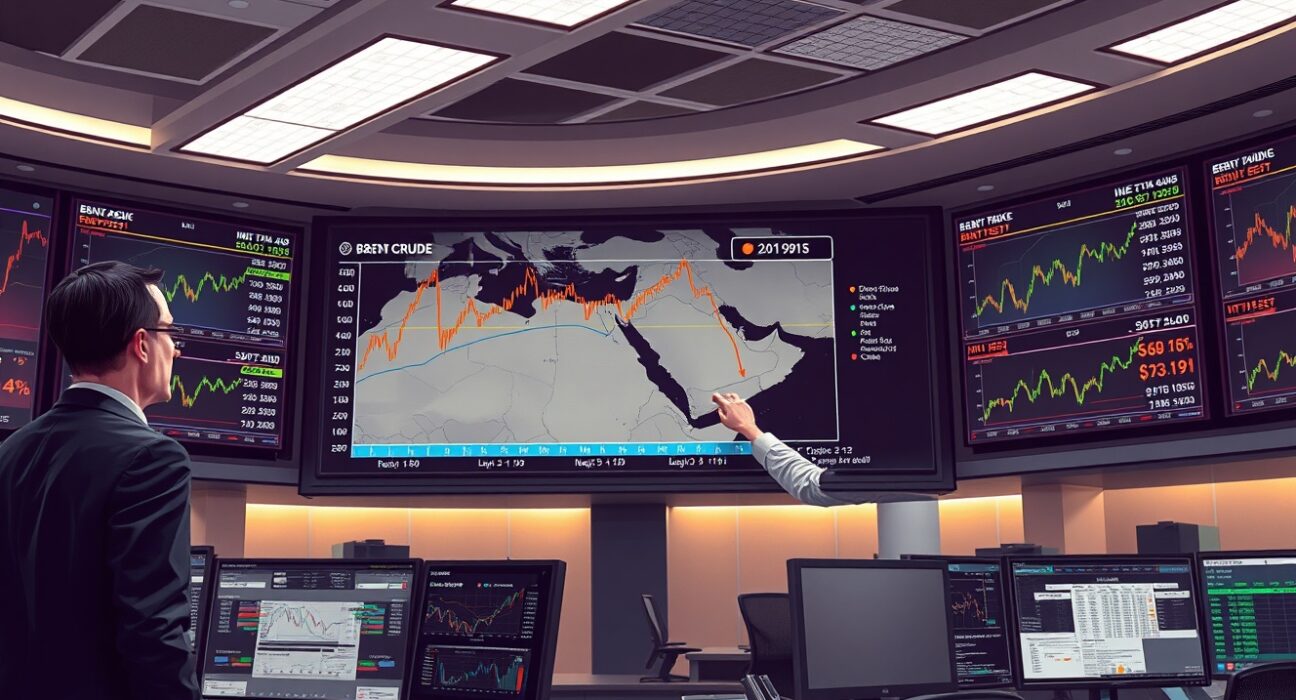
Global energy markets face mounting pressure as Societe Generale, the French multinational financial services company, issues a stark warning about oil prices maintaining elevated levels for an extended period. The bank’s latest analysis, released this week, directly links this sustained price pressure to prolonged geopolitical conflicts in key producing regions. Consequently, this development threatens to reshape economic forecasts and energy security strategies worldwide throughout 2025.
Societe Generale’s Oil Price Analysis and Conflict Extension
Societe Generale’s commodities research team has revised its oil price trajectory based on persistent supply-side risks. The bank now projects Brent crude will average between $85 and $95 per barrel through the next fiscal year. This forecast represents a significant upward adjustment from previous estimates. The primary driver, according to their report, is the extension of military and political conflicts in the Middle East and Eastern Europe. These regions collectively account for over 35% of global oil production. Therefore, any disruption creates immediate market volatility. The analysis specifically cites ongoing tensions that continue to threaten critical shipping lanes and production infrastructure.
Furthermore, the bank’s models incorporate historical data from past supply shocks. For instance, the 1973 oil embargo and the 1990 Gulf War provide relevant comparative frameworks. The current situation shares characteristics with both events, particularly regarding the duration of market uncertainty. However, modern markets feature more complex financial instruments and faster information flow. This complexity can amplify price movements in both directions. Societe Generale’s report emphasizes that inventory levels, while improved from 2022 lows, remain insufficient to buffer against a major, prolonged supply interruption.
Market Mechanics and Price Floor Support
The concept of a “higher-for-longer” price path refers to sustained periods where prices remain above long-term historical averages. Several structural factors now support this floor. First, global demand continues its gradual recovery, particularly in emerging Asian economies. Second, production discipline among OPEC+ members has created a tighter physical market. Third, investment in new production has lagged behind depletion rates in many non-OPEC fields. Finally, geopolitical risk premiums have become a semi-permanent market feature. These premiums reflect the cost of insuring against sudden supply loss.
Geopolitical Conflict’s Direct Impact on Energy Security
Extended conflict directly threatens global energy security through multiple channels. The most immediate risk involves the physical disruption of production facilities. Attacks on infrastructure in key regions have already demonstrated this vulnerability. Additionally, conflict often leads to the militarization of critical maritime chokepoints. The Strait of Hormuz, through which 21% of global petroleum liquids pass, remains a persistent flashpoint. Insurance costs for tankers transiting these areas have skyrocketed, adding a direct cost to every barrel.
Moreover, sanctions regimes targeting oil exports from conflict participants further complicate the supply picture. These measures can remove significant volumes from the formal market. However, they often create shadow markets with different price dynamics. The net effect is reduced transparency and increased volatility. National oil companies in conflict zones also face capital constraints, delaying maintenance and expansion projects. This deferred investment creates a future supply gap that markets must eventually price in.
The following table illustrates recent conflict-driven supply disruptions:
| Region | Estimated Production Impact (Barrels Per Day) | Primary Cause | Duration |
|---|---|---|---|
| Eastern Mediterranean | 500,000 – 750,000 | Pipeline Security & Export Constraints | Ongoing since Q4 2023 |
| Persian Gulf | Variable, up to 1 million | Shipping Lane Tensions & Attacks | Intermittent since 2019 |
| Black Sea Basin | 300,000 – 500,000 | Port Infrastructure Damage | Ongoing since 2022 |
Economic Implications of Sustained High Oil Prices
Persistently high oil prices act as a tax on global economic growth. The International Energy Agency (IEA) estimates that every $10 sustained increase in oil prices reduces global GDP growth by approximately 0.5%. This impact is not evenly distributed. Emerging markets with high energy import bills and weak currencies suffer disproportionately. Countries like India and Pakistan face severe balance-of-payments pressures. Conversely, major exporters like Saudi Arabia and the United Arab Emirates experience revenue windfalls. These funds can support domestic spending but also increase regional economic disparities.
For consumers, the transmission mechanism operates through several key areas:
- Transportation Costs: Directly increases prices for gasoline, diesel, and jet fuel.
- Manufacturing Inputs: Petroleum is a feedstock for plastics, chemicals, and fertilizers.
- Food Prices: Higher fertilizer and transportation costs elevate agricultural production expenses.
- Central Bank Policy: Can complicate inflation fighting, potentially delaying interest rate cuts.
Furthermore, corporate investment decisions face new uncertainty. Energy-intensive industries may delay expansion plans. Airlines and shipping companies must hedge fuel costs more aggressively. Renewable energy projects, however, may gain relative economic attractiveness. This dynamic could accelerate the energy transition, albeit from a position of price pain rather than strategic planning.
Expert Perspectives on Market Adaptation
Market analysts beyond Societe Generale echo concerns about structural change. Dr. Fatih Birol, Executive Director of the IEA, recently noted that “geopolitics has become a persistent driver of energy markets.” This shift requires different risk management approaches. Companies now build larger contingency buffers and diversify supply sources more aggressively. National governments are reassessing strategic petroleum reserve policies. Some are increasing mandated storage levels, while others are coordinating release mechanisms with allies.
Comparative Analysis with Previous Oil Price Cycles
The current price environment differs from previous cycles in important ways. The 2008 price spike was primarily demand-driven, fueled by rapid emerging market growth. The 2014-2016 price collapse resulted from a supply surge from US shale producers. Today’s market faces a combination of constrained supply, resilient demand, and embedded geopolitical risk. This triad creates a more stable high-price plateau rather than a sharp peak. Financialization of commodities also plays a larger role. Exchange-traded funds and other passive investment vehicles now hold significant futures positions, which can dampen volatility but extend price trends.
Another key difference involves the policy response. During the 1970s crises, governments focused on conservation and rationing. Today, the policy toolkit includes:
- Coordinated Reserve Releases: IEA member countries can tap strategic stocks.
- Sanctions Adjustments: Temporarily allowing more exports from restricted nations.
- Diplomatic Pressure: Encouraging OPEC+ to increase production quotas.
- Alternative Supply Activation: Accelerating permits for non-OPEC projects.
However, these tools have limitations. Strategic reserves are finite. Sanctions relief involves complex political trade-offs. OPEC+ maintains its own capacity and revenue objectives. Therefore, the market’s ability to quickly correct a supply shortfall remains constrained.
Conclusion
Sustained geopolitical conflict has fundamentally altered the oil price outlook for 2025, as detailed in Societe Generale’s analysis. The bank’s warning of a higher-for-longer price path reflects deep structural vulnerabilities in global energy supply chains. Markets must now account for persistent risk premiums and reduced spare production capacity. Consequently, consumers, businesses, and policymakers face prolonged economic headwinds from elevated energy costs. While renewable transition efforts may receive indirect acceleration, the immediate future points toward continued volatility and energy security challenges. The extended conflict ensures that oil prices will remain a central concern for the global economy throughout the coming year.
FAQs
Q1: What does “higher-for-longer” mean for oil prices?
This term describes a market expectation where oil prices remain significantly above their long-term historical average for an extended period, often several quarters or years, due to structural supply constraints or persistent demand pressures.
Q2: Which specific conflicts is Societe Generale referencing in its analysis?
While the report does not name every conflict, analysts point to ongoing tensions in the Middle East affecting shipping lanes, continued instability in Eastern Europe impacting pipeline flows, and political volatility in several African producer nations as key contributors to supply risk.
Q3: How do higher oil prices typically affect inflation and interest rates?
Elevated oil prices directly increase transportation and production costs, contributing to broader inflation. Central banks may respond by maintaining higher interest rates for longer to prevent these cost increases from becoming embedded in wage and price expectations, potentially slowing economic growth.
Q4: Can increased US shale production offset these geopolitical supply risks?
US shale production remains a crucial swing factor, but growth has moderated due to capital discipline, cost inflation, and logistical constraints. While it provides a ceiling on prices, most analysts believe it cannot fully compensate for large, sustained disruptions from major conventional producers.
Q5: What are the main differences between the current oil market and the 2008 price spike?
The 2008 spike was primarily driven by surging demand from China and financial speculation. The current environment is characterized by supply-side risks from geopolitics, production capacity limits within OPEC+, and more measured demand growth, creating a different type of price stability at elevated levels.
Disclaimer: The information provided is not trading advice, Bitcoinworld.co.in holds no liability for any investments made based on the information provided on this page. We strongly recommend independent research and/or consultation with a qualified professional before making any investment decisions.
