

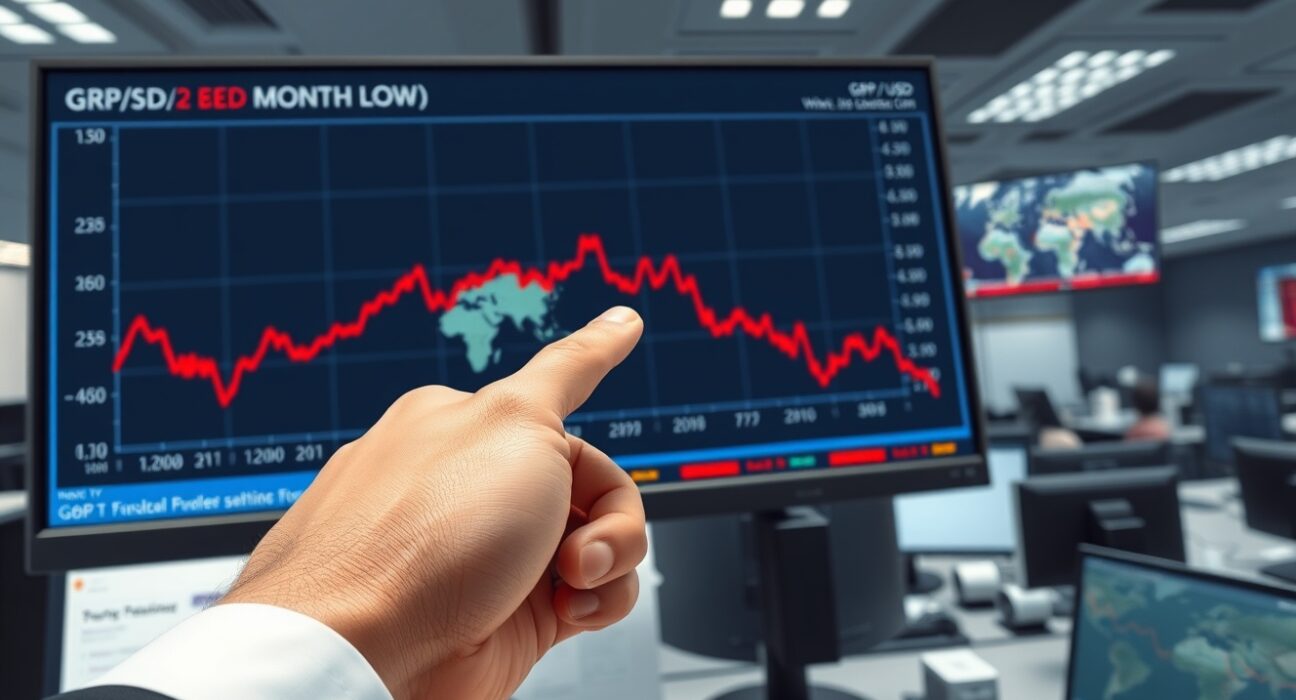
LONDON, April 2025 – The GBP/USD currency pair has plunged to its lowest level in four months, a dramatic move primarily fueled by escalating geopolitical tensions in the Middle East. Consequently, investors are flocking to the perceived safety of the US Dollar, creating significant pressure on the British Pound. This sharp decline marks one of the most substantial single-day drops for the pair this year, reflecting a broader market shift towards risk aversion.
GBP/USD Technical Breakdown and Market Reaction
The GBP/USD pair breached several key technical support levels during the London trading session. Specifically, the pair fell below the psychologically important 1.2500 handle, reaching a trough not seen since late December 2024. Market data from major trading platforms shows a surge in trading volume, exceeding the 30-day average by over 150%. Furthermore, the move triggered a cascade of stop-loss orders, which accelerated the downward momentum. Analysts at several major investment banks immediately revised their short-term forecasts for the pair. The Relative Strength Index (RSI) entered deeply oversold territory, signaling a potential for a technical rebound, although the prevailing fundamental drivers remain overwhelmingly bearish.
Geopolitical Tensions Drive Safe-Haven Flows
Renewed conflict in the Middle East is the primary catalyst for the current market turmoil. Reports of military escalations have triggered a classic flight-to-safety response across global financial markets. Historically, the US Dollar benefits from such events due to its status as the world’s primary reserve currency. Concurrently, assets like gold and US Treasury bonds have also seen strong buying interest. The volatility index (VIX), often called the “fear gauge,” spiked by over 20%, underscoring the heightened risk sentiment. This environment typically leads to capital outflows from risk-sensitive currencies, including the Pound Sterling, and into the Dollar.
Expert Analysis on Currency Dynamics
Senior currency strategists point to the compound effect of geopolitics on existing macroeconomic divergences. “While the Middle East situation is the immediate trigger, it’s amplifying underlying trends,” noted a lead analyst from a global financial institution. “The market is already pricing in a more hawkish Federal Reserve relative to the Bank of England. Geopolitical risk simply adds a premium to the Dollar’s yield and safety appeal.” Data from the Commodity Futures Trading Commission (CFTC) shows that speculative net long positions on the US Dollar had been increasing for three consecutive weeks prior to this event, suggesting the market was already positioned for Dollar strength.
Comparative Impact on Major Currency Pairs
The US Dollar’s strength has been broad-based, but its gains against the Pound have been particularly pronounced. The following table illustrates the intraday movements of major pairs against the USD:
| Currency Pair | Intraday Change | Key Level Breached |
|---|---|---|
| GBP/USD | -1.8% | 1.2450 (4-month low) |
| EUR/USD | -1.2% | 1.0700 |
| USD/JPY | +0.9% | 158.00 |
| AUD/USD | -1.5% | 0.6400 |
This data clearly shows the Pound underperforming its G10 peers. Several factors contribute to this, including:
- Domestic Economic Concerns: Recent UK economic data has shown signs of stagnation.
- Interest Rate Expectations: Markets see a higher probability of Fed rate holds versus potential BoE cuts.
- Energy Dependency: The UK’s net energy importer status makes it vulnerable to oil price spikes from Middle East volatility.
Historical Context and Potential Trajectory
Historically, geopolitical shocks have led to sustained periods of Dollar strength, though the initial spike often moderates. For instance, similar patterns emerged during the Ukraine conflict in 2022. The key question for traders is whether this represents a short-term risk-off episode or the beginning of a more protracted trend. Market participants will closely monitor:
- Diplomatic developments in the Middle East.
- Upcoming inflation and growth data from the US and UK.
- Central bank commentary for any shifts in policy tone.
Technical analysts identify the next major support level for GBP/USD around 1.2350, a zone that held during multiple tests in Q4 2024. A break below this level could open the path for a move toward 1.2200.
Conclusion
The GBP/USD pair’s dive to four-month lows underscores the powerful interplay between geopolitics and currency markets. The Middle East crisis has acted as a potent accelerant, driving fierce safe-haven flows into the US Dollar at the expense of the British Pound. While technical indicators suggest the move is overextended in the short term, the fundamental driver of risk aversion remains firmly in place. Therefore, the near-term path for GBP/USD appears contingent on geopolitical developments as much as economic data, highlighting the currency’s vulnerability in the current risk-off climate.
FAQs
Q1: Why does the US Dollar strengthen during geopolitical tensions?
The US Dollar is considered the world’s primary safe-haven currency. During times of global uncertainty or crisis, investors seek the stability and liquidity of USD-denominated assets like US Treasury bonds, increasing demand for the currency.
Q2: How do Middle East tensions specifically affect GBP/USD?
Escalations can spike global oil prices. The UK is a net energy importer, so higher oil prices can worsen its trade balance and inflation outlook, weighing on the Pound. Simultaneously, the safe-haven demand boosts the Dollar, creating a double negative for GBP/USD.
Q3: What are the key technical levels to watch for GBP/USD now?
Traders are monitoring the recent low near 1.2450 as immediate resistance if a rebound occurs. On the downside, major support is seen around the 1.2350 level, followed by 1.2200. A daily close above 1.2550 would be needed to signal a potential reversal.
Q4: Could the Bank of England intervene to support the Pound?
Direct intervention in the foreign exchange market by the BoE is extremely rare. The central bank typically focuses on interest rates and monetary policy to influence currency value indirectly. Its primary mandate is price stability, not a specific exchange rate.
Q5: Does this mean the long-term trend for GBP/USD is now downward?
Not necessarily. While the current geopolitical crisis exerts strong downward pressure, long-term trends are dictated by relative economic growth, interest rate differentials, and trade flows. The current move may prove to be a volatile correction within a broader range rather than a definitive new trend.
Disclaimer: The information provided is not trading advice, Bitcoinworld.co.in holds no liability for any investments made based on the information provided on this page. We strongly recommend independent research and/or consultation with a qualified professional before making any investment decisions.
